Barbell Overhead Squat: Form, Benefits, Sets, Tips & FAQ
Learn the Barbell Overhead Squat with safe form, step-by-step cues, sets by goal, common mistakes, FAQs, and essential equipment tips.
Barbell Overhead Squat
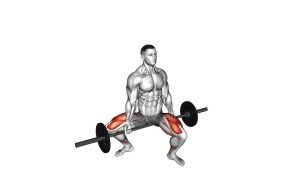
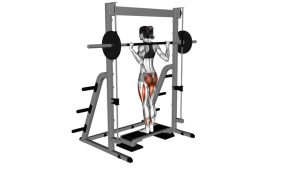
This exercise works best when performed with excellent control, strong bracing, and proper overhead positioning. Unlike a standard back squat, the overhead squat demands more shoulder mobility, thoracic extension, ankle dorsiflexion, and core stability. Use lighter loads until the bar path, squat depth, and overhead lockout remain clean.
Quick Overview
| Body Part | Legs |
|---|---|
| Primary Muscle | Quadriceps |
| Secondary Muscle | Glutes, hamstrings, core, shoulders, traps, upper back, calves |
| Equipment | Barbell, weight plates, squat rack, optional lifting shoes |
| Difficulty | Advanced |
Sets & Reps (By Goal)
- Technique practice: 3–5 sets × 3–5 reps with an empty bar or light load
- Mobility and control: 2–4 sets × 5–8 reps using slow tempo and full range
- Strength development: 3–5 sets × 3–6 reps with moderate load and long rest
- Olympic lifting accessory: 3–4 sets × 2–5 reps after warm-up or snatch work
Progression rule: Increase load only when the bar stays vertical, your heels stay down, and your torso remains stable through the full squat.
Setup / Starting Position
- Set the bar overhead: Use a wide snatch-style grip and lock the elbows fully.
- Stack the bar: Keep the bar slightly behind or directly above the ears, shoulders, hips, and mid-foot.
- Brace the core: Tighten your abs and ribs without over-arching your lower back.
- Set your stance: Place feet about shoulder-width or slightly wider with toes slightly turned out.
- Activate the shoulders: Push up into the bar and keep the upper back engaged before descending.
Tip: If you cannot hold the bar comfortably overhead, practice with a PVC pipe, broomstick, or empty barbell first.
Execution (Step-by-Step)
- Start tall: Stand upright with the bar locked overhead and your eyes looking forward.
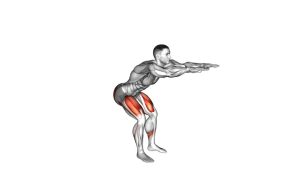
- Begin the squat: Bend the knees and hips together while keeping the chest lifted.
- Keep the bar stacked: Maintain the bar over the mid-foot as your hips descend between your heels.
- Control the bottom: Reach your available depth without relaxing your shoulders or losing core tension.
- Drive up: Press through the whole foot and extend the knees and hips together.
- Finish strong: Return to a fully standing position with the bar stable overhead.
Pro Tips & Common Mistakes
- Keep the elbows locked: Bent elbows reduce stability and make the bar harder to control.
- Do not let the bar drift forward: The bar should stay stacked over the mid-foot.
- Push the knees out: Keep the knees tracking in the same direction as the toes.
- Avoid rushing the descent: Lower with control so your shoulders and core stay organized.
- Do not over-arch the lower back: Brace the ribs down and keep the spine controlled.
- Use the whole foot: Keep pressure balanced through the heel, big toe, and little toe.
- Start light: This is a skill-heavy lift. Technique should come before load.
FAQ
What muscles does the Barbell Overhead Squat work?
The Barbell Overhead Squat mainly targets the quadriceps, while the glutes, hamstrings, core, shoulders, traps, upper back, and calves help stabilize the movement.
Is the overhead squat good for building leg strength?
Yes, but it is also limited by mobility and overhead stability. It can build leg strength, but it is often best used as a technical strength, mobility, and Olympic lifting accessory exercise.
Why does the bar drift forward during overhead squats?
Forward bar drift often comes from limited shoulder mobility, poor thoracic extension, tight ankles, weak bracing, or descending too quickly. Reduce the weight and improve position before adding load.
Should beginners do Barbell Overhead Squats?
Beginners can practice the movement pattern with a PVC pipe, broomstick, or empty barbell. Loaded overhead squats are better for lifters who already have solid squat mechanics and overhead mobility.
How deep should I squat?
Squat as deep as you can while keeping the heels down, knees controlled, torso upright, elbows locked, and barbell stacked over the mid-foot. Do not force depth if position breaks down.
Recommended Equipment
- Olympic Barbell — essential for practicing and loading the overhead squat safely
- Bumper Plates — useful for controlled barbell training and Olympic lifting-style work
- Weightlifting Shoes — raised heel support can help improve squat depth and stability
- PVC Pipe / Technique Bar — ideal for learning overhead position before adding weight
- Weightlifting Wrist Wraps — optional wrist support during overhead barbell work
Tip: Equipment can support better training, but the biggest priority is clean movement quality, stable overhead positioning, and gradual progression.