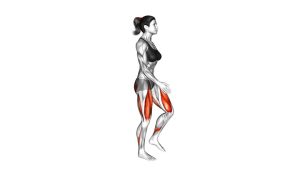
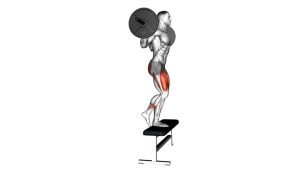
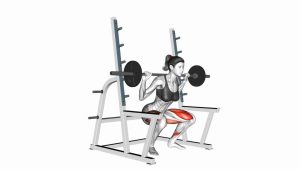
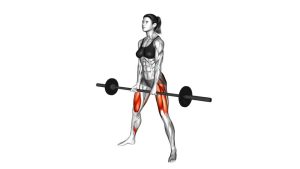
Barbell Rear Lunge: Proper Form, Muscles Worked, Sets, Tips & FAQ
Learn the Barbell Rear Lunge for stronger quads, glutes, balance, and lower-body control. Includes form, sets, mistakes, FAQs, and equipment.
Barbell Rear Lunge
This exercise is excellent for building single-leg strength, improving balance, and correcting side-to-side strength differences. Because the load sits on the upper back, the Barbell Rear Lunge also requires strong core bracing and good posture control. Compared with a forward lunge, the rear lunge is often easier to control because the working front foot stays planted.
Quick Overview
| Body Part | Legs |
|---|---|
| Primary Muscle | Quadriceps |
| Secondary Muscle | Glutes, hamstrings, calves, hip stabilizers, core, spinal erectors |
| Equipment | Barbell, squat rack recommended |
| Difficulty | Intermediate |
Sets & Reps (By Goal)
- Strength: 3–5 sets × 4–6 reps per leg with controlled rest and heavier loading
- Muscle growth: 3–4 sets × 8–12 reps per leg with moderate weight and steady tempo
- Balance and control: 2–4 sets × 8–10 reps per leg using lighter weight and slower reps
- Conditioning: 2–3 sets × 12–16 reps per leg with lighter load and shorter rest
Progression rule: Add reps first, then increase weight gradually. Do not increase load if your step becomes unstable or your front knee loses alignment.
Setup / Starting Position
- Set the bar safely: Place the barbell on a squat rack at upper-chest height so you can unrack it without reaching or bending awkwardly.
- Position the bar: Rest the bar across the upper traps in a high-bar position. Keep it centered and stable.
- Grip the bar firmly: Hold the bar slightly wider than shoulder-width and pull your elbows gently down to create upper-back tightness.
- Brace your core: Take a breath, tighten your midsection, and keep your ribs stacked over your pelvis.
- Set your stance: Stand tall with feet about hip-width apart and weight evenly balanced before beginning the first rep.
A stable starting position helps keep the barbell from shifting during the backward step.
Execution (Step-by-Step)
- Stand tall and brace: Keep your chest lifted, eyes forward, and core tight before moving.
- Step one foot backward: Move the working-side opposite leg behind you with a controlled step. Do not let the bar pull you forward.
- Lower into the lunge: Bend both knees as the rear knee travels toward the floor. Keep the front foot flat.
- Control the bottom position: Lower until the front thigh is near parallel or until your range allows clean control.
- Drive through the front foot: Push through the front heel and midfoot to stand back up.
- Return to the start: Bring the rear foot forward and reset your balance before repeating on the same side or alternating legs.
Pro Tips & Common Mistakes
- Keep the front foot planted: Do not let the heel lift as you descend or drive upward.
- Use a controlled step length: A very short step can overload the knee, while a very long step can reduce balance and control.
- Do not bounce at the bottom: Pause briefly and drive up smoothly instead of using momentum.
- Keep the knee aligned: The front knee should track in the same direction as the toes.
- Brace before every rep: The barbell adds spinal loading, so core tension is essential.
- Avoid leaning too far forward: A slight forward torso angle is normal, but excessive collapse reduces control.
- Start lighter than expected: Balance and coordination often limit this exercise before leg strength does.
FAQ
What muscles does the Barbell Rear Lunge work?
The Barbell Rear Lunge primarily works the quadriceps. It also trains the glutes, hamstrings, calves, hip stabilizers, core, and spinal erectors.
Is the Barbell Rear Lunge the same as the Barbell Reverse Lunge?
Yes. Both names usually describe the same movement: stepping backward into a lunge while holding a barbell, then returning to a standing position.
Is the rear lunge better than the forward lunge?
It depends on the goal. The rear lunge is often easier to control because the working front foot stays planted. This can make it a good option for strength, balance, and knee-friendly lower-body training.
Should I alternate legs or do one side at a time?
Both methods work. Alternating reps can feel more athletic and balanced, while completing all reps on one side can create more muscle fatigue and focus.
Why do I lose balance during Barbell Rear Lunges?
Balance problems usually come from stepping too narrow, rushing the rep, using too much weight, or failing to brace. Use a lighter load, step back under control, and reset between reps.
Can beginners do the Barbell Rear Lunge?
Beginners should first master bodyweight and dumbbell reverse lunges. Once balance and control are solid, they can progress to the barbell version with light loading.
Recommended Equipment
- Olympic Barbell — essential for performing loaded barbell rear lunges safely and consistently
- Squat Rack — helps you unrack and rerack the barbell from a safe height
- Barbell Squat Pad — optional padding for lifters who feel pressure on the upper traps
- Weightlifting Belt — useful for heavier sets when additional bracing support is needed
- Knee Sleeves — provide warmth and light support during lower-body training
Tip: Equipment should support better form, not replace control. Master the movement pattern before increasing weight.