Dumbbell Bulgarian Split Squat: Form, Muscles, Sets, Tips & FAQ
Learn the Dumbbell Bulgarian Split Squat for stronger quads, glutes, balance, and single-leg control. Includes setup, form, sets, mistakes, FAQ, and gear.
Dumbbell Bulgarian Split Squat
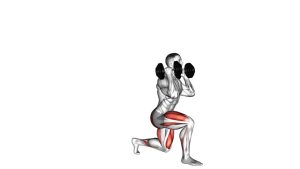
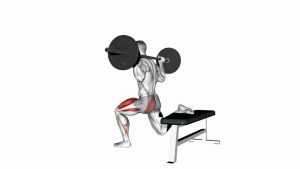
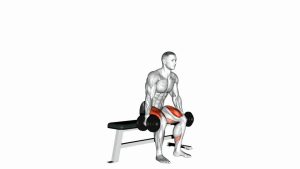
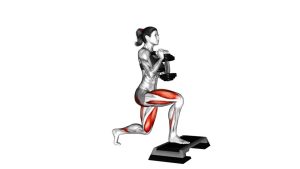
This exercise works best when the front leg does most of the work. The dumbbells should hang naturally beside your body, the torso should stay tall with a slight controlled lean, and the front knee should track in line with the toes. Because the rear foot is elevated, the movement increases range of motion and places more demand on balance, hip control, and single-leg strength than a regular split squat.
Quick Overview
| Body Part | Legs |
|---|---|
| Primary Muscle | Quadriceps |
| Secondary Muscle | Glutes, hamstrings, adductors, calves, core, and hip stabilizers |
| Equipment | Dumbbells and a flat bench or stable elevated platform |
| Difficulty | Intermediate |
Sets & Reps (By Goal)
- Strength: 3–5 sets × 5–8 reps per leg using heavier dumbbells and controlled rest periods.
- Muscle growth: 3–4 sets × 8–12 reps per leg with a slow descent and strong front-leg drive.
- Balance and control: 2–3 sets × 8–10 reps per leg using light dumbbells or bodyweight.
- Endurance / conditioning: 2–4 sets × 12–15 reps per leg with moderate weight and smooth tempo.
- Beginner progression: 2–3 sets × 6–8 reps per leg using bodyweight before adding dumbbells.
Progression rule: Increase range of motion and control first, then add reps, then add dumbbell weight. Clean balance and knee tracking are more important than lifting heavy too soon.
Setup / Starting Position
- Choose a stable bench: Use a flat bench, box, or platform that does not move during the exercise.
- Stand in front of the bench: Face away from the bench and place one foot forward on the floor.
- Elevate the rear foot: Rest the top of the back foot on the bench. Keep the rear leg relaxed and supportive.
- Set your stance distance: Move the front foot far enough forward so the knee can bend comfortably without the heel lifting.
- Hold the dumbbells: Keep one dumbbell in each hand with arms straight and palms facing your body.
- Brace your core: Keep ribs stacked, shoulders relaxed, chest open, and eyes forward.
- Start tall: Balance over the front foot before beginning the first rep.
Tip: If the stance feels unstable, practice a few bodyweight reps first. The front foot position determines most of the comfort and control in this exercise.
Execution (Step-by-Step)
- Brace before lowering: Keep your core tight and dumbbells still at your sides.
- Lower with control: Bend the front knee and hip while allowing the rear knee to travel down toward the floor.
- Keep the front foot grounded: Maintain pressure through the heel, mid-foot, and big toe base.
- Track the knee correctly: Let the front knee follow the same line as the toes without collapsing inward.
- Reach a strong bottom position: Lower until the front thigh is near parallel or slightly below, depending on mobility and control.
- Drive upward: Push through the front foot and extend the knee and hip to return to the top.
- Reset balance: Pause briefly at the top before beginning the next repetition.
- Complete all reps on one side: Then switch legs and repeat with the same setup and control.
Pro Tips & Common Mistakes
- Use the correct stance length: Too short can overload the knee; too long can reduce control and depth.
- Do not bounce at the bottom: Pause or reverse smoothly to keep tension on the working muscles.
- Keep the dumbbells quiet: Swinging dumbbells usually means you are rushing or losing balance.
- Avoid front heel lift: Keep the full foot connected to the floor for better power and knee control.
- Control knee alignment: Do not allow the knee to cave inward as you lower or stand up.
- Use a slight forward lean naturally: A small lean can help balance and increase glute involvement, but avoid rounding the back.
- Do not push hard from the rear leg: The rear foot should assist balance, not take over the exercise.
- Match both sides: Use the same stance, depth, tempo, and weight on both legs.
- Start light: This movement is demanding even before heavy loading because of balance and range of motion.
- Stop before form breaks: End the set if your reps become shaky, rushed, or uneven.
FAQ
Is the Dumbbell Bulgarian Split Squat good for building quads?
Yes. The Dumbbell Bulgarian Split Squat strongly targets the quadriceps, especially when the torso stays more upright and the front knee travels forward under control. It is one of the best dumbbell exercises for single-leg quad strength.
Does this exercise work the glutes?
Yes. The glutes work hard during the bottom and upward phase, especially when you use a slightly longer stance and controlled hip flexion. A small forward torso lean can also increase glute emphasis.
What is the difference between a Bulgarian split squat and a regular split squat?
In a regular split squat, both feet stay on the floor. In a Bulgarian split squat, the rear foot is elevated on a bench or platform. This increases range of motion, balance demand, and front-leg loading.
Should my knee go past my toes?
The knee may travel past the toes if your heel stays down and the movement feels controlled. The main goal is proper tracking: the knee should follow the toe line without collapsing inward.
Why do I lose balance during Bulgarian split squats?
Balance issues usually come from a stance that is too narrow, a rear foot placed too high, rushing the descent, or using dumbbells that are too heavy. Widen your stance slightly and practice bodyweight reps first.
How heavy should I go on this exercise?
Use a weight that allows full control, stable knee tracking, and a smooth tempo. If you cannot reach depth without wobbling or bouncing, reduce the dumbbell weight.
Recommended Equipment
- Adjustable Dumbbells — ideal for progressive overload without needing many separate dumbbell pairs.
- Flat Workout Bench — provides stable rear-foot elevation for Bulgarian split squats.
- Weightlifting Shoes — help improve foot stability and lower-body positioning during heavy reps.
- Non-Slip Exercise Mat — useful for floor grip, comfort, and a safer home workout setup.
- Resistance Bands Set — helpful for warm-ups, glute activation, and lower-body mobility drills.
Tip: Choose equipment that supports balance and consistency. For this exercise, a stable bench and controlled dumbbell loading are more important than using maximum weight.