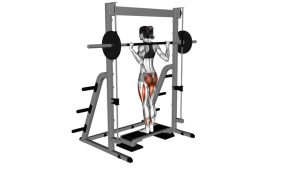
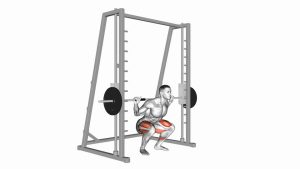
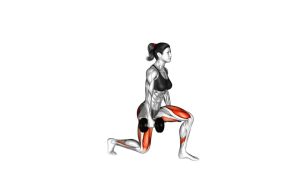
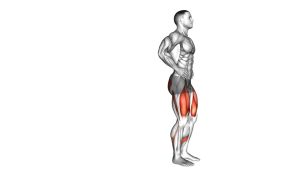
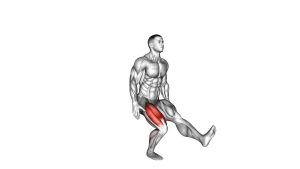
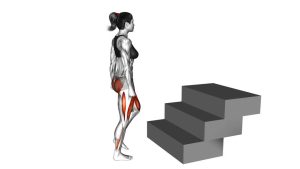
Smith Machine Split Squat: Form, Muscles, Sets, Tips & FAQ
Learn the Smith Machine Split Squat for stronger quads, glutes, and single-leg control. Includes setup, form steps, sets, mistakes, FAQs, and equipment.
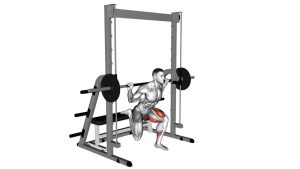
Smith Machine Split Squat
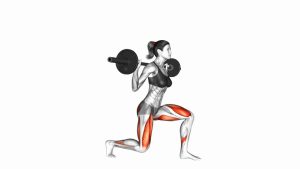
This movement is best performed with a stable split stance, a controlled lowering phase, and steady pressure through the front foot. The front leg does most of the work while the rear leg helps with balance. A shorter stance usually feels more quad-dominant, while a slightly longer stance can increase glute involvement.
Quick Overview
| Body Part | Legs |
|---|---|
| Primary Muscle | Quadriceps |
| Secondary Muscle | Glutes, hamstrings, calves, adductors, core stabilizers |
| Equipment | Smith machine |
| Difficulty | Beginner to intermediate |
Sets & Reps (By Goal)
- Strength: 3–5 sets × 5–8 reps per leg with heavier loading and full control.
- Muscle growth: 3–4 sets × 8–12 reps per leg with a slow descent and strong drive up.
- Endurance / conditioning: 2–4 sets × 12–20 reps per leg with light-to-moderate weight.
- Beginner technique: 2–3 sets × 8–10 reps per leg using only the bar or a light load.
Progression rule: Add reps first, then increase weight gradually. Do not increase load if your front knee collapses inward, your heel lifts, or your torso shifts out of position.
Setup / Starting Position
- Set the bar height: Position the Smith machine bar around upper-chest height so you can unrack it safely.
- Place the bar correctly: Rest the bar across your upper traps, not directly on your neck.
- Step into a split stance: Place one foot forward and the other foot behind you with the rear heel lifted.
- Find your stance length: Use a moderate stance for a balanced quad-and-glute focus. Lengthen the stance slightly if you want more glute emphasis.
- Brace your core: Keep your ribs down, chest controlled, and spine neutral before you start the rep.
- Set your front foot: Keep the whole foot planted, especially the heel and big toe.
Execution (Step-by-Step)
- Unrack the bar: Rotate the bar out of the hooks and settle into your split stance.
- Lower vertically: Bend both knees and descend straight down while keeping the front foot planted.
- Track the front knee: Allow the front knee to travel naturally over the toes without collapsing inward.
- Control the bottom: Lower until the rear knee is close to the floor and the front thigh is near parallel, if mobility allows.
- Drive through the front leg: Push through the front foot to return to the top position.
- Finish tall: Extend the front knee and hip without locking aggressively or leaning backward.
- Repeat all reps: Complete the set on one side, then switch legs and match the same reps on the other side.
Pro Tips & Common Mistakes
- Keep the front heel down: Lifting the heel can reduce stability and increase knee stress.
- Do not bounce at the bottom: Lightly approach the floor with the rear knee, then drive up under control.
- Avoid knee collapse: Keep the front knee tracking in line with the toes.
- Control your stance: Too short may crowd the knee; too long may limit depth and reduce control.
- Use the rear leg lightly: The back leg should support balance, not dominate the lift.
- Keep your torso consistent: A small forward lean is acceptable, but avoid rounding or shifting side to side.
- Start lighter than expected: Unilateral exercises create high demand on one leg, even with moderate loads.
FAQ
What muscles does the Smith Machine Split Squat work?
It primarily works the quadriceps. The glutes, hamstrings, calves, adductors, and core also assist with hip extension, balance, and lower-body stability.
Is the Smith Machine Split Squat good for beginners?
Yes. The Smith machine provides a fixed bar path, which makes the exercise easier to control than a free-weight split squat. Beginners should start light and focus on balance, depth, and knee tracking.
Is this exercise more for quads or glutes?
It can train both, but the version shown with a moderate stance and controlled knee travel is usually more quad-dominant. A longer stance and slightly more hip hinge can increase glute involvement.
Should my knee go past my toes?
Some forward knee travel is normal and often necessary for a strong split squat. The key is to keep the heel planted, control the descent, and keep the knee aligned with the toes.
How deep should I go?
Lower until the rear knee is close to the floor and the front leg reaches a strong, controlled range. Stop before pain, heel lift, hip twisting, or loss of balance.
Can I use this instead of barbell lunges?
Yes. It is a strong alternative if you want more stability and less balance demand. It is especially useful for controlled leg training, muscle growth, and progressive overload.
Recommended Equipment
- Smith Machine — essential for performing the fixed-path split squat variation safely and consistently
- Barbell Squat Pad — adds comfort when the bar rests across the upper traps
- Weightlifting Shoes — improve foot stability and help maintain a strong planted position
- Knee Sleeves — provide warmth and light support during lower-body training
- Exercise Mat — useful as a soft depth marker if you want the rear knee to approach the floor gently
Tip: Equipment should improve comfort and consistency, not hide poor form. Prioritize stable foot placement, smooth reps, and controlled depth before adding heavier weight.