Smith Machine Front Squat Clean Grip: Form, Sets, Tips & FAQ
Learn the Smith Machine Front Squat Clean Grip for quad strength, upright squat form, core control, setup, reps, mistakes, FAQs, and equipment.
Smith Machine Front Squat (Clean Grip)
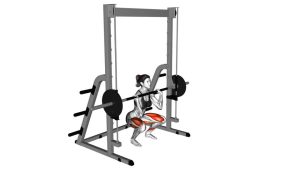
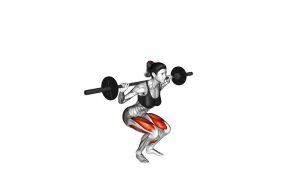
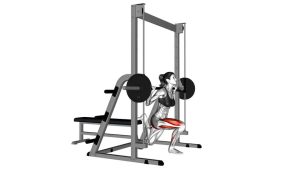
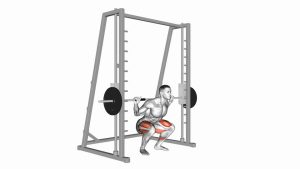
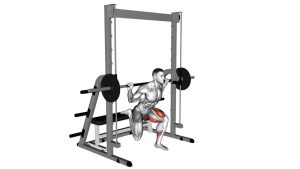
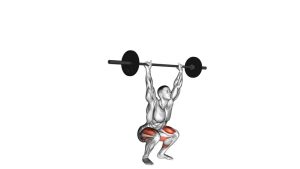
This exercise is useful for building quad strength, improving front-squat mechanics, and developing better squat posture. Because the Smith machine guides the bar vertically, the lifter can focus on depth, knee tracking, torso angle, and leg drive. The clean grip adds a front-rack challenge, so the wrists, shoulders, upper back, and core must stay organized throughout the movement.
Quick Overview
| Body Part | Quads |
|---|---|
| Primary Muscle | Quadriceps |
| Secondary Muscle | Glutes, adductors, core, upper back, front deltoids, calves |
| Equipment | Smith machine |
| Difficulty | Intermediate |
Sets & Reps (By Goal)
- Strength: 4–5 sets × 3–6 reps with 2–3 minutes rest
- Muscle growth: 3–4 sets × 8–12 reps with 60–90 seconds rest
- Technique practice: 2–4 sets × 6–8 controlled reps with light-to-moderate load
- Quad-focused volume: 3–5 sets × 10–15 reps with smooth tempo and full control
Progression rule: Add weight only when every rep keeps the elbows high, torso upright, knees tracking cleanly, and heels planted. Good front-squat mechanics matter more than chasing heavy load.
Setup / Starting Position
- Set the Smith bar height: Position the bar around upper-chest height so you can unrack it without standing on your toes.
- Step under the bar: Place the bar across the front shoulders, close to the base of the neck, not on the hands.
- Use a clean grip: Place the fingers under the bar with the elbows pointing forward and slightly upward.
- Brace the torso: Keep the ribs stacked, core tight, chest tall, and upper back active.
- Set the feet: Place the feet about shoulder-width apart, slightly forward if needed, with toes turned out naturally.
- Unrack carefully: Stand tall, rotate the bar out of the hooks, and stabilize before starting the first rep.
The bar should feel supported by the front shoulders. Your hands guide the bar position, but they should not carry the full weight.
Execution (Step-by-Step)
- Brace before descending: Take a breath, tighten the core, lift the elbows, and keep the chest tall.
- Start the squat: Bend the knees and hips together while allowing the knees to travel forward naturally.
- Descend with control: Lower until your thighs reach parallel or slightly below, depending on mobility and comfort.
- Keep the rack strong: Maintain high elbows so the torso does not fold forward.
- Drive upward: Push through the mid-foot and heel while extending the knees and hips together.
- Finish tall: Return to a strong standing position without leaning back or overextending the lower back.
- Reset each rep: Re-brace, check foot pressure, and repeat with the same controlled path.
Pro Tips & Common Mistakes
- Keep the elbows high: Dropping the elbows usually causes the chest to fall and the bar to roll forward.
- Do not turn it into a back squat: Avoid pushing the hips too far back. This variation should stay more upright and quad-focused.
- Control the bottom: Do not bounce aggressively. Pause or lightly control the reversal if your position breaks down.
- Use full-foot pressure: Keep pressure through the heel, mid-foot, and big toe base for better stability.
- Do not overload the wrists: The shoulders support the bar. The fingers help keep the rack position.
- Avoid knee collapse: Keep the knees tracking in the same direction as the toes.
- Match stance to mobility: A slightly wider stance or mild toe-out can help maintain depth without rounding.
- Control the Smith path: Do not slam into the rails or hooks. Move smoothly through the guided line.
FAQ
Is the Smith Machine Front Squat good for building quads?
Yes. The front-loaded position and upright torso make this exercise highly effective for targeting the quadriceps. The guided Smith path can also help lifters focus on knee bend, depth, and controlled leg drive.
Where should the bar sit during a clean-grip Smith front squat?
The bar should rest across the front deltoids and upper shoulder area. The hands and fingers help guide the bar, but the shoulders should carry most of the load.
Do I need wrist mobility for the clean grip?
Yes, some wrist, shoulder, and lat mobility helps. If the clean grip feels uncomfortable, reduce the load, warm up the wrists, or use a modified grip until your front-rack position improves.
Should my feet be forward on the Smith machine?
A slightly forward foot position is common because the Smith bar path is fixed. The goal is to keep the torso upright, heels planted, knees tracking well, and balance stable throughout the rep.
Is this easier than a barbell front squat?
It can feel easier to balance because the Smith machine controls the bar path. However, the clean grip, front rack, quad demand, and depth still make it a challenging lower-body exercise.
Who should be careful with this exercise?
Lifters with wrist pain, shoulder limitations, knee pain, hip restrictions, or back issues should use caution. Start light, use a pain-free range of motion, and avoid forcing depth or rack position.
Recommended Equipment
- Weightlifting Shoes — helps improve squat depth, heel stability, and upright torso positioning
- Weightlifting Belt — supports stronger bracing during heavier squat sets
- Knee Sleeves — provides warmth and light support around the knees during leg training
- Wrist Wraps — useful if the clean grip challenges wrist comfort or front-rack stability
- Barbell Pad — optional comfort tool for beginners, though proper front-rack positioning is still preferred
Tip: Equipment can improve comfort and stability, but it should not replace good technique. Keep the bar controlled, the rack position strong, and the squat pattern consistent.