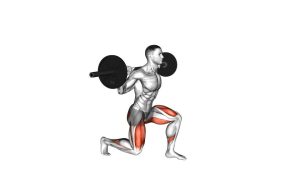
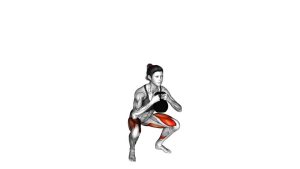
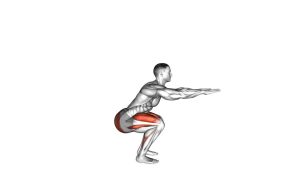
Bodyweight Wall Squat: Safe Form, Benefits, Sets, Tips & FAQ
Learn the Bodyweight Wall Squat for quad strength, knee control, posture support, safe form, sets, reps, common mistakes, FAQs, and equipment.
Bodyweight Wall Squat
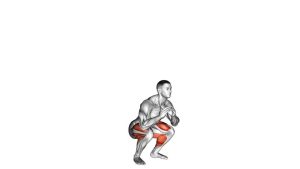
This exercise is useful for beginners, home workouts, warm-ups, and controlled leg-strength practice. Because the wall supports the torso, the movement places more focus on the knees and quadriceps than a free-standing squat. It can also be used as a stepping stone before progressing to regular bodyweight squats, goblet squats, or loaded squat variations.
Quick Overview
| Body Part | Legs |
|---|---|
| Primary Muscle | Quadriceps |
| Secondary Muscle | Glutes, calves, hamstrings, core stabilizers |
| Equipment | Bodyweight and a wall |
| Difficulty | Beginner |
Sets & Reps (By Goal)
- Beginner form practice: 2–3 sets × 8–12 reps with slow control
- Quad endurance: 3–4 sets × 12–20 reps with a smooth tempo
- Strength control: 3–5 sets × 6–10 reps with a 2–3 second lowering phase
- Wall-sit progression: 2–4 sets × 20–45 second holds near the bottom position
- Warm-up use: 1–2 sets × 10–15 easy reps before leg training
Progression rule: First increase control, depth, or hold time. After your reps feel smooth and stable, progress to regular bodyweight squats, goblet squats, or wall-squat holds.
Setup / Starting Position
- Stand against a wall: Place your upper back, mid-back, and hips lightly against the wall.
- Step your feet forward: Position the feet about 1–2 foot-lengths away from the wall so you can squat without your heels lifting.
- Set your stance: Use a shoulder-width stance with toes pointing slightly outward or straight ahead based on comfort.
- Brace lightly: Keep the ribs stacked, core gently engaged, and shoulders relaxed.
- Look forward: Keep the head neutral and avoid pushing the chin forward.
Tip: The farther your feet are from the wall, the more the exercise feels like a controlled wall sit. The closer your feet are, the more ankle and knee mobility you need.
Execution (Step-by-Step)
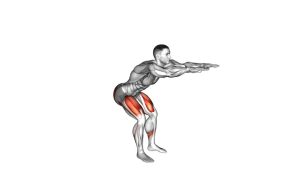
- Start tall: Keep your back lightly touching the wall and your feet planted firmly on the floor.
- Begin the descent: Bend the knees and slide your body down the wall under control.
- Track the knees: Let the knees move in the same direction as the toes. Avoid letting them collapse inward.
- Lower to a comfortable depth: Stop around a quarter squat, half squat, or near parallel depending on your strength and joint comfort.
- Pause briefly: Hold the bottom position for 1–2 seconds while keeping tension in the legs.
- Drive through the feet: Push through the heels and midfoot to slide back up the wall.
- Finish tall: Return to the starting position without aggressively locking the knees.
Pro Tips & Common Mistakes
- Keep the movement smooth: Do not drop quickly into the bottom position.
- Do not let the knees cave inward: Keep the knees tracking over the middle toes.
- Keep the heels grounded: If the heels lift, step the feet slightly farther forward.
- Do not relax into the wall: The wall supports posture, but your legs should still control the movement.
- Avoid excessive depth too soon: Stop at the deepest pain-free position you can control.
- Use slow tempo for better results: Lower for 2–3 seconds, pause briefly, then rise with control.
- Keep the torso upright: Avoid arching the lower back or letting the hips slide unevenly.
- Breathe naturally: Inhale before lowering and exhale as you stand back up.
FAQ
What muscles does the Bodyweight Wall Squat work?
The Bodyweight Wall Squat primarily works the quadriceps. It also involves the glutes, calves, hamstrings, and core stabilizers to help control posture and leg alignment.
Is the wall squat good for beginners?
Yes. The wall gives extra support, making it easier to learn squat mechanics without worrying as much about balance. It is a useful beginner exercise for building confidence, leg endurance, and knee-control awareness.
How deep should I go during a wall squat?
Lower only as far as you can control without pain. Many beginners should start with a shallow or half-squat range. As strength improves, you can work toward a deeper position where the thighs approach parallel to the floor.
Is a wall squat the same as a wall sit?
They are related but not exactly the same. A wall squat usually moves up and down for reps. A wall sit holds the lower position isometrically for time.
Why do my knees hurt during wall squats?
Knee discomfort may happen if your feet are too close to the wall, your knees collapse inward, you go too deep too soon, or you rush the movement. Step the feet slightly farther forward, reduce depth, and use a slower tempo.
Can I use this exercise for leg endurance?
Yes. Higher-rep wall squats or wall-sit holds can build local muscular endurance in the quadriceps. Keep the movement controlled and avoid turning the exercise into a painful grind.
Recommended Equipment (Optional)
- Exercise Mat — useful for comfort during warm-ups, mobility work, and floor-based leg training
- Resistance Bands Set — helpful for glute activation, squat warm-ups, and knee-tracking practice
- Mini Loop Resistance Bands — useful for teaching the knees to stay aligned during squat variations
- Adjustable Dumbbell — a simple progression tool once bodyweight wall squats become easy
- Knee Sleeves — optional support and warmth for lower-body training sessions
Tip: Equipment is optional. Master the basic wall squat first, then add tools only when your form, depth, and knee tracking stay consistent.