Smith Machine Lateral Step-Up: Form, Muscles, Sets & Tips
Learn the Smith Machine Lateral Step-Up for stronger quads, glutes, and single-leg control. Includes setup, reps, mistakes, FAQs, and gear.
Smith Machine Lateral Step-Up
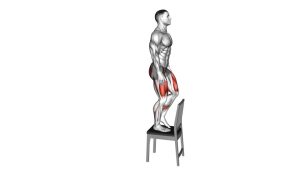
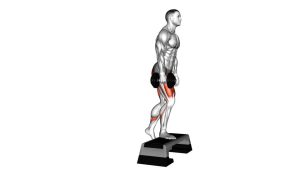
This exercise is especially useful when you want to build unilateral leg strength with more support than a free-weight step-up. Because the bar path is fixed, the movement allows you to concentrate on pressing through the elevated foot, controlling the descent, and keeping the torso stable. The goal is not to jump off the lower leg. Instead, the working leg should do most of the lifting while the lower foot provides only light balance assistance.
Quick Overview
| Body Part | Legs |
|---|---|
| Primary Muscle | Quadriceps, especially the working-leg thigh during the upward drive |
| Secondary Muscle | Gluteus maximus, gluteus medius, hamstrings, adductors, calves, and core stabilizers |
| Equipment | Smith machine, flat bench or step-up platform, optional weight plates |
| Difficulty | Beginner to Intermediate |
Sets & Reps (By Goal)
- Muscle growth: 3–4 sets × 8–12 reps per leg with controlled tempo.
- Leg strength: 4–5 sets × 5–8 reps per leg using a challenging but stable load.
- Balance and control: 2–3 sets × 10–15 reps per leg using light weight.
- Warm-up activation: 1–2 sets × 8–10 reps per leg with bodyweight or very light load.
Progression rule: Increase control first, then reps, then load. If the bottom leg starts pushing hard, reduce the weight or lower the bench height.
Setup / Starting Position
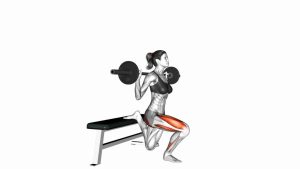
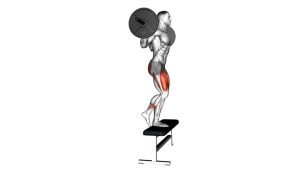
- Set the bench: Place a strong flat bench or step platform beside the Smith machine bar path.
- Position the bar: Set the bar across your upper traps, similar to a back squat position.
- Place the working foot: Put one foot sideways on the bench with the whole foot supported.
- Set the lower foot: Keep the opposite foot on the floor beside the bench for balance.
- Brace the torso: Keep your ribs down, chest tall, shoulders tight, and core engaged.
- Align the knee: The working knee should track in the same direction as the toes.
Choose a bench height that allows the working leg to bend without your pelvis twisting or your knee collapsing inward.
Execution (Step-by-Step)
- Brace before moving: Grip the bar, tighten your core, and keep your eyes forward.
- Load the elevated leg: Shift most of your weight into the foot on the bench.
- Drive upward: Push through the heel and midfoot of the elevated leg to raise your body.
- Extend with control: Straighten the working knee and hip without locking aggressively.
- Keep the torso steady: Avoid leaning, twisting, or letting the hips drift away from the bench.
- Lower slowly: Bend the working knee and return the lower foot toward the floor under control.
- Maintain tension: Touch the floor lightly with the lower foot, then begin the next rep.
Pro Tips & Common Mistakes
- Press through the full foot: Keep the heel, midfoot, and forefoot connected to the bench.
- Control the lowering phase: Do not drop quickly into the bottom position.
- Avoid pushing off the floor leg: The lower leg should assist balance, not dominate the rep.
- Keep the knee aligned: Do not let the working knee cave inward during the drive.
- Use a stable bench: A moving or soft platform can reduce safety and control.
- Stay tall: Keep the torso upright to emphasize the quads and maintain a clean Smith machine path.
- Start light: The fixed bar path can feel stable, but the lateral setup still requires control.
FAQ
What muscles does the Smith Machine Lateral Step-Up work?
It mainly works the quadriceps of the elevated leg. The glutes, hamstrings, adductors, calves, and core also help stabilize the body and complete the upward drive.
Is the Smith Machine Lateral Step-Up good for glutes?
Yes, it can train the glutes, especially when you use a controlled range of motion and push through the heel and midfoot. A slightly higher bench and stronger hip drive may increase glute involvement.
Should I use a high or low bench?
Beginners should start with a moderate bench height. A bench that is too high can cause hip shifting, knee collapse, or excessive help from the lower leg.
Why do I feel my bottom leg working too much?
This usually means you are pushing off the floor instead of driving through the elevated leg. Use less weight, slow the tempo, and focus on pressing through the top foot.
Is this better than a regular step-up?
It is not automatically better, but it is more guided. The Smith machine gives extra stability, which can help you focus on leg tension and controlled reps.
Recommended Equipment
- Smith Machine — the main machine used to guide the bar path during the lateral step-up.
- Adjustable Weight Bench — provides a stable platform for step-up variations.
- Weightlifting Shoes — helps create a stable foot position during loaded lower-body training.
- Barbell Squat Pad — optional padding for comfort when the Smith bar rests on the upper traps.
- Resistance Bands — useful for glute activation drills before step-up training.
Tip: Equipment should support better form, not compensate for poor control. Start with a stable bench, light load, and smooth reps before adding more resistance.