Stability Ball Single-Leg Squat: Form, Benefits, Sets, Tips & FAQ
Learn the Stability Ball Single-Leg Squat for stronger quads, glutes, balance, and knee control. Includes setup, steps, sets, tips, FAQs, and gear.
Stability Ball Single-Leg Squat
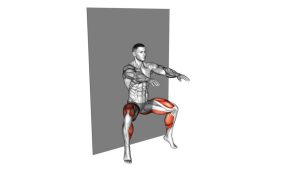
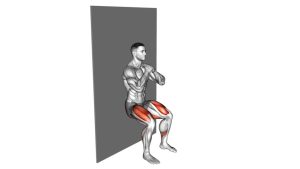
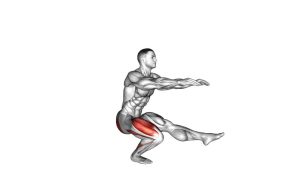
This exercise is useful when you want to build single-leg strength without jumping directly into a free-standing pistol squat. The wall and ball provide support, but the working leg still has to control balance, depth, knee tracking, and upward drive. Keep the motion smooth, controlled, and aligned from hip to knee to foot.
Quick Overview
| Body Part | Legs |
|---|---|
| Primary Muscle | Quadriceps |
| Secondary Muscle | Glutes, hamstrings, calves, hip stabilizers, core |
| Equipment | Stability ball and wall |
| Difficulty | Intermediate |
Sets & Reps (By Goal)
- Strength control: 3–4 sets × 6–10 reps per leg, using a slow descent.
- Balance and coordination: 2–3 sets × 8–12 reps per leg with a steady tempo.
- Muscle endurance: 2–4 sets × 12–15 reps per leg with controlled, smooth reps.
- Warm-up activation: 1–2 sets × 6–8 reps per leg before squats, lunges, or leg training.
Progression rule: First improve balance and depth. Then add reps, slower tempo, pauses, or light external load.
Setup / Starting Position
- Place the ball: Position a stability ball between your lower-to-mid back and a solid wall.
- Set your working foot: Step one foot slightly forward so your heel stays grounded during the squat.
- Lift the opposite leg: Raise the non-working leg slightly in front of you for counterbalance.
- Stack your posture: Keep your chest tall, ribs controlled, and eyes forward.
- Brace lightly: Engage your core and keep your shoulders relaxed against the ball.
Tip: Start with a shallow range of motion until you can keep your knee tracking in line with your toes.
Execution (Step-by-Step)
- Begin tall: Stand on one leg with the ball lightly supporting your back against the wall.
- Lower slowly: Bend the working knee and hip while the ball rolls down the wall.
- Control knee tracking: Keep the knee pointing in the same direction as your toes.
- Hold your balance: Keep the lifted leg off the floor and avoid shifting side to side.
- Reach your depth: Stop when you can no longer maintain clean alignment or heel contact.
- Drive upward: Press through the heel and midfoot of the working leg to return to standing.
- Reset at the top: Stand tall, regain balance, and repeat before switching sides.
Pro Tips & Common Mistakes
- Keep the heel down: If your heel lifts, reduce depth or adjust foot position.
- Avoid knee collapse: Do not let the knee cave inward during the descent or ascent.
- Use the ball as a guide: The ball should roll smoothly, not carry your full body weight.
- Control the descent: Dropping too fast reduces muscle tension and increases balance risk.
- Stay tall: Avoid rounding your back or folding forward excessively.
- Train both sides evenly: Start with your weaker leg and match reps on the stronger side.
FAQ
What muscles does the Stability Ball Single-Leg Squat work?
It mainly works the quadriceps. It also trains the glutes, hamstrings, calves, hip stabilizers, and core because your body must balance on one leg.
Is this exercise good for beginners?
It can be used by strong beginners, but it is usually better for intermediate trainees. Beginners should first master regular stability ball wall squats and bodyweight split squats before progressing to the single-leg version.
How deep should I squat?
Squat only as deep as you can while keeping the heel down, knee aligned, and torso controlled. A shallow, clean rep is better than a deep rep with knee collapse or balance loss.
Is this the same as a pistol squat?
No. It is a supported single-leg squat variation. It can help build strength and control for pistol squat progressions, but the wall and stability ball reduce the balance and mobility demands.
Why does my knee move inward during this exercise?
Knee collapse often happens when the glutes, hip stabilizers, or foot control are not strong enough for the current depth. Reduce the range, move slower, and focus on keeping the knee aligned with the toes.
Recommended Equipment
- Exercise Stability Ball — the main tool for wall-assisted single-leg squat support.
- Anti-Slip Exercise Mat — helps improve foot grip and floor safety during single-leg work.
- Resistance Bands for Legs — useful for glute activation and knee-tracking drills.
- Adjustable Dumbbells — optional progression once bodyweight reps are stable and controlled.
- Balance Pad — advanced tool for ankle stability and balance progression.
Tip: Master the bodyweight version first. Add equipment only when your reps stay controlled, balanced, and pain-free.