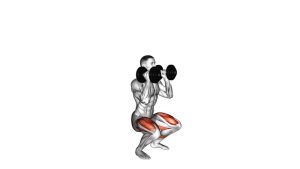
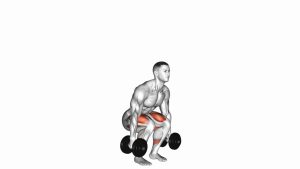
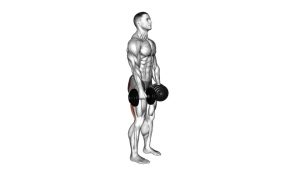
Front-Foot Elevated Dumbbell Goblet Split Squat: Form, Sets, Tips & FAQ
Learn the Front-Foot Elevated Dumbbell Goblet Split Squat to build quads, glutes, balance, and leg strength with safe form and smart progression.
Front-Foot Elevated Dumbbell Goblet Split Squat
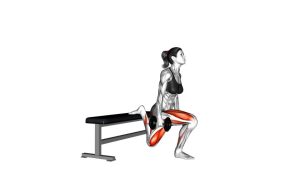
This exercise is excellent for building leg strength with controlled depth. The front-foot elevation helps the working leg move through a longer range, which can increase quad tension and glute stretch compared with a standard split squat. The dumbbell goblet hold also encourages a tall torso and strong core position.
Quick Overview
| Body Part | Legs |
|---|---|
| Primary Muscle | Quadriceps |
| Secondary Muscle | Glutes, hamstrings, adductors, calves, core stabilizers |
| Equipment | Dumbbell and low step, weight plate, or sturdy platform |
| Difficulty | Intermediate |
Sets & Reps (By Goal)
- Muscle growth: 3–4 sets × 8–12 reps per leg with controlled depth.
- Strength: 4–5 sets × 5–8 reps per leg using a heavier dumbbell and strict balance.
- Leg endurance: 2–3 sets × 12–18 reps per leg with moderate load.
- Technique practice: 2–3 sets × 6–10 reps per leg using light weight and slow tempo.
Progression rule: First improve depth, balance, and control. Then increase dumbbell weight gradually when every rep stays smooth.
Setup / Starting Position
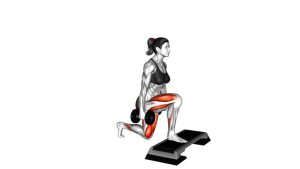
- Place a low step, weight plate, or sturdy platform on the floor.
- Put your front foot fully on the platform with the heel planted and toes pointing forward or slightly outward.
- Step the rear foot back into a split stance with the rear heel naturally lifted.
- Hold one dumbbell vertically against your chest in a goblet position.
- Brace your core, keep your chest tall, and center most of your weight over the front leg.
Start with a small elevation. A very high platform can make balance harder and may reduce control.
Execution (Step-by-Step)
- Brace first: Tighten your core and keep the dumbbell close to your chest.
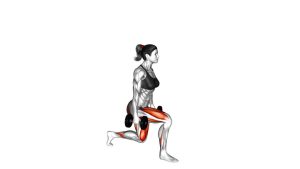
- Lower under control: Bend the front knee and hip as the rear knee moves down toward the floor.
- Keep alignment: Let the front knee travel forward naturally while tracking in line with the toes.
- Reach depth safely: Lower until you feel strong tension in the front quad and glute without losing balance.
- Drive up: Push through the front mid-foot and heel to return to the starting position.
- Repeat cleanly: Maintain the same stance, depth, and tempo for every rep before switching legs.
Pro Tips & Common Mistakes
- Keep the dumbbell close: Holding it too far from the chest can pull your torso forward.
- Control the bottom: Do not bounce. Pause briefly if you want more strength and stability.
- Use the right step height: A small elevation is enough to increase range of motion.
- Track the knee properly: The front knee should follow the direction of the toes.
- Avoid pushing from the back leg: The rear foot is mainly for balance.
- Do not rush reps: A slower eccentric phase increases control and muscle tension.
- Keep the heel down: If your front heel lifts, shorten the stance or reduce the load.
FAQ
What muscles does the Front-Foot Elevated Dumbbell Goblet Split Squat work?
It primarily works the quadriceps. It also trains the glutes, hamstrings, adductors, calves, and core stabilizers.
Is this exercise better for quads or glutes?
It can train both, but the front-foot elevation and forward knee travel often make it very effective for the quads. A deeper range also gives the glutes a strong stretch.
How high should the front foot be elevated?
Use a low step or plate, usually a few inches high. The platform should increase range of motion without making balance unstable.
Should my knee go past my toes?
Yes, the front knee can travel forward as long as the heel stays down, the knee tracks with the toes, and the movement feels controlled.
Can beginners do this exercise?
Beginners can perform it with bodyweight first. Add the dumbbell only after balance, depth, and knee control are consistent.
Recommended Equipment
- Adjustable Dumbbell — allows easy load progression for goblet split squats.
- Aerobic Step Platform — provides a stable front-foot elevation for deeper split squat range.
- Rubber-Coated Weight Plate — useful as a low front-foot platform when a step is not available.
- Non-Slip Exercise Mat — improves traction and comfort during lower-body training.
- Weightlifting Shoes — can improve stability and help maintain a solid foot position.
Choose equipment that feels stable before adding heavy load. For this exercise, control and balance matter more than maximum weight.