Cable Front Squat: Proper Form, Muscles Worked, Sets, Tips & FAQ
Learn the Cable Front Squat for stronger quads, glutes, core stability, and better squat posture with step-by-step form tips and common mistakes.
Cable Front Squat
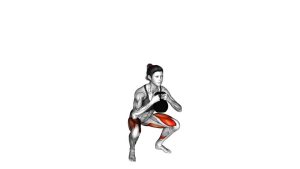
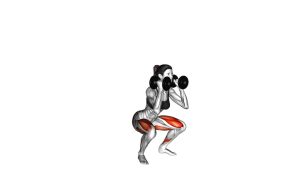
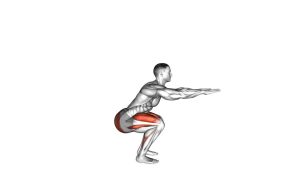
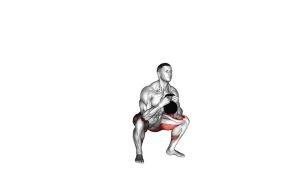
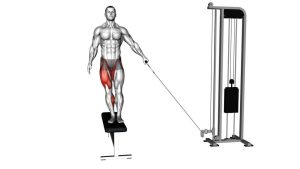
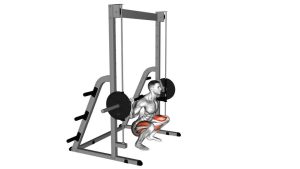
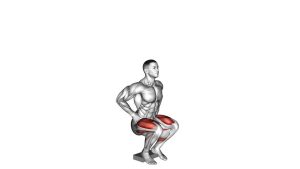
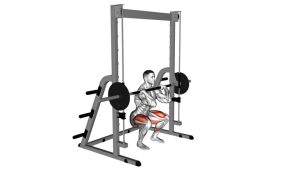
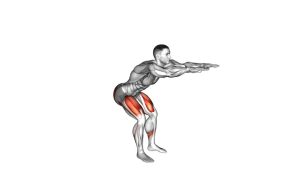
This exercise works best when the cable handle stays close to the chest and the body moves through a smooth, controlled squat pattern. Because the resistance is placed in front of the body, the core must work hard to resist the forward pull while the legs drive the movement. Keep your feet planted, chest tall, knees tracking over the toes, and avoid letting the cable pull your shoulders or spine out of position.
Quick Overview
| Body Part | Legs |
|---|---|
| Primary Muscle | Quadriceps |
| Secondary Muscle | Glutes, hamstrings, adductors, calves, core, upper back |
| Equipment | Cable machine with low pulley and handle attachment |
| Difficulty | Beginner to Intermediate |
Sets & Reps (By Goal)
- Strength: 4–5 sets × 5–8 reps with controlled rest and heavier cable tension.
- Muscle growth: 3–4 sets × 8–12 reps with a slow lowering phase and full control.
- Beginner technique: 2–3 sets × 10–15 reps using light-to-moderate resistance.
- Conditioning: 2–4 sets × 12–20 reps with smooth tempo and short rest periods.
Progression rule: Increase reps first, then increase cable weight only when you can keep the torso upright, heels grounded, and knees tracking cleanly through every rep.
Setup / Starting Position
- Set the pulley low: Attach a straight bar, rope, V-handle, or close-grip handle to the lowest cable setting.
- Face the machine: Step back until the cable has tension while the handle is held in front of your chest.
- Set your stance: Place your feet around shoulder-width apart with toes slightly turned out.
- Brace your core: Keep the ribs stacked, chest tall, shoulders relaxed, and spine neutral.
- Hold the load close: Keep the attachment close to the upper chest so the cable does not pull your arms forward.
Tip: Stand far enough from the cable stack to maintain constant tension, but not so far that you feel pulled off balance.
Execution (Step-by-Step)
- Start tall: Stand upright with your feet planted and the handle held close to your chest.
- Begin the squat: Bend your knees and hips together while lowering your body under control.
- Keep the chest lifted: Resist the cable’s forward pull and maintain a neutral spine.
- Track the knees: Let the knees move in line with the toes without collapsing inward.
- Reach depth: Lower until your thighs are around parallel or as deep as you can control safely.
- Drive upward: Push through the mid-foot and heel while extending the knees and hips together.
- Finish strong: Return to standing without leaning back, shrugging, or letting the cable go slack.
Pro Tips & Common Mistakes
- Keep the handle close: Holding the cable too far away increases arm fatigue and pulls the torso forward.
- Do not turn it into a row: The arms should stabilize the handle, not actively pull during the squat.
- Control the descent: Avoid dropping quickly into the bottom position or bouncing out of the squat.
- Keep the heels grounded: If your heels rise, adjust your stance or reduce squat depth.
- Brace before each rep: A strong core keeps the spine stable against the forward cable pull.
- Use a natural knee path: Let the knees travel forward while staying aligned with the toes.
- Avoid leaning backward: Stand tall at the top without overextending the lower back.
FAQ
What muscles does the Cable Front Squat work?
The Cable Front Squat primarily works the quadriceps. It also trains the glutes, hamstrings, adductors, calves, core, and upper back as stabilizers.
Is the Cable Front Squat good for beginners?
Yes. It can be beginner-friendly because the cable provides a front-loaded counterbalance that helps many lifters stay more upright. Beginners should start light and focus on clean squat depth, posture, and knee alignment.
Is the Cable Front Squat better than a barbell squat?
It is not necessarily better, but it is different. The Cable Front Squat is easier to control, usually places less direct load on the spine, and is useful for learning squat mechanics. Barbell squats are better for maximal strength loading.
Why do I feel my arms working during this exercise?
Your arms may work if the handle is held too far from your body or the weight is too heavy. Keep the attachment close to your chest and let your legs perform the squat.
How deep should I squat?
Squat as deep as you can while keeping your heels down, knees aligned, torso controlled, and spine neutral. For many lifters, parallel or slightly below parallel is a good target.
Recommended Equipment
- Cable Machine Handle Attachment — useful for keeping a secure front-loaded grip during cable squats
- Tricep Rope Cable Attachment — allows a comfortable close grip for cable squat variations
- Weightlifting Shoes — help improve squat stability, heel support, and upright posture
- Resistance Bands for Legs — useful for warm-ups, glute activation, and knee-tracking drills
- Foam Roller for Legs — helpful for lower-body warm-up and recovery around squat sessions
Tip: Choose equipment that improves control and comfort. The Cable Front Squat should feel stable, balanced, and leg-driven.