Lever Leg Extension Inward Toes: Form, Muscles & Tips
Learn the Lever Leg Extension (Inward Toes) for controlled quad training. Explore correct machine setup, step-by-step form, sets, common mistakes, and FAQs.
Lever Leg Extension (Inward Toes)
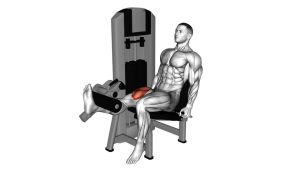
The Lever Leg Extension with Inward Toes is useful for developing quadriceps strength, muscular endurance, and controlled knee-extension mechanics. Because the machine supports the torso and thighs, the quadriceps can perform most of the dynamic work. Additionally, the fixed movement path allows consistent repetitions without demanding the balance required by standing leg exercises.
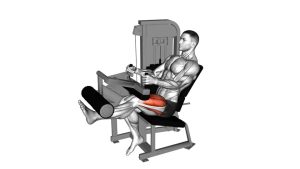
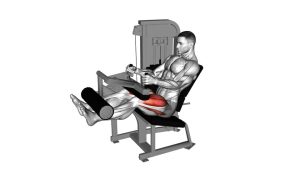
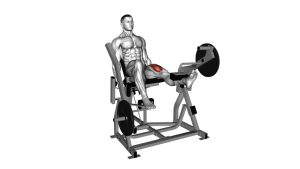
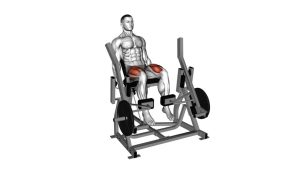
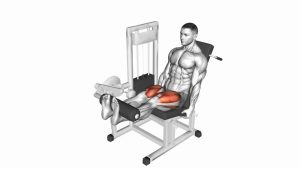
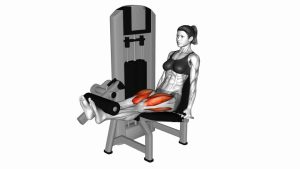
During the exercise, both knees begin bent while the padded lever rests against the lower shins. Next, the quadriceps contract to straighten the legs and lift the resistance. After a brief controlled contraction, the knees bend again as the lever returns toward its starting position. Throughout the movement, the back stays supported, the hips remain seated, and the toes maintain a comfortable slight inward angle.
Quick Overview
| Body Part | Legs |
|---|---|
| Primary Muscle | Quadriceps femoris: rectus femoris, vastus lateralis, vastus medialis, and vastus intermedius |
| Secondary Muscle | Hip and trunk stabilizers support the seated position; there is no major secondary dynamic muscle group |
| Equipment | Seated lever leg extension machine with an adjustable seat, shin roller, and resistance system |
| Difficulty | Beginner to Intermediate, depending on resistance, knee comfort, and movement control |
Sets & Reps (By Goal)
- Strength: Perform 3–5 sets × 5–8 controlled repetitions, resting approximately 90–150 seconds between sets. Choose challenging but manageable resistance. However, avoid sacrificing knee comfort or smooth movement to lift heavier weights.
- Hypertrophy (Muscle Growth): Complete 3–4 sets × 8–15 repetitions, resting 60–90 seconds. Focus on consistent quadriceps tension and controlled lowering. Additionally, select a resistance that makes the final repetitions challenging without requiring momentum.
- Muscular Endurance: Use 2–3 sets × 15–25 repetitions with lighter resistance and 30–60 seconds of rest. Maintain a smooth rhythm throughout each set. As fatigue develops, reduce the load if the movement becomes rushed.
- Mobility and Movement Control: Perform 2–3 sets × 10–15 slow repetitions with very light resistance. Work through a comfortable knee range rather than forcing maximum extension. Meanwhile, prioritize consistent alignment and relaxed breathing.
- Rehab-Style Strengthening: Use 1–3 sets × 8–12 gentle repetitions when appropriate for your individual rehabilitation plan. Keep resistance and range of motion within prescribed limits. If recovering from knee surgery or an injury, follow your clinician’s specific guidance.
Progression and Resistance Selection
Progression rule: Begin with a weight that allows consistent knee control and comfortable inward toe positioning. First, improve repetition quality and gradually increase your repetitions. Then, raise resistance in small increments when every repetition remains controlled. Importantly, the inward toe angle should never become more extreme simply to increase exercise difficulty.
Setup / Starting Position
- Adjust the machine seat: Sit on the leg extension machine with your back comfortably supported. Move the backrest until your knees align with the machine’s rotational pivot. Consequently, the lever can follow your knee movement without unnecessary shifting.
- Position the lower-leg pad: Adjust the padded roller so it rests against the front of both lower shins, just above the ankles. Ensure the pad contacts both legs evenly. However, avoid placing it directly across the feet or knee joints.
- Establish a stable seated posture: Keep your hips against the seat and your thighs supported. Next, grip the machine’s handles beside your hips. This position helps limit unwanted torso movement as the resistance increases.
- Set your knee position: Begin with both knees comfortably bent, commonly around 90 degrees when the machine allows it. Adjust the starting range if needed. Additionally, maintain similar knee angles on both sides before lifting.
- Turn your toes slightly inward: Gently orient both toes toward the body’s midline without forcing rotation through the knees. Instead of twisting the feet against a fixed position, allow a small, comfortable adjustment of the lower-limb orientation.
- Select the resistance: Start with a light weight to test alignment and movement comfort. Breathe normally, relax your shoulders, and prepare to extend both knees simultaneously. Finally, confirm that the machine moves freely through your intended range.
Starting Position Checkpoint
Before beginning, verify that your hips remain seated, your back stays supported, and the padded roller rests evenly against both shins. Although the toes point slightly inward, neither knee should feel twisted or compressed. If you cannot establish this position comfortably, use neutral feet instead.
Execution (Step-by-Step)
- Stabilize your body: Sit upright with your back against the support and both hands gripping the handles. Keep the hips stationary and the shoulders relaxed. Meanwhile, maintain a comfortable inward toe angle without applying twisting force.
- Initiate knee extension: Contract the quadriceps to lift the padded lever forward and upward. Both lower legs should move simultaneously. As the knees begin straightening, keep your thighs supported against the seat.
- Lift through the middle range: Continue extending both knees at a steady pace, taking approximately 1–2 seconds for the lifting phase. Avoid jerking the weight upward. Instead, let the quadriceps control the resistance throughout the machine’s movement arc.
- Reach the extended position: Raise the lower legs until the knees approach a comfortably straight position. Avoid snapping into a forceful lockout. Additionally, maintain your seated posture rather than leaning backward to complete the repetition.
- Pause and control the contraction: Hold the extended position briefly for approximately one second if comfortable. Keep breathing naturally while maintaining quadriceps tension. However, do not squeeze harder by twisting the feet farther inward.
- Lower the resistance slowly: Bend both knees gradually as the padded lever moves downward. Take approximately 2–3 seconds for the return. Consequently, the quadriceps remain engaged while controlling the eccentric portion of the exercise.
- Return to the starting position: Continue lowering until both knees reach your chosen comfortable bend. Avoid allowing the weight stack to crash or the machine to pull your legs suddenly. Then, begin the next repetition with the same controlled technique.
Movement Control and Range Checkpoint
Pro Tips & Common Mistakes
- Keep inward rotation comfortable: A slight inward toe position defines this variation. However, excessive rotation can create unwanted stress or discomfort. Therefore, avoid forcing your toes toward each other to exaggerate the movement.
- Do not assume outer-quad isolation: Inward rotation may change quadriceps muscle activation during leg extensions. Nevertheless, the vastus lateralis, vastus medialis, rectus femoris, and vastus intermedius still contribute to knee extension. A toe angle does not guarantee selective muscle growth.
- Align the knees with the machine pivot: Incorrect seat adjustment may alter the way resistance is applied. Before lifting, check your knee position against the rotational axis. Then, confirm that the lower legs move comfortably.
- Avoid swinging the resistance: Using momentum reduces movement consistency and makes the exercise harder to control. Instead, lift gradually and lower the lever deliberately. This approach encourages more repeatable quadriceps training.
- Keep your hips on the seat: Lifting the pelvis or rocking backward can indicate excessive resistance. Additionally, it changes your body position during the repetition. Reduce the weight and maintain steady contact with the backrest.
- Control the extended position: Straighten the knees only as far as your comfortable range allows. Although some machines permit full extension, avoid snapping into a hard lockout. Use a controlled pause when appropriate.
- Do not rush the lowering phase: Dropping the weight removes controlled resistance from much of the return. Therefore, guide the lever downward over approximately 2–3 seconds instead of letting gravity dominate.
- Maintain equal effort between legs: Both knees should extend and bend together throughout each repetition. If one leg moves differently or becomes uncomfortable, stop and adjust. Meanwhile, reduce resistance until you can regain symmetrical control.
Training Tip for Better Quadriceps Development
For balanced leg development, combine controlled machine leg extensions with suitable compound exercises such as squats or leg presses. Additionally, vary training loads and repetitions according to your strength and hypertrophy goals. Most importantly, prioritize progressive overload and comfortable knee mechanics rather than relying on foot rotation alone.
FAQ
What muscles does the Lever Leg Extension (Inward Toes) work?
The exercise primarily targets the quadriceps femoris, including the rectus femoris, vastus lateralis, vastus medialis, and vastus intermedius. Because the exercise involves knee extension, all four muscles contribute to the movement. Additionally, seated positioning reduces the balance demands of standing leg exercises.
Does turning the toes inward target the outer quadriceps more?
Some electromyography studies have observed changes in quadriceps activation with inward leg rotation. However, these findings do not establish that the variation reliably isolates the outer quadriceps or produces greater muscle growth. Therefore, treat inward toe positioning as an optional variation rather than a guaranteed vastus lateralis isolation technique.
Is the Lever Leg Extension with Inward Toes safe for beginners?
It can be suitable for beginners who can maintain a comfortable knee position and properly adjust the machine. Nevertheless, a neutral foot position is often simpler to learn initially. Start with light resistance, establish a controlled range, and introduce a slight inward angle only if it feels natural.
Should I fully straighten my knees during leg extensions?
You may approach full knee extension when your mobility, machine setup, and joint comfort allow it. However, avoid forcefully snapping the knees straight or pushing through pain. Instead, use a smooth finishing position and lower the resistance under control.
How often should I perform inward-toes leg extensions?
Many healthy lifters can include leg extensions within their regular lower-body training, often once or twice weekly. However, frequency depends on total quadriceps workload, recovery, and individual tolerance. If the inward toe angle causes discomfort, use neutral feet and adjust your training approach.
Recommended Equipment
- Adjustable Seated Leg Extension Machine — provides machine-guided resistance for controlled quadriceps isolation and bilateral knee-extension training
- Leg Extension and Leg Curl Bench Attachment — offers an alternative setup for home gyms when compatible with an existing workout bench
- Leg Extension Machine Replacement Roller Pads — replacement padding for compatible machines to maintain comfortable and consistent lower-shin contact
- Gym Knee Sleeves — optional compression accessories for warmth and comfort during training, without replacing correct technique
- Resistance Bands Exercise Set — useful for lighter quadriceps exercises, warm-ups, and additional lower-body training variations
Equipment tip: Before purchasing a machine or accessory, verify its dimensions, adjustment options, weight capacity, and compatibility. Additionally, prioritize stable construction and comfortable leg positioning. For inward-toes leg extensions, proper machine alignment and manageable resistance are more important than specialized accessories.