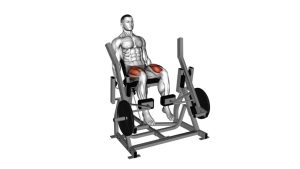
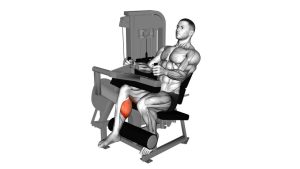
Lever Seated Leg Extension: Quad Form, Sets, Tips & FAQ
Learn the Lever Seated Leg Extension for stronger quads, better knee control, and clean isolation. Includes setup, steps, sets, tips, FAQs, and gear.
Lever Seated Leg Extension
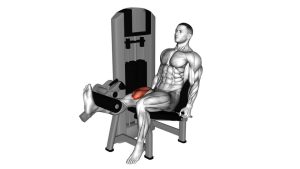
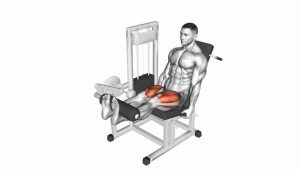
This exercise works best when the hips stay planted, the back stays supported, and the knees move through a clean, controlled path. The movement should come from the knee joint, not from swinging the torso or kicking the weight with momentum. A controlled top squeeze and slow lowering phase make the exercise more effective for quad hypertrophy.
Quick Overview
| Body Part | Legs |
|---|---|
| Primary Muscle | Quadriceps |
| Secondary Muscle | Hip flexors and core stabilizers assist lightly with seated posture control |
| Equipment | Lever seated leg extension machine |
| Difficulty | Beginner to Intermediate |
Sets & Reps (By Goal)
- Muscle growth: 3–5 sets × 10–15 reps with a controlled squeeze at the top.
- Strength focus: 3–4 sets × 6–10 reps using a challenging but clean load.
- Beginner practice: 2–3 sets × 12–15 reps with light weight and slow tempo.
- Burnout finisher: 2–3 sets × 15–25 reps after squats, presses, or lunges.
Progression rule: Add reps first, then increase weight only when every rep stays smooth, controlled, and pain-free.
Setup / Starting Position
- Sit fully into the machine: Keep your back against the pad and your hips stable.
- Adjust the knee position: Align your knees with the machine’s pivot point as closely as possible.
- Set the roller pad: Place the pad just above the ankles, not on the shins or feet.
- Grip the handles: Hold the side handles to keep your torso from lifting or rocking.
- Brace lightly: Keep your ribs down, core stable, and feet relaxed but controlled.
A correct setup makes the movement feel smooth at the knees and focused in the quadriceps.
Execution (Step-by-Step)
- Start with bent knees: Begin with the legs underneath the pad and the knees flexed.
- Extend the knees: Drive the roller pad upward by straightening your legs.
- Squeeze the quads: Pause briefly near the top without aggressively locking the knees.
- Lower slowly: Return the pad under control until the knees are bent again.
- Repeat with rhythm: Keep each rep smooth, controlled, and free of swinging.
Pro Tips & Common Mistakes
- Control the lowering phase: Do not let the weight stack drop quickly.
- Pause at the top: A short squeeze improves quad tension and control.
- Avoid hard knee snapping: Reach extension smoothly without forcing lockout.
- Keep hips down: Do not arch or slide forward to lift heavier weight.
- Use full but comfortable range: Train through a range that feels strong and pain-free.
- Match your foot position: Keep feet steady and avoid excessive twisting during reps.
FAQ
What muscles does the Lever Seated Leg Extension work?
It primarily works the quadriceps, including the rectus femoris, vastus lateralis, vastus medialis, and vastus intermedius.
Is the leg extension good for building bigger quads?
Yes. Because it isolates knee extension, it allows direct quad tension and can be very effective for hypertrophy when performed with controlled reps and progressive overload.
Should I lock my knees at the top?
You can reach near-full extension, but avoid snapping or forcing the knees into a hard lockout. A controlled top squeeze is safer and more effective.
Is this exercise beginner-friendly?
Yes. The machine provides support and a fixed movement path, making it easier to learn than many free-weight leg exercises. Beginners should start light and focus on smooth technique.
When should I do leg extensions in a workout?
You can use them after compound lifts like squats and leg presses, or as a warm-up activation drill with lighter weight before heavier leg training.
Recommended Equipment
- Leg Extension Machine — best option for performing the exact machine-based movement at home.
- Adjustable Bench with Leg Extension Attachment — useful for home gyms with limited space.
- Weightlifting Knee Sleeves — provides warmth and light support during leg training.
- Resistance Bands — can be used for banded knee extensions when a machine is unavailable.
- Cable Ankle Straps — useful for cable-based leg extension variations and lower-body isolation work.
Tip: Choose equipment based on your training space, knee comfort, and ability to control the movement through a smooth range of motion.