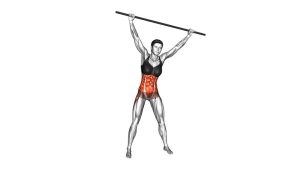
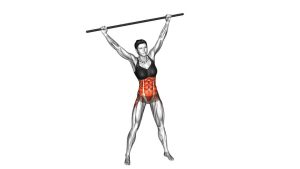
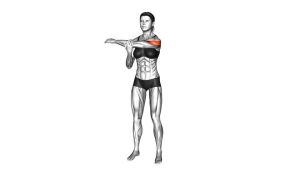
Side Lat Stretch: Proper Form, Benefits, Sets, Tips & FAQ
Learn how to perform the Side Lat Stretch with proper form to improve lat flexibility, shoulder mobility, and upper-body movement quality. Includes setup, execution, tips, FAQs, and recommended equipment.
Side Lat Stretch
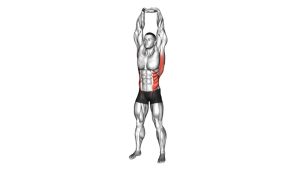
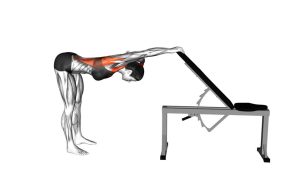
This exercise is best used as a warm-up mobility drill, a post-workout stretch, or a quick reset for lifters who feel tight during pull-ups, pulldowns, overhead pressing, and other upper-body movements. It works well because it combines an overhead reach with a gentle side bend, which increases the stretch through the lats without needing any complicated setup or equipment.
Quick Overview
| Body Part | Back |
|---|---|
| Primary Muscle | Latissimus dorsi |
| Secondary Muscle | Teres major, serratus anterior, external obliques, long head of triceps |
| Equipment | Wall or sturdy vertical support |
| Difficulty | Beginner |
Sets & Reps (By Goal)
- Warm-up mobility: 1–2 sets × 5–8 reps per side with a 2–3 second stretch on each rep
- Flexibility improvement: 2–4 sets × 20–30 second holds per side
- Post-workout recovery: 2–3 sets × 20–40 second holds per side
- Desk or posture reset: 1–2 sets × 15–20 second holds per side
Progression rule: First improve breathing control and stretch quality, then gradually increase hold time or depth. Do not force extra range by twisting the torso or shrugging the shoulder.
Setup / Starting Position
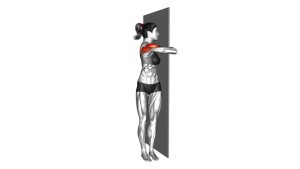
- Stand beside a wall: Position yourself with the working side closest to the wall or upright support.
- Reach the inside arm overhead: Extend that arm up so the hand or forearm can make light contact with the wall.
- Set your posture: Stand tall with feet about hip-width apart, ribs controlled, and shoulders relaxed.
- Keep the arm long: Straighten the elbow comfortably without locking aggressively.
- Prepare to lean away: The torso should remain square and tall before the stretch begins.
Tip: A slightly staggered stance can help some people balance more easily during the side bend.
Execution (Step-by-Step)
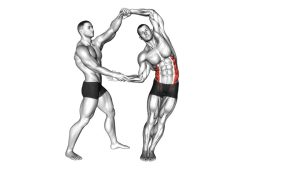
- Anchor the overhead arm: Keep the inside hand or forearm gently connected to the wall.
- Shift into the stretch: Lean the torso away from the wall while keeping the arm long overhead.
- Create length through the side body: Think about stretching from the hand, through the ribs, down toward the hip.
- Hold and breathe: Stay relaxed for the planned hold time and take slow, controlled breaths.
- Return smoothly: Come back to the starting position under control and repeat on the same side before switching.
Pro Tips & Common Mistakes
- Keep the torso square: Avoid turning the stretch into a twist.
- Do not shrug: Keep the shoulder away from the ear to place more stretch on the lat instead of the upper traps.
- Breathe into the ribs: Deep breathing can help you relax into the stretch and improve mobility quality.
- Use mild tension: Stretching harder is not always better; smooth positioning works best.
- Do not overarch the lower back: Keep the ribs controlled so the stretch stays in the upper side body.
- Adjust the arm angle: A slightly different overhead angle can help target the lats more comfortably depending on your shoulder mobility.
FAQ
Where should I feel the Side Lat Stretch?
You should mainly feel it along the latissimus dorsi, the side of the rib cage, and sometimes the rear shoulder or upper side body. It should feel like a long stretch, not a sharp joint pinch.
Is this stretch good before workouts?
Yes, especially before upper-body sessions that involve pull-ups, pulldowns, rows, or overhead pressing. It can help improve movement quality when your lats feel tight.
Can beginners do this exercise?
Absolutely. It is beginner-friendly because the wall gives you balance and support, and you can easily control the depth of the stretch.
How long should I hold the stretch?
For general flexibility, most people do well with 20–30 second holds. For warm-ups, shorter controlled reps or brief holds often work better.
What if I feel this more in my shoulder than my lat?
Reduce the overhead angle slightly, relax the shoulder, and keep the torso square. If the shoulder still feels pinched, decrease the range or choose a gentler variation.
Recommended Equipment (Optional)
- Trideer Stretching Strap — useful for shoulder mobility drills, assisted stretching, and flexibility work
- Amazon Basics High Density Foam Roller — helpful for soft-tissue work on the lats, upper back, and surrounding tissues
- Fit Simplify Resistance Loop Exercise Bands — useful for pairing mobility work with light activation drills and posture training
- Gaiam Extra Thick Yoga Mat — adds comfort for floor-based mobility work and recovery sessions
- Shoulder Mobility Stick — a practical tool for improving overhead range of motion and upper-body mobility
Tip: You do not need special gear to perform this stretch, but mobility tools can make your warm-ups, recovery sessions, and shoulder-care routine more complete.