Hanging Leg Tuck: Proper Form, Sets, Benefits, Tips & FAQ
Learn how to do the Hanging Leg Tuck with proper form. Discover muscles worked, setup, execution steps, sets by goal, common mistakes, FAQs, and recommended equipment.
Hanging Leg Tuck
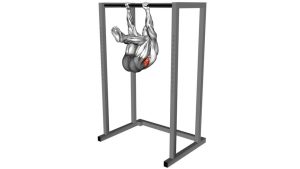
This exercise is most effective when every rep is controlled from start to finish. The movement should begin with the abs and pelvis, not with momentum from the legs. You should feel strong tension through the front of the torso while keeping the upper body stable and minimizing swinging. Cleaner reps with a smaller range are usually more productive than loose, rushed repetitions.
Quick Overview
| Body Part | Abs |
|---|---|
| Primary Muscle | Rectus abdominis |
| Secondary Muscle | Hip flexors, obliques, forearms, lats, and shoulder stabilizers |
| Equipment | Pull-up bar or sturdy hanging bar setup |
| Difficulty | Beginner to Intermediate |
Sets & Reps (By Goal)
- Core strength: 3-4 sets × 8-12 reps
- Muscle control and technique: 2-4 sets × 6-10 slow reps
- Endurance / conditioning: 2-3 sets × 12-20 reps
- Beginner practice: 2-3 sets × 5-8 clean reps
Progression rule: First improve control, reduce swing, and own the lowering phase. Then add reps. After that, progress to higher knee raises, straight-leg raises, or toes-to-bar variations.
Setup / Starting Position
- Grip the bar firmly: Use an overhand grip with hands about shoulder-width apart or slightly wider.
- Hang tall: Let the body hang with arms extended while keeping the shoulders slightly active rather than fully collapsing.
- Bring the legs together: Keep the feet close and the body aligned before starting the first rep.
- Brace the core: Tighten the abs lightly and reduce unnecessary swinging before initiating the tuck.
- Set a neutral torso: Keep the chest controlled and avoid excessive arching through the lower back.
Tip: Before each set, pause in the bottom position for a second to eliminate momentum and make the abs do the work.
Execution (Step-by-Step)
- Start from a steady hang: Grip the bar, engage the shoulders, and brace the midsection.
- Tuck the knees upward: Draw the knees toward the chest in a smooth motion rather than kicking them forward.
- Use the abs to curl the pelvis: Think about lifting from the core so the pelvis slightly rolls upward at the top.
- Pause briefly: Hold the top for a moment to increase abdominal tension and prove control.
- Lower slowly: Return the legs under control until you reach the starting hang again.
- Reset before repeating: Minimize swing between reps so each repetition begins from a stable position.
Pro Tips & Common Mistakes
- Lead with the core: Do not rely on momentum or a kipping action to lift the knees.
- Control the eccentric: Lowering slowly builds more strength than dropping straight down.
- Keep the movement compact: A clean knee tuck is better than a sloppy high rep.
- Stay active through the shoulders: Avoid hanging passively if it causes instability.
- Do not arch excessively: Overarching the lower back reduces abdominal involvement.
- Use straps only if needed: If grip is the limiting factor, ab straps can help shift more focus to the core.
- Progress gradually: Master hanging knee tucks before moving to straight-leg raises or toes-to-bar.
FAQ
What muscles does the hanging leg tuck work the most?
The main target is the rectus abdominis, with the hip flexors assisting the knee lift. The obliques, forearms, lats, and shoulders also help stabilize the body during the hang.
Is the hanging leg tuck good for lower abs?
Yes. It is commonly used to emphasize the lower portion of the abs through the knee tuck and pelvic curl, especially when performed slowly and without swinging.
Why do I swing so much during this exercise?
Swinging usually comes from starting too fast, relaxing the core, or dropping the legs on the way down. Pause at the bottom, brace the abs, and make each rep smoother and smaller if needed.
Can beginners do hanging leg tucks?
Yes. Beginners can start with short sets, controlled knee raises, or even use ab straps if grip strength is the main limitation. The key is to focus on quality rather than high reps.
What is the best progression after hanging leg tucks?
Once you can perform clean reps with minimal swing, you can progress to higher knee raises, straight-leg raises, hanging L-raises, or toes-to-bar variations.
Recommended Equipment
- Doorway Pull-Up Bar — practical home setup for hanging leg tucks, knee raises, and other bodyweight core work
- Hanging Ab Straps — useful if grip fatigue limits your ability to focus on the abs during hanging movements
- Pull-Up Grips / Hand Protection — helps reduce palm discomfort and improve grip security during repeated hanging sets
- Pull-Up Assistance Bands — useful for warm-ups, accessory core work, and progressing toward stronger hanging control
- Liquid Chalk — improves grip for longer hangs and helps reduce slipping on the bar
These recommendations are based on currently available Amazon categories and listings for pull-up bars, ab straps, grips, assistance bands, and chalk related to hanging core training.