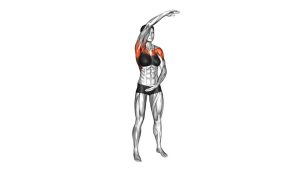
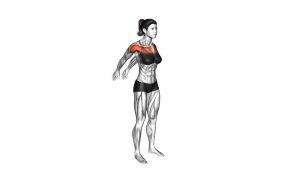
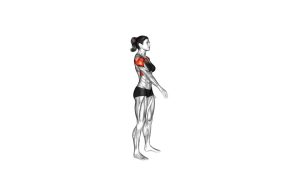
Standing Elbow Circles: Proper Form, Benefits, Sets, Tips & FAQ
Learn how to do Standing Elbow Circles with proper form to improve shoulder mobility, warm up the delts, and enhance upper-body movement quality. Includes setup, execution, sets by goal, mistakes, FAQs, and recommended equipment.
Standing Elbow Circles
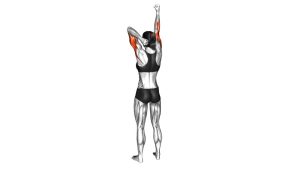
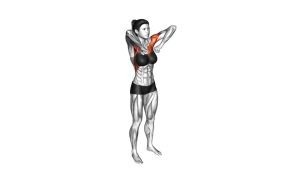
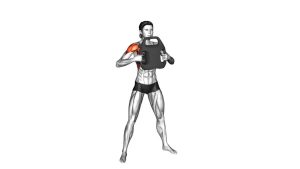
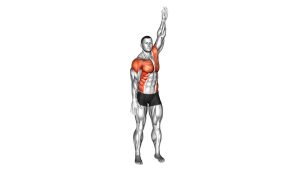
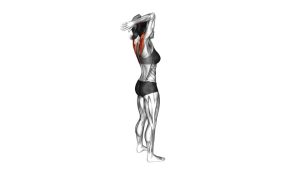
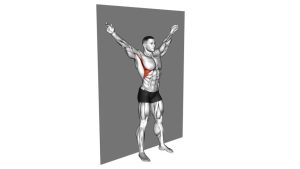
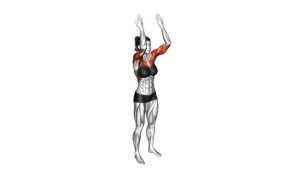
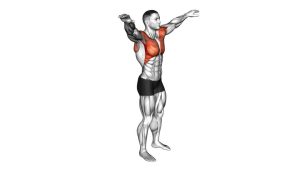
Standing Elbow Circles work best as a mobility-focused warm-up rather than a high-effort strength movement. The exercise should feel smooth and controlled through the shoulders, upper back, and chest. You may notice light muscular activation around the delts and scapular stabilizers, but the goal is not fatigue. Use a comfortable range of motion and prioritize quality movement over making the circles excessively large.
Quick Overview
| Body Part | Shoulders |
|---|---|
| Primary Muscle | Deltoids |
| Secondary Muscle | Rotator cuff, trapezius, rhomboids, serratus anterior |
| Equipment | None |
| Difficulty | Beginner |
Sets & Reps (By Goal)
- General warm-up: 2–3 sets × 8–12 circles forward and 8–12 circles backward
- Shoulder mobility focus: 2–4 sets × 10–15 controlled circles per direction
- Pre-upper-body workout activation: 2–3 sets × 10 circles each way with slow tempo
- Desk posture reset: 1–2 sets × 6–10 circles each direction, easy effort
Progression rule: Increase control and range of motion before adding extra reps. The shoulders should stay smooth, relaxed, and pain-free throughout each set.
Setup / Starting Position
- Stand tall: Place your feet about hip-width to shoulder-width apart for a stable base.
- Position the hands: Lightly place your hands behind your head without pulling on the neck.
- Open the elbows: Let the elbows point out to the sides while keeping the chest lifted.
- Brace lightly: Engage the core to avoid leaning backward or arching the lower back.
- Relax the neck: Keep the head neutral and shoulders down rather than shrugged up.
Tip: Before starting the circles, gently squeeze the shoulder blades down and back to create a strong, controlled upper-body position.
Execution (Step-by-Step)
- Begin forward: Move the elbows forward toward each other in front of the body in a controlled arc.
- Continue upward: Raise the elbows upward while maintaining a steady posture and a neutral neck.
- Sweep outward and back: Guide the elbows out to the sides and slightly behind the torso as the chest opens.
- Complete the circle: Return to the starting side position smoothly without jerking or rushing.
- Repeat continuously: Perform all reps in one direction, then reverse and circle the elbows the other way.
Pro Tips & Common Mistakes
- Use smooth circles: Avoid rushing through the movement or using momentum.
- Keep the ribs down: Do not flare the ribcage or overarch the lower back to fake more range.
- Stay relaxed through the neck: The traps should not dominate the exercise.
- Do not yank the head: Hands should rest behind the head lightly, not pull on the neck.
- Work both directions: Forward and backward circles help train more complete shoulder mobility.
- Use a pain-free range: Large circles are not better if they create pinching or discomfort.
FAQ
What is the main benefit of standing elbow circles?
The main benefit is improved shoulder mobility and activation. This drill helps warm up the deltoids, rotator cuff, and upper back while encouraging smoother shoulder mechanics before training.
Should standing elbow circles be done before or after a workout?
They are most useful before a workout as part of a warm-up, especially before shoulder, chest, back, or upper-body sessions. They can also be used during the day as a mobility reset.
How big should the circles be?
Make the circles only as large as you can control without pain or compensation. A moderate, smooth circle is much better than an oversized one that causes shrugging or back arching.
Can beginners do standing elbow circles?
Yes. This is a beginner-friendly exercise because it uses no external load and can be adjusted easily by reducing the range of motion or slowing the tempo.
What if my shoulders click during the movement?
Mild clicking without pain can be common in mobility drills. However, if the clicking comes with pinching, pain, or instability, reduce the range or stop and reassess your shoulder position.
Recommended Equipment (Optional)
- Resistance Bands Set — useful for pairing shoulder mobility drills with pull-aparts, external rotations, and activation work
- Foam Roller — helps loosen the upper back and chest before mobility work
- Yoga Mat — provides a comfortable surface for warm-ups, mobility sessions, and floor-based shoulder drills
- Massage Ball — useful for releasing tight pecs, rear delts, and upper-back muscles that may limit shoulder motion
- Posture Corrector Brace — optional reminder tool for posture awareness, best used alongside mobility and strengthening work
Tip: Accessories should support better movement quality, not replace proper mobility work and strong exercise technique.