Lying Around the World: Form, Shoulder Mobility Benefits, Sets & FAQ
Learn how to perform the Lying Around the World exercise for better shoulder mobility, control, and range of motion. Includes setup, step-by-step form, sets by goal, common mistakes, FAQs, and recommended equipment.
Lying Around the World
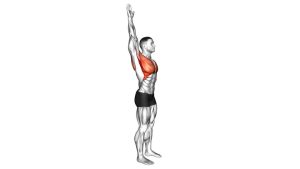
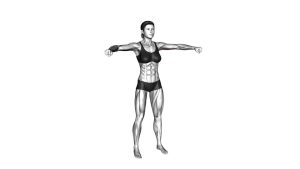
This exercise is best treated as a quality-focused mobility movement, not a heavy strength lift. The goal is to create clean shoulder circles while keeping the neck relaxed, the ribcage down, and the movement symmetrical from side to side. You should feel the shoulders, upper chest, and surrounding stabilizers working gently through a long range of motion.
Quick Overview
| Body Part | Shoulders |
|---|---|
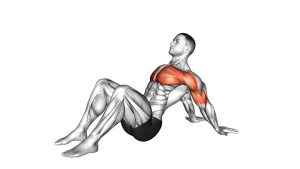
| Primary Muscle | Deltoids (anterior, lateral, and posterior fibers through the circular path) |
| Secondary Muscle | Rotator cuff, serratus anterior, upper chest, and scapular stabilizers |
| Equipment | None; optional exercise mat or sliders |
| Difficulty | Beginner (mobility-focused, but overhead range may challenge tight shoulders) |
Sets & Reps (By Goal)
- Shoulder warm-up: 1–2 sets × 6–10 slow circles in each direction
- Mobility development: 2–4 sets × 8–12 reps with controlled tempo
- Movement prep before upper-body training: 2–3 sets × 6–8 smooth reps
- Recovery / low-intensity restoration: 1–3 sets × 5–8 reps with very easy effort
Progression rule: Increase control and circle quality before adding reps. A larger range only counts if you can keep your ribs down and shoulders relaxed.
Setup / Starting Position
- Lie flat on your back: Use the floor or an exercise mat. Keep your head neutral and your body relaxed.
- Set your arms at your sides: Palms can face down or slightly inward depending on comfort.
- Brace lightly through the trunk: Keep your ribcage down so your lower back does not overarch as the arms travel overhead.
- Lengthen through the fingertips: Keep the elbows straight or only softly bent.
- Start with a pain-free range: Do not force the hands all the way to the floor overhead if mobility is limited.
Tip: A mat helps reduce friction and makes the movement more comfortable, especially during higher-rep mobility work.
Execution (Step-by-Step)
- Lift the arms from your sides: Raise both arms in a smooth arc toward the overhead position.
- Reach overhead with control: Keep the ribs down and avoid shrugging or flaring the chest.
- Sweep outward: From overhead, move the arms out wide to the sides in a large circular pattern.
- Finish the circle: Continue the arc until the arms return to the starting position beside the body.
- Repeat smoothly: Keep each repetition slow and even, as if drawing a large circle with both hands.
Pro Tips & Common Mistakes
- Move slowly: This drill works best when you control every inch of the circle.
- Keep the ribcage down: Do not turn overhead shoulder motion into a lower-back stretch.
- Stay long through the arms: Straight elbows increase the mobility challenge and improve pattern quality.
- Do not force overhead depth: Work within a range that feels smooth and joint-friendly.
- Avoid shrugging: Keep tension out of the neck and upper traps as much as possible.
- Use it as preparation: This drill pairs well with pressing, reaching, and shoulder stability work.
FAQ
What is the main benefit of Lying Around the World?
It helps improve shoulder mobility, arm path control, and overall awareness through a large circular range of motion. It is especially useful as a warm-up or low-load movement-prep drill.
Should I do this exercise fast or slow?
Slow is better. A controlled tempo helps you improve shoulder mechanics and notice restrictions or compensations.
Is this a strength exercise?
Not primarily. It is mostly a mobility and control exercise, though the shoulders and stabilizers still work throughout the movement.
What if I cannot get my arms fully overhead?
That is fine. Work within a comfortable range and gradually improve smoothness before trying to increase depth.
Can beginners use this as part of a shoulder warm-up?
Yes. It is beginner-friendly when performed slowly and within a pain-free range, making it a strong option for warm-ups and mobility sessions.
Recommended Equipment (Optional)
- Gaiam Non-Slip Yoga Mat — adds floor comfort and grip for supine mobility work
- Dual-Sided Exercise Sliders — useful if you want smoother arm travel on carpet or hard floors
- Resistance Bands Set — a smart add-on for pairing shoulder mobility with light activation work
- Trideer Stretching Strap — helpful for extra flexibility and shoulder-opening drills
- Peanut Massage Ball — useful for upper-back and shoulder soft-tissue prep before mobility work
Tip: Keep equipment optional. This exercise works well with bodyweight alone, and accessories should only support cleaner movement quality.