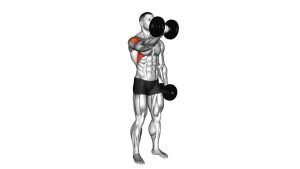
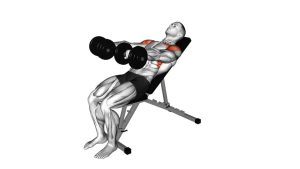
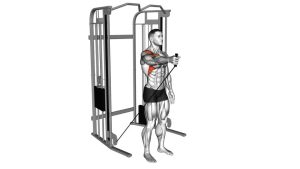
EZ-Bar Incline Front Raise: Form, Muscles Worked, Sets, Tips & FAQ
Learn how to do the EZ-Bar Incline Front Raise with proper form to target the front delts with strict control. Includes muscles worked, setup, step-by-step execution, sets by goal, mistakes, FAQ, and recommended equipment.
EZ-Bar Incline Front Raise
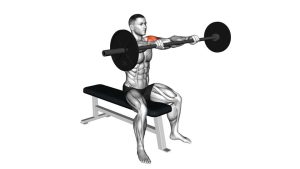
This variation is ideal for lifters who want to build the front delts with stricter mechanics. Because the bench limits cheating and backward lean, the shoulders are forced to do more of the work. The goal is to raise the bar with control to about shoulder height, pause briefly, and lower it slowly while keeping tension on the delts the entire time.
Quick Overview
| Body Part | Front Shoulders |
|---|---|
| Primary Muscle | Anterior deltoid (front delts) |
| Secondary Muscle | Upper chest, serratus anterior, upper traps (minimal if form is strict), core stabilizers |
| Equipment | EZ-bar and incline bench |
| Difficulty | Intermediate |
Sets & Reps (By Goal)
- Muscle growth: 3–4 sets × 8–15 reps with controlled tempo and 45–75 sec rest
- Shoulder definition / pump work: 2–4 sets × 12–20 reps with lighter weight and short rest
- Strength-focused isolation: 3–4 sets × 6–10 reps using strict form and 75–120 sec rest
- Warm-up / activation: 2–3 sets × 12–15 reps with very light weight before pressing workouts
Progression rule: Add reps first, then increase load gradually. Do not move up in weight unless you can raise and lower the bar without torso movement or shoulder shrugging.
Setup / Starting Position
- Set the bench: Adjust an incline bench to roughly 45–60 degrees so your back is fully supported.
- Sit and brace: Sit back firmly against the pad with your chest up, shoulders down, and feet planted flat on the floor.
- Grip the EZ-bar: Hold the EZ-bar with both hands using a comfortable angled grip, usually around shoulder width.
- Start low: Let the bar rest near the upper thighs with elbows slightly bent and wrists neutral.
- Set posture: Keep your head against the bench, core engaged, and avoid leaning or arching before the first rep.
Tip: A slightly narrower grip often helps keep the front delts loaded while reducing wrist strain.
Execution (Step-by-Step)
- Begin the raise: Lift the EZ-bar forward in a smooth arc using your shoulders, not momentum.
- Keep the elbows soft: Maintain a slight bend in the elbows throughout the movement without turning it into a curl.
- Raise to shoulder height: Stop when the bar reaches about shoulder level, or slightly above if your mobility and control allow it comfortably.
- Pause briefly: Hold the top for a moment to maximize front delt tension.
- Lower under control: Bring the bar back down slowly to the start position without dropping it or losing posture.
- Repeat smoothly: Perform each rep with the same tempo and keep the torso pinned to the bench.
Pro Tips & Common Mistakes
- Use the bench as your form coach: Stay in contact with the pad to reduce cheating.
- Lift only as high as you can control: Shoulder height is usually enough for excellent tension.
- Lead with the delts, not the traps: Keep shoulders down and avoid shrugging at the top.
- Do not swing the bar: Momentum shifts stress away from the front delts and reduces exercise quality.
- Keep wrists comfortable: Use the angled sections of the EZ-bar that feel most natural for your joints.
- Control the lowering phase: The eccentric portion is a major part of the muscle-building stimulus.
- Avoid turning it into a press: The elbows should not drive upward like an overhead press.
FAQ
What does the EZ-Bar Incline Front Raise work?
It mainly targets the anterior deltoids, which are the front portion of the shoulders. Secondary support can come from the upper chest and stabilizing muscles, but this is primarily a front-delt isolation exercise.
Why use an incline bench for front raises?
The incline bench helps limit torso movement and momentum, making the exercise stricter and more effective for isolating the shoulders. It also helps reduce the tendency to lean back during heavier reps.
Is an EZ-bar better than a straight bar for this exercise?
For many lifters, yes. The angled grip of the EZ-bar can feel more natural on the wrists and elbows, especially during moderate to high reps. However, the best option is the one you can control comfortably without pain.
How high should I raise the bar?
In most cases, raising the bar to about shoulder height is enough. Going higher is not always better and may shift tension away from the target muscle if control is lost.
Can beginners do this exercise?
Beginners can do it, but it is usually better after learning basic shoulder control first. Start with a very light EZ-bar or fixed-weight curl bar and prioritize smooth reps over heavy loading.
Recommended Equipment
- EZ Curl Bar — the main tool for this exercise, offering a more wrist-friendly grip than a straight bar
- Weight Plates — lets you load the EZ-bar progressively for hypertrophy and strength-focused shoulder training
- Adjustable Incline Weight Bench — provides torso support and helps enforce strict front raise mechanics
- Weightlifting Gloves or Grips — can improve grip comfort during higher-rep sets and longer time-under-tension work
- Barbell Collars — helps secure the plates and keeps the load stable during controlled raises
Tip: Keep this exercise moderate in load. Front raises usually work best when technique, control, and tension come before ego lifting.