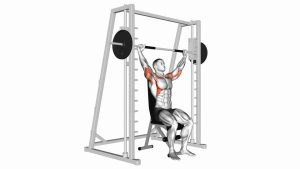
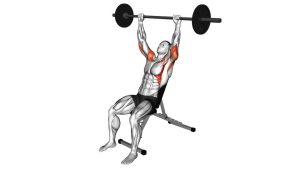
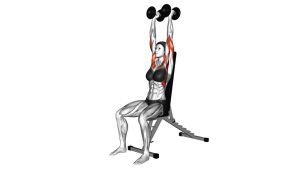
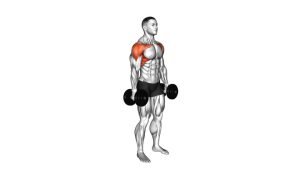
Dumbbell Seated Close-Grip Shoulder Press: Form, Sets, Tips & FAQ
Learn the Dumbbell Seated Close-Grip Shoulder Press to build front delts and triceps with more control and shoulder-friendly mechanics. Includes setup, execution, sets by goal, common mistakes, FAQs, and recommended equipment.
Dumbbell Seated Close-Grip Shoulder Press
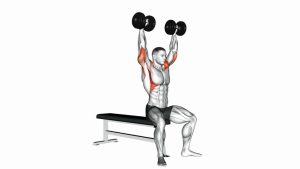
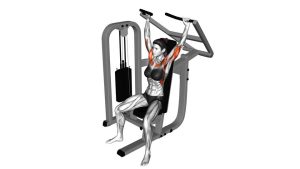
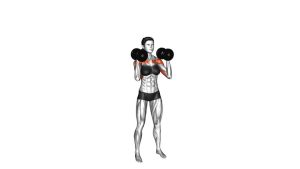
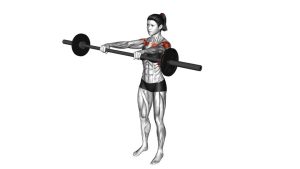
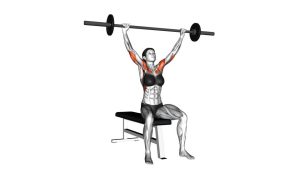
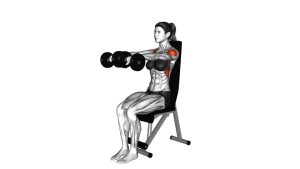
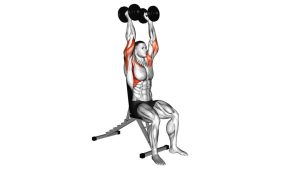
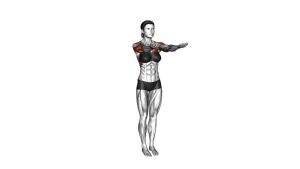
This exercise is best performed with a controlled tempo and a balanced range of motion. The dumbbells start near shoulder level, the elbows stay slightly forward instead of flaring wide, and the weights travel upward in a strong vertical path. You should feel the front of the shoulders doing most of the work, with the triceps helping to finish the press. Keep the ribcage down, avoid over-arching the lower back, and focus on lifting the dumbbells with precision rather than momentum.
Quick Overview
| Body Part | Front Shoulders |
|---|---|
| Primary Muscle | Anterior deltoids (front delts) |
| Secondary Muscle | Triceps, lateral deltoids, upper chest, upper traps as stabilizers |
| Equipment | Dumbbells and a flat or adjustable bench with back support |
| Difficulty | Beginner to Intermediate |
Sets & Reps (By Goal)
- Muscle growth: 3–4 sets × 8–12 reps with 60–90 seconds rest
- Strength focus: 4–5 sets × 4–6 reps with 90–150 seconds rest
- Technique practice: 2–3 sets × 10–15 reps with light to moderate load and clean tempo
- Shoulder accessory work: 2–4 sets × 8–10 reps after your main compound pressing work
Progression rule: Increase weight only when you can press through the full target rep range without leaning back, flaring the elbows too wide, or losing control at the bottom.
Setup / Starting Position
- Set the bench: Sit on a bench with your torso upright or slightly reclined if needed for support.
- Plant your feet: Keep both feet flat on the floor to create a solid base.
- Bring the dumbbells up: Start with the dumbbells at shoulder height, close to each other, with a neutral or slightly angled grip.
- Tuck the elbows: Let the elbows stay slightly forward rather than directly out to the sides.
- Brace the torso: Keep your abs engaged, chest lifted naturally, and lower back neutral against the bench support.
Tip: A close-grip setup usually feels strongest when the wrists stay stacked over the elbows and the dumbbells move in a compact path.
Execution (Step-by-Step)
- Start from shoulder level: Hold the dumbbells close together near the shoulders with your elbows tucked slightly forward.
- Press upward: Drive the dumbbells overhead in a controlled line without letting them drift too wide.
- Reach the top smoothly: Finish with the arms nearly straight overhead while keeping the shoulders controlled and not excessively shrugged.
- Pause briefly: Stabilize the top position for a moment without relaxing your torso.
- Lower under control: Bring the dumbbells back down slowly to shoulder level, maintaining the same close-grip path.
- Repeat evenly: Keep every rep smooth, balanced, and identical from start to finish.
Pro Tips & Common Mistakes
- Keep the grip compact: A close dumbbell path increases control and keeps the emphasis on strict pressing mechanics.
- Do not lean back too much: Excessive arching turns the movement into more of an incline chest press.
- Keep wrists stacked: Avoid letting the wrists bend too far backward under load.
- Control the lowering phase: The eccentric portion helps build shoulder stability and better pressing consistency.
- Do not slam the dumbbells together: Bring them close, but stay in control at the top.
- Avoid flared elbows: A moderate tuck is usually more comfortable and shoulder-friendly than a very wide press.
- Use manageable loads: Quality reps matter more than chasing heavy weight with poor posture.
FAQ
What does the close grip change in this shoulder press?
A closer grip usually creates a more compact pressing path, increases triceps contribution, and can feel more controlled than a wider dumbbell shoulder press.
Is this better than a standard seated dumbbell shoulder press?
Not necessarily better for everyone, but it is a great variation if you prefer a tucked pressing path, want more triceps involvement, or feel stronger and more stable with the dumbbells closer together.
Should I use a neutral grip or rotate my hands forward?
Either can work. Most lifters do well with a neutral or slightly angled grip because it often feels natural on the shoulders and wrists.
How low should I lower the dumbbells?
Lower them to a comfortable shoulder-level position where you can maintain control and keep the elbows in a strong pressing angle. Do not force extra depth if it causes shoulder discomfort.
Can beginners use this exercise?
Yes. It can be a very good beginner-friendly pressing variation when done with light dumbbells, good posture, and strict control.
Recommended Equipment
- BowFlex Results Series SelectTech Adjustable Dumbbells — adjustable dumbbells are space-saving and allow quick load changes for pressing work
- FLYBIRD Adjustable Weight Bench — useful for seated pressing support and incline variations
- Gymreapers Weightlifting Wrist Wraps — can help improve wrist support on heavier pressing sets
- Resistance Bands Set — useful for warm-ups, shoulder activation, and accessory delt work
- Micro Plates / Fractional Plates — helpful for making smaller strength jumps when progressing overhead pressing
These recommendations are based on currently available Amazon listings for adjustable dumbbells, benches, wrist wraps, and resistance bands relevant to shoulder press training.