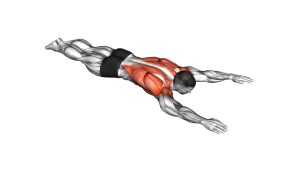
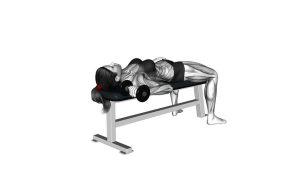
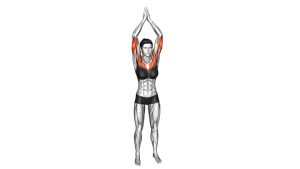
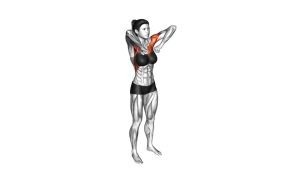
Full Arm Rotation: Shoulder Mobility Form, Benefits, Sets & FAQ
Learn how to perform the Full Arm Rotation for better shoulder mobility, control, and warm-up readiness. Includes form tips, muscles worked, sets by goal, common mistakes, FAQs, and recommended equipment.
Full Arm Rotation
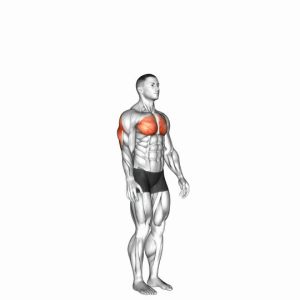
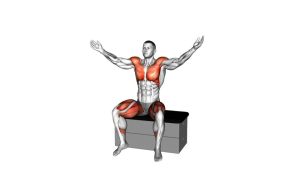
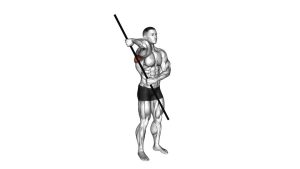
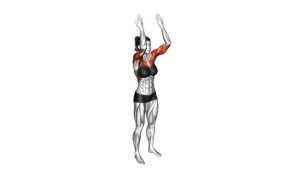
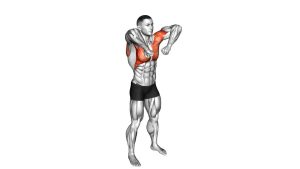
This exercise works best when the motion is controlled rather than rushed. You should feel the shoulders moving through a comfortable range of motion with light muscular engagement in the deltoids, rotator cuff, and upper-back stabilizers. The movement should feel like a warm-up and mobility drill, not a max-effort exercise.
Quick Overview
| Body Part | Shoulders |
|---|---|
| Primary Muscle | Deltoids (anterior, lateral, posterior) |
| Secondary Muscle | Rotator cuff, trapezius, serratus anterior, upper chest |
| Equipment | None |
| Difficulty | Beginner (excellent for warm-ups, mobility sessions, and recovery work) |
Sets & Reps (By Goal)
- General warm-up: 2–3 sets × 10–15 forward circles + 10–15 backward circles
- Shoulder mobility practice: 2–4 sets × 8–12 slow controlled reps per direction
- Pre-pressing or overhead training: 1–3 sets × 10–20 total rotations with light tempo
- Recovery / desk reset: 1–2 sets × 8–10 easy reps per direction
Progression rule: Increase control and range of motion before adding volume. Bigger circles are only useful if you can keep the ribs down and the shoulders moving smoothly.
Setup / Starting Position
- Stand tall: Place your feet about hip-width to shoulder-width apart with your knees soft.
- Brace lightly: Keep your core engaged and ribs stacked over your hips to avoid leaning back.
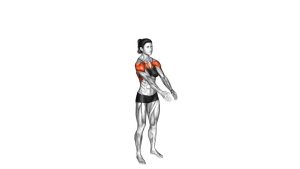
- Lift the arms: Raise both arms in front of the body to about shoulder height with elbows mostly straight.
- Relax the neck: Keep your shoulders down and your head neutral rather than shrugging upward.
- Choose your range: Start with a small circle if your shoulders feel stiff, then gradually widen it.
Tip: This exercise can also be performed one arm at a time if you want to focus on shoulder control on each side.
Execution (Step-by-Step)
- Begin the circle: Move both arms upward in front of the body in a smooth arc.
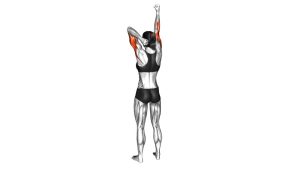
- Reach overhead: Continue the arc until the hands move above the head without arching the lower back.
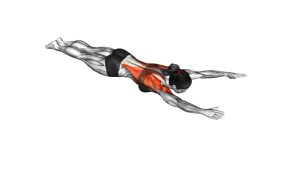
- Open outward: Let the arms travel out and around as they move behind and down through the sides.
- Return to front: Bring the arms back to the starting position to complete one full rotation.
- Repeat smoothly: Perform all reps in one direction, then reverse the circle and repeat the same number of reps backward.
Pro Tips & Common Mistakes
- Move with control: Don’t turn the exercise into fast arm flailing.
- Use both directions: Forward and backward circles challenge the shoulders differently.
- Keep elbows soft but long: Slight bend is fine, but don’t collapse the shape of the movement.
- Stay tall: Avoid excessive lower-back arching when the arms go overhead.
- Don’t shrug aggressively: Let the shoulder blades move naturally without jamming them upward.
- Start small if needed: Pain-free quality matters more than making the biggest possible circle.
- Pair it well: Great before presses, push-ups, handstands, swimming, boxing, and upper-body strength sessions.
FAQ
What does the Full Arm Rotation train?
It mainly trains shoulder mobility and movement control. It also lightly warms up the deltoids, rotator cuff, and upper-back muscles before more demanding upper-body work.
Is this the same as arm circles?
Yes, it is a form of arm circles, but the goal here is controlled full-range shoulder rotation rather than simply making quick circles for fatigue.
Should I do this before or after workouts?
Most people benefit from doing it before workouts as part of a warm-up. It can also be used after training for light mobility work if the shoulders feel stiff.
How big should the circles be?
As big as you can comfortably control without pain, back arching, or shoulder pinching. Start small and expand only if the movement stays smooth.
Who should be cautious with this exercise?
Anyone with current shoulder pain, impingement symptoms, recent injury, or post-surgical restrictions should be careful and avoid forcing range. If needed, use a smaller movement or get professional guidance.
Recommended Equipment (Optional)
- Shoulder Resistance Bands — useful for warm-up progressions, pull-aparts, and light rotator-cuff work
- Yoga Strap / Stretch Strap — helps with shoulder mobility drills, pass-throughs, and controlled range work
- Shoulder Pulley — useful for gentle range-of-motion practice and rehab-style mobility sessions
- Peanut Massage Ball — helpful for upper-back and shoulder-area soft tissue work before mobility practice
- Mobility Stick / Shoulder Stretcher — useful for dynamic shoulder openers, pass-throughs, and posture-focused warm-ups
Tip: The Full Arm Rotation itself needs no equipment, so these tools are best used to expand your warm-up or support extra shoulder mobility work.