Stick Pass Around Stretch: Proper Form, Shoulder Mobility Benefits, Sets & FAQ
Learn how to do the Stick Pass Around Stretch with proper form to improve shoulder mobility, posture, and overhead range of motion. Includes setup, execution steps, sets by goal, common mistakes, FAQ, and recommended equipment.
Stick Pass Around Stretch
This exercise works best when you move slowly, keep the elbows straight, and choose a grip width that lets you complete every rep without shrugging, twisting, or arching hard through the lower back. It is commonly used in warm-ups, mobility circuits, posture-focused training, and shoulder preparation before pressing, handstands, gymnastics, or overhead lifting.
Quick Overview
| Body Part | Shoulders |
|---|---|
| Primary Muscle | Deltoids (especially anterior deltoids) and rotator cuff stabilizers |
| Secondary Muscle | Upper chest, trapezius, serratus anterior, and upper back stabilizers |
| Equipment | Stick, dowel, PVC pipe, broomstick, or light mobility bar |
| Difficulty | Beginner (easy to scale by widening or narrowing grip) |
Sets & Reps (By Goal)
- Warm-up before upper-body training: 1–3 sets × 8–12 reps
- Shoulder mobility improvement: 2–4 sets × 10–15 reps with slow, controlled tempo
- Posture / recovery work: 2–3 sets × 8–10 reps with a brief pause overhead or behind
- Movement prep for overhead athletes: 2–3 sets × 6–10 very clean reps before skill work
Progression rule: Improve quality before range. Narrow the grip only when you can complete all reps without pain, elbow bending, rib flare, or lower-back compensation.
Setup / Starting Position
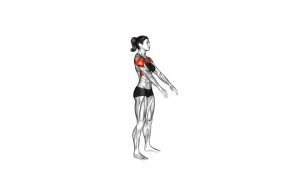
- Stand tall: Place your feet about hip- to shoulder-width apart and keep the body balanced.
- Grip the stick wide: Hold it in front of your thighs with a pronated grip and straight arms.
- Brace lightly: Keep the ribs down, core engaged, and glutes lightly active to prevent lumbar overextension.
- Set the shoulders: Relax the neck and avoid shrugging before you start moving.
- Choose a safe width: Your grip should be wide enough to allow a smooth pass-over without pain.
Tip: If the stick catches or your shoulders feel blocked, widen your hands immediately rather than forcing the range.
Execution (Step-by-Step)
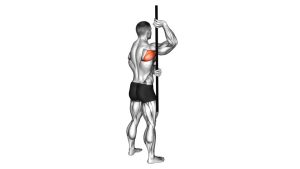
- Start in front: Hold the stick against the front of the thighs with arms extended.
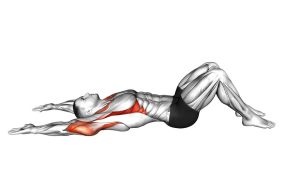
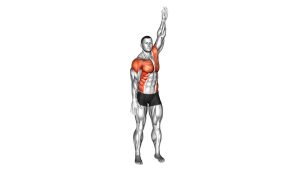
- Raise the stick upward: Sweep it in a controlled arc from the thighs to overhead.
- Continue behind the body: If mobility allows, bring the stick past overhead and down behind the hips or glutes.
- Keep posture stable: Do not flare the ribs, bend the elbows, or lean the torso to create fake range.
- Reverse the motion: Bring the stick back up behind you, pass overhead, and return to the front under control.
- Repeat smoothly: Perform each rep with steady tempo and symmetrical movement on both sides.
Pro Tips & Common Mistakes
- Use a wider grip first: Start easy, then gradually narrow the hands over time.
- Keep elbows straight: Bent elbows usually hide limited shoulder mobility.
- Move slowly: Momentum reduces the value of the drill and increases the chance of irritation.
- Do not arch the lower back: Keep the ribs stacked over the pelvis.
- Avoid shrugging: Let the shoulders rotate naturally without elevating aggressively into the ears.
- Stay pain-free: A strong stretch is fine; pinching or sharp discomfort is not.
- Use it as preparation: This pairs well with pressing, pull-aparts, wall slides, and thoracic mobility work.
FAQ
What does the Stick Pass Around Stretch improve?
It mainly improves shoulder mobility, especially overhead movement, chest opening, and coordinated shoulder rotation. It is often used to prepare for pressing, handstands, gymnastics, and posture work.
How wide should my grip be?
Wide enough that you can move through the range without pain, elbow bend, or heavy torso compensation. Beginners usually need a much wider grip than they expect.
Should the stick go all the way behind my body?
Only if you can do it smoothly and pain-free. Partial reps are completely fine while you build mobility and control.
Is this a stretch or a strength exercise?
It is primarily a mobility and flexibility drill, although the shoulders and upper back still work to control the movement.
Can I use a resistance band instead of a stick?
Yes. A long resistance band can make the movement easier because it allows the hands to separate slightly as you move through the range.
Recommended Equipment
- Mobility Stick — useful when you want a dedicated shoulder-mobility tool rather than a basic broomstick. Amazon’s mobility-stick results emphasize non-slip ends, foam handles, and exercise-guide style accessories.
- Shoulder Stick for Physical Therapy — a shoulder-focused stretching bar can work well for pass-arounds, warm-ups, and general flexibility sessions.
- Stretch-Out Strap — a looped stretching strap is a strong alternative if a rigid stick feels too aggressive, and Amazon listings position it for flexibility, mobility, and physical-therapy-style work.
- 10-Loop Stretching Strap — loop straps make it easier to adjust hand position quickly and can be useful for shoulder mobility practice at home.
- Resistance Band Set — a long band or band set is helpful for easier pass-through variations, warm-ups, and extra shoulder activation work.
Tip: For this drill, the best “equipment upgrade” is usually a tool that helps you stay comfortable and consistent, not one that forces extra range.