Aztec Push-Up: Explosive Form, Benefits, Sets, Tips & Progressions
Learn the Aztec Push-Up for explosive chest, triceps, shoulder, and core power. Step-by-step form, sets, tips, mistakes, FAQs, and gear.
Aztec Push-Up
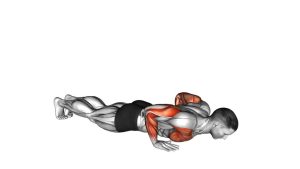
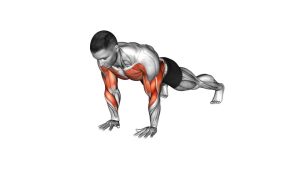
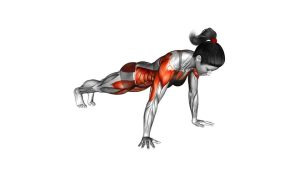
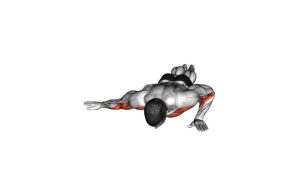
The Aztec Push-Up is not just a harder push-up. It is a fast, explosive, full-body power drill that demands strong pushing mechanics, quick hip flexion, tight core control, and confident landing technique. The movement begins like a deep push-up, then transitions into a powerful airborne phase where the body briefly folds into a sharp tuck before returning to plank.
Quick Overview
| Body Part | Chest |
|---|---|
| Primary Muscle | Pectoralis major |
| Secondary Muscle | Triceps, anterior deltoids, serratus anterior, rectus abdominis, obliques, hip flexors |
| Equipment | No equipment required; optional exercise mat or soft plyometric surface |
| Difficulty | Advanced to elite |
Sets & Reps (By Goal)
- Power development: 3–5 sets × 2–5 reps with 90–180 seconds rest
- Skill practice: 4–6 sets × 1–3 clean reps with full recovery between sets
- Calisthenics progression: 3–4 sets × 2–4 reps after explosive push-up warm-ups
- Conditioning use: Not recommended for high-rep fatigue work because form can break down quickly
Progression rule: Quality matters more than volume. Stop the set when jump height drops, landing becomes noisy, or the hands and feet no longer return safely to the plank position.
Setup / Starting Position
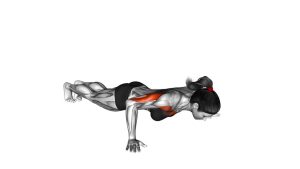
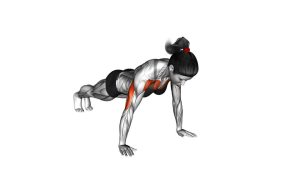
- Start in a strong push-up plank: Place your hands slightly wider than shoulder-width and keep your body long from head to heels.
- Brace your core: Tighten your abs and glutes so the hips do not sag during the loading phase.
- Set your shoulders: Keep the shoulders stable and slightly packed while allowing natural scapular movement.
- Use an athletic hand position: Spread your fingers and press evenly through the palms for a powerful push.
- Prepare for impact: Use a soft surface, keep the elbows slightly ready to bend, and focus on landing quietly.
Before attempting the Aztec Push-Up, you should be able to perform strong regular push-ups, clap push-ups, and controlled explosive push-ups without pain.
Execution (Step-by-Step)
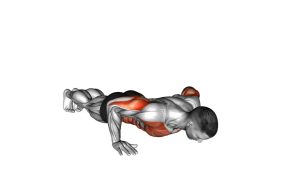
- Lower under control: Bend your elbows and descend into a deep push-up while keeping your core tight and your body aligned.
- Load the chest and triceps: Reach the bottom position with control. Do not collapse into the shoulders or let the hips drop.
- Explode upward: Push hard through the floor so both hands leave the ground. Drive with maximum speed.
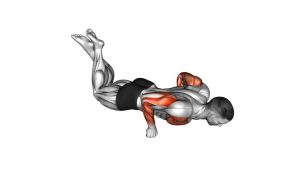
- Lift the lower body: As your upper body rises, allow the feet to leave the floor so the full body becomes airborne.
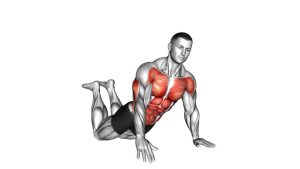
- Compress in mid-air: Quickly flex the hips and bring your hands toward your feet, creating the signature Aztec “fold” position.
- Extend back to plank: Immediately move the hands and feet back into position before landing.
- Land softly: Catch the floor with bent elbows, braced abs, and stable shoulders. Absorb the impact smoothly.
- Reset before repeating: Rebuild your plank tension before starting the next rep.
Pro Tips & Common Mistakes
- Build the push first: Your explosive push must create enough height before you attempt the hand-to-foot motion.
- Keep the core tight: A loose midsection makes the landing unstable and increases lower-back stress.
- Do not rush the progression: Master clap push-ups, knee-tuck push-ups, and explosive push-ups before full Aztec reps.
- Avoid landing with locked elbows: Soft elbows help absorb force and protect the wrists, elbows, and shoulders.
- Do not let the hips sag: Keep the body organized before takeoff and immediately after landing.
- Use low reps: This is a power skill, not a high-rep burnout exercise.
- Train on a safe surface: A firm mat or rubber gym floor can reduce impact stress during practice.
FAQ
What muscles does the Aztec Push-Up work?
The Aztec Push-Up primarily works the chest, especially the pectoralis major. It also trains the triceps, front shoulders, serratus anterior, abs, obliques, hip flexors, and full-body stabilizers.
Is the Aztec Push-Up good for building muscle?
It can support muscle development, but its main benefit is explosive power, not traditional hypertrophy. For muscle growth, combine it with controlled push-ups, dips, presses, and progressive resistance training.
Is the Aztec Push-Up beginner-friendly?
No. The Aztec Push-Up is an advanced exercise. Beginners should first master regular push-ups, incline push-ups, explosive push-ups, and clap push-ups before attempting this movement.
Why can’t I bring my hands to my feet in mid-air?
This usually means you need more explosive push height, faster hip flexion, stronger core compression, or better timing. Practice tuck jumps, explosive push-ups, and hollow-body compression drills.
How many Aztec Push-Ups should I do?
Most athletes should perform low-rep sets, such as 2–5 reps per set. Stop before fatigue causes poor landing mechanics or weak takeoff height.
What is the safest progression for the Aztec Push-Up?
A smart progression is: regular push-up, fast push-up, explosive push-up, clap push-up, knee-tuck explosive push-up, partial Aztec Push-Up, then full Aztec Push-Up.
Recommended Equipment (Optional)
- Thick Exercise Mat — helps reduce wrist and hand impact during plyometric push-up practice
- Push-Up Bars — useful for wrist-friendly push-up strength work and progression training
- Workout Wrist Wraps — provides extra wrist support during advanced upper-body training
- Resistance Bands Set — useful for warm-ups, shoulder activation, and assisted explosive push-up drills
- Core Training Ab Mat — helpful for core compression drills that support the mid-air tuck phase
Tip: Equipment is optional. The most important tools for the Aztec Push-Up are safe progression, strong wrists, powerful pushing mechanics, and clean landing control.