Band Overhead Side Bend: Form, Sets, Core Tips & FAQ
Learn the Band Overhead Side Bend for oblique strength, lateral core control, and full-body stability with step-by-step form tips.
Band Overhead Side Bend
This exercise works best when the movement stays slow, clean, and focused. Instead of rushing into a deep bend, keep your feet grounded, maintain a tall starting posture, and let the torso move in a clear side arc. As a result, the band creates useful tension through the lateral core while the body learns to control bending and returning under resistance.
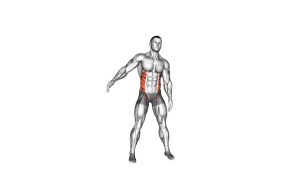
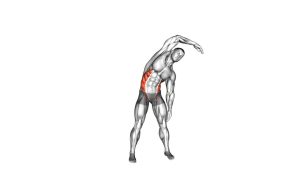
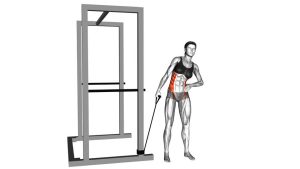
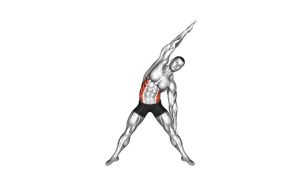
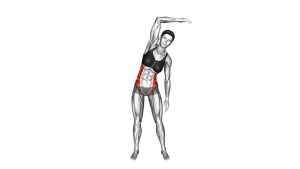
In the video, the movement is performed from a standing position with one arm extended overhead while holding a resistance band. The torso bends laterally away from the band anchor, then returns to upright in a controlled manner. Therefore, this drill is best treated as a precise oblique and lateral-flexion exercise rather than a fast conditioning movement.
Quick Overview
| Body Part | Core |
|---|---|
| Primary Muscle | Obliques |
| Secondary Muscle | Quadratus lumborum, transverse abdominis, rectus abdominis, shoulder stabilizers |
| Equipment | Resistance band with a secure low or side anchor point |
| Difficulty | Beginner to Intermediate, depending on band tension and range of motion |
Sets & Reps (By Goal)
- Technique practice: 2–3 sets × 8–10 reps per side with light band tension
- Oblique strength: 3–4 sets × 10–15 reps per side with controlled resistance
- Core endurance: 2–4 sets × 12–20 reps per side using a smooth, steady tempo
- Warm-up activation: 1–2 sets × 8–12 reps per side before core or full-body training
Progression rule: Increase control first, then increase repetitions, and only then use a stronger band. Additionally, keep both sides balanced by matching your reps and range of motion.
Setup / Starting Position
- Anchor the band securely: Attach the band low or slightly to the side so it creates diagonal tension when your arm reaches overhead.
- Stand tall: Place your feet about shoulder-width apart and keep your weight balanced through both feet.
- Hold the band overhead: Extend the working-side arm upward while keeping the elbow mostly straight.
- Set your ribs and pelvis: Keep the ribs controlled and avoid flaring the chest before the bend begins.
- Relax the neck: Keep the head aligned with the torso and avoid shrugging the shoulder toward the ear.
- Prepare the core: Lightly brace your midsection so the movement comes from a controlled side bend, not a loose collapse.
Tip: Start with a light band. If the band pulls your shoulder out of position or makes your hips shift, reduce the tension before increasing the range.
Execution (Step-by-Step)
- Begin upright: Stand tall with the band held overhead and the torso vertical.
- Create light tension: Let the band pull gently while you keep the arm long and stable.
- Bend to the side: Move the torso laterally in a smooth arc, away from the band anchor point.
- Keep the hips steady: Avoid pushing the hips far to the side or turning the pelvis.
- Maintain overhead reach: Keep the elbow extended and the shoulder controlled as the body bends.
- Pause briefly: Reach the end of your comfortable range without bouncing or forcing the spine.
- Return with control: Use your obliques to bring the torso back to upright slowly.
- Reset before the next rep: Stand tall again, regain balance, and repeat with the same tempo.
Pro Tips & Common Mistakes
- Move slowly: A controlled bend trains the obliques better than a fast swing.
- Keep the arm long: Bending the elbow reduces overhead tension and changes the movement pattern.
- Avoid twisting: Stay in a side-bending path instead of turning the chest forward or backward.
- Do not collapse into the low back: Use a comfortable range and keep the core lightly braced.
- Control the return: The upward phase matters because the band is still pulling against you.
- Keep both feet grounded: Stable feet help prevent hip shifting and unnecessary compensation.
- Do not shrug: Keep the shoulder active but not jammed toward the ear.
- Train both sides: Perform equal work on the left and right side to support balanced lateral core strength.
FAQ
What muscles does the Band Overhead Side Bend work?
The main target is the obliques. However, the quadratus lumborum, transverse abdominis, rectus abdominis, and shoulder stabilizers also assist because the band is held overhead while the torso moves laterally.
Should I feel this in my lower back?
You may feel some side-trunk involvement near the low back because the quadratus lumborum assists with lateral flexion. However, sharp pain, pinching, or heavy low-back strain is not the goal. If that happens, reduce band tension and shorten the range.
Is this exercise good for obliques?
Yes. Because the torso bends against band tension, the obliques help control both the lowering phase and the return to upright. For best results, use a slow tempo and avoid swinging.
How heavy should the resistance band be?
Use a light to moderate band. The correct band should let you keep the arm overhead, the elbow straight, and the torso controlled. If your shoulder rises, your body twists, or your hips shift too much, the band is probably too strong.
Can beginners do the Band Overhead Side Bend?
Yes, beginners can perform it with a light band and a small range of motion. Nevertheless, the movement should stay controlled. Beginners should master smooth side bending before adding stronger resistance.
How do I avoid cheating during this exercise?
Keep both feet planted, avoid bouncing, and return to upright slowly. Also, keep your chest facing forward so the movement stays in the side-bending plane instead of becoming a twist.
Recommended Equipment
- Resistance Bands Set — useful for adjusting tension levels as your oblique strength improves
- Resistance Band Door Anchor — helps create a secure anchor point for band-based core exercises
- Long Loop Resistance Bands — ideal for overhead band movements and full-body resistance drills
- Exercise Mat — provides a stable training area for warm-ups, core work, and stretching
- Foam Roller — useful for thoracic mobility and recovery work after core training
Tip: Choose equipment that lets you control the movement without forcing your shoulder, spine, or hips into uncomfortable positions.