Dumbbell Standing One-Arm Overhead Triceps Extension: Form, Sets, Tips & FAQ
Learn the Dumbbell Standing One-Arm Overhead Triceps Extension with proper form, setup, execution steps, sets by goal, common mistakes, FAQs, and recommended equipment for stronger triceps.
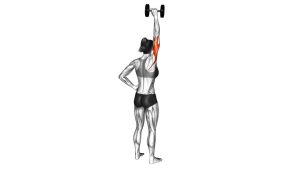
Dumbbell Standing One-Arm Overhead Triceps Extension
This exercise works best when the upper arm stays relatively fixed and the movement comes mainly from elbow extension. You should feel tension in the back of the upper arm, not in the lower back or shoulder joint. Since the exercise is performed one arm at a time, it also improves coordination, stability, and side-to-side control.
Quick Overview
| Body Part | Triceps |
|---|---|
| Primary Muscle | Triceps brachii (long head emphasis) |
| Secondary Muscle | Triceps lateral head, triceps medial head, shoulder stabilizers, core stabilizers |
| Equipment | Single dumbbell |
| Difficulty | Beginner to Intermediate |
Sets & Reps (By Goal)
- Muscle growth: 3–4 sets × 8–15 reps per arm
- Strength focus: 3–5 sets × 6–8 reps per arm
- Technique and control: 2–3 sets × 10–12 reps per arm with slower tempo
- Higher-volume arm training: 2–4 sets × 12–20 reps per arm with strict form
Progression rule: First improve control and full range of motion, then increase reps, and only after that raise the load. Keep both sides working through the same clean range.
Setup / Starting Position
- Stand tall: Place your feet about hip-width to shoulder-width apart and brace your core.
- Hold one dumbbell: Grip the dumbbell with one hand and press or place it overhead.
- Set the elbow position: Bend the working arm so the dumbbell lowers behind your head while the elbow points upward.
- Keep the upper arm close: Your upper arm should stay near your ear instead of drifting far out to the side.
- Stabilize your torso: Keep ribs down, glutes lightly engaged, and avoid leaning backward.
Tip: If balance feels unstable, stagger your stance slightly or perform the move seated with back support until your control improves.
Execution (Step-by-Step)
- Start from the stretched position: With the dumbbell behind your head, keep your elbow bent and pointed mostly upward.
- Extend the elbow: Press the dumbbell upward by straightening your arm without letting the upper arm drift too much.
- Reach the top under control: Bring the dumbbell overhead until your arm is nearly straight, but do not force a harsh lockout.
- Pause briefly: Squeeze the triceps for a moment at the top while keeping the shoulder stable.
- Lower slowly: Bend the elbow and bring the dumbbell back behind your head in a smooth, controlled motion.
- Repeat evenly: Complete all reps on one side, then switch arms and match the same form and tempo.
Pro Tips & Common Mistakes
- Keep the elbow pointed up: A stable elbow position helps keep tension on the triceps.
- Do not arch the lower back: Brace the abs and keep the ribs from flaring upward.
- Use full but pain-free range: Lower the dumbbell into a deep stretch only as far as your shoulder allows comfortably.
- Control the eccentric: Lowering too fast reduces tension and can stress the elbow.
- Avoid excessive elbow flare: Letting the arm drift too far out can reduce isolation and strain the joint.
- Train both sides evenly: Match reps, tempo, and range of motion to avoid strength imbalances.
- Do not rush the top: Finish each rep with tension on the triceps instead of bouncing in and out of lockout.
FAQ
What part of the triceps does this exercise emphasize most?
The overhead arm position places a strong stretch on the long head of the triceps, which is the main emphasis of this variation. The lateral and medial heads still assist during elbow extension.
Is it better to do this exercise one arm at a time?
Yes, the one-arm version can help improve unilateral strength, coordination, and side-to-side balance. It also lets you focus more carefully on elbow path and control.
Should my elbow stay completely still?
Not perfectly still, but it should remain relatively stable. Small movement is normal, but large drifting usually means the load is too heavy or the shoulder is compensating.
What if I feel this more in my shoulder than my triceps?
Reduce the weight, tighten your core, and keep the elbow closer to your head. If the overhead position still feels uncomfortable, limit the range or try a different triceps variation that is more shoulder-friendly.
Can beginners use this exercise?
Yes. Beginners can use it effectively with a light dumbbell and strict technique. Start with moderate reps and focus on smooth control before progressing the load.
Recommended Equipment
- Adjustable Dumbbell — ideal for progressive overload without needing multiple fixed dumbbells
- Rubber Hex Dumbbell — a simple, durable option for home or gym triceps training
- Adjustable Weight Bench — useful if you want seated support for stricter overhead extension variations
- Weightlifting Gloves — can improve grip comfort and reduce hand fatigue during longer arm sessions
- Home Gym Mirror — helpful for checking elbow position, torso alignment, and lockout symmetry
Tip: For this exercise, a comfortable dumbbell and good overhead positioning matter more than using heavy weight.