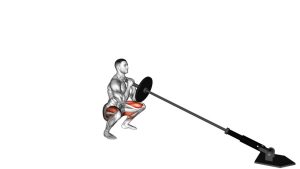
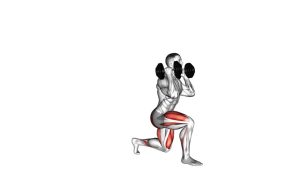
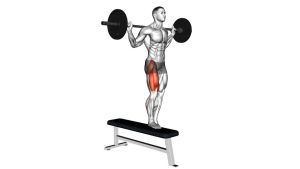
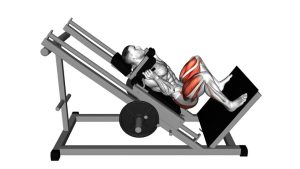
Barbell Back Squat : Proper Form, Muscles Worked & Tips
Learn the barbell back squat for stronger quads and glutes. Follow safe setup, proper depth, sets by goal, common mistakes, and expert form tips.
Barbell Squat
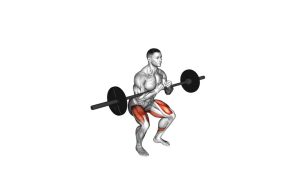
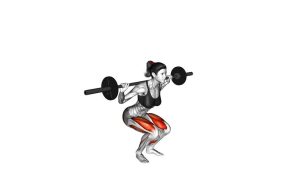
The Barbell Squat (Female) is an effective exercise for developing leg strength, especially through the quadriceps and glutes. Unlike isolated leg exercises, it requires several joints and muscle groups to coordinate during the same movement. Consequently, the abdominal muscles, spinal erectors, and hip stabilizers contribute to maintaining balance under the barbell.
During the downward phase, the hips and knees bend together as the body descends. Meanwhile, the torso inclines naturally to keep the loaded barbell balanced over the feet. At the bottom, the lifter reverses the movement by extending both hips and knees. Although squat depth varies with mobility and anatomy, control should remain consistent throughout the repetition.
Quick Overview
| Body Part | Legs |
|---|---|
| Primary Muscle | Quadriceps and gluteus maximus |
| Secondary Muscle | Adductor magnus, hamstrings, spinal erectors, calves, and core stabilizers |
| Equipment | Barbell, weight plates, squat rack, and safety bars |
| Difficulty | Intermediate (requires squat technique, bracing, and load control) |
Sets & Reps (By Goal)
- Strength development: 4–5 sets × 3–6 reps using a challenging but controlled weight. Rest approximately 2–4 minutes between working sets.
- Muscle growth (hypertrophy): 3–4 sets × 6–12 reps with controlled lowering and consistent depth. Additionally, allow 90–180 seconds of recovery between sets.
- Muscular endurance: 2–3 sets × 12–20 reps using relatively light resistance. However, stop the set before fatigue causes significant technique breakdown.
- Technique development: 2–4 sets × 5–8 reps using an empty barbell or manageable resistance. Focus on stable positioning, smooth movement, and repeatable technique.
- Explosive strength: 3–5 sets × 2–4 reps using a suitably light-to-moderate load. Drive upward with intent while maintaining control and avoiding excessive momentum.
Progression rule: First establish consistent depth, balance, and bracing. Then increase resistance gradually when all repetitions remain controlled. Moreover, track the weight, repetitions, and perceived difficulty to guide future progression. These ranges are general training examples rather than fixed requirements.
Setup / Starting Position
- Adjust the squat rack: Position the barbell slightly below shoulder height so you can unrack it by straightening your legs. Additionally, set the safety bars just below your intended squat depth.
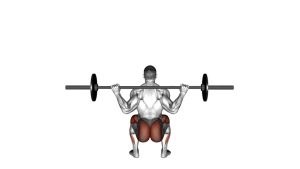
- Position the barbell: Step underneath the bar and place it across the upper trapezius muscles. The bar should rest on muscular tissue rather than directly against the neck or cervical spine.
- Establish your grip: Hold the bar securely with both hands, using a comfortable, symmetrical grip. Next, gently draw the shoulder blades together to create a stable upper-back position.
- Unrack with control: Brace your abdomen and straighten your hips and knees to lift the bar. Then take two or three small steps backward until you have adequate clearance from the rack.
- Set your stance: Position your feet approximately shoulder-width apart, with the toes pointing slightly outward. However, adjust the width according to your hip structure, ankle mobility, and comfort.
- Prepare your torso: Keep your head in a comfortable, neutral position and your upper back stable. Meanwhile, inhale and brace your abdominal muscles to support the trunk before descending.
- Check your balance: Distribute pressure across the heel, base of the big toe, and base of the little toe. As a result, your entire foot provides a stable foundation throughout the squat.
Starting Position and Barbell Alignment
Before the first repetition, check that the barbell feels balanced and your feet remain firmly planted. Furthermore, keep the bar positioned over the midfoot rather than shifting excessively forward or backward. A slight forward torso inclination is normal and depends on individual proportions. Therefore, prioritize stable alignment instead of forcing a completely vertical torso.
Tip: Begin with the empty barbell and use your first repetitions to confirm stance width, breathing, and comfortable squat depth.
Execution (Step-by-Step)
- Brace before moving: Take a controlled breath and tighten your abdominal muscles. Keep your upper back engaged and your feet firmly grounded. Then begin the squat without losing trunk stability.
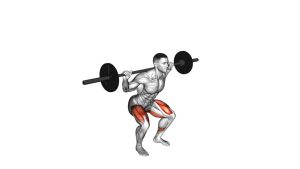
- Initiate the descent: Bend your hips and knees together, allowing the hips to travel downward and slightly backward. Meanwhile, your knees can move forward naturally as your body lowers.
- Maintain knee alignment: Keep your knees tracking generally in the same direction as your toes. Although some inward or outward movement can occur naturally, avoid uncontrolled knee collapse during loaded repetitions.
- Control the lowering phase: Descend at a steady pace while maintaining balanced pressure across both feet. Additionally, keep the barbell supported securely across the upper back throughout the movement.
- Reach a comfortable depth: Lower until your thighs approach parallel to the floor or another depth you can control. In the demonstrated movement, the thighs reach approximately parallel before the upward phase begins.
- Reverse the movement: Push through your entire foot to begin standing. At the same time, extend your knees and hips together while maintaining a firm abdominal brace.
- Drive toward standing: Continue rising without allowing the hips to shoot upward much faster than the chest. Consequently, the torso and barbell move upward together in a coordinated motion.
- Finish the repetition: Return to a stable standing position with your hips and knees extended. However, avoid excessively leaning backward or forcefully pushing the pelvis forward at the top.
- Reset and repeat: Regain your breathing and abdominal tension before beginning another repetition. Once the set is complete, walk forward carefully and return the barbell securely to the rack.
Breathing, Tempo, and Squat Depth
For controlled repetitions, lower the barbell over approximately two to three seconds before driving upward with steady force. Additionally, maintain abdominal pressure during the demanding portion of the lift. Between repetitions, reset your breath when needed. Avoid prolonged breath-holding if a healthcare professional has advised against it.
Although deeper squats may be appropriate for some lifters, maximum depth is not necessary for every training goal. Instead, choose a range that allows consistent balance, comfortable joints, and stable trunk positioning.
Pro Tips & Common Mistakes
- Keep the bar off your neck: Position it securely on the upper-back muscles. Otherwise, direct pressure on the cervical spine may create unnecessary discomfort.
- Maintain full-foot contact: Avoid lifting your heels or shifting all your weight onto the toes. Instead, distribute pressure across the entire foot for better balance.
- Control your knee position: Allow your knees to follow the natural direction of your toes. Additionally, avoid aggressively forcing them inward or outward.
- Avoid excessive forward collapse: Some torso inclination is normal during a back squat. However, sudden loss of trunk tension can make the barbell harder to control.
- Do not bounce at the bottom: Lower smoothly into your chosen squat depth. Then reverse the movement using muscular control rather than relying on an uncontrolled rebound.
- Prevent uneven weight distribution: Keep both feet planted and avoid consistently shifting toward one leg. As a result, both sides can contribute more evenly throughout the repetition.
- Brace before every repetition: Prepare your abdominal muscles before descending. Furthermore, maintain upper-back tension so the barbell remains securely positioned.
- Progress resistance gradually: Avoid increasing weight simply because the previous set felt easy. Instead, confirm that squat depth, balance, and technique remain consistent.
- Use appropriate safety equipment: Squat inside a suitable rack with correctly adjusted safety bars. Moreover, seek supervision when learning heavy barbell movements.
Improving Squat Technique Over Time
Consistency matters more than increasing resistance at every session. Therefore, practice the same movement standards across warm-up and working sets. If ankle mobility limits comfortable depth, appropriate weightlifting shoes may help some lifters maintain balance. However, footwear cannot replace controlled technique.
Recording a repetition from the side can also help identify changes in torso position, squat depth, and barbell path. Additionally, comparing several sessions may reveal improvements that are difficult to notice during training.
FAQ
Muscles Worked and Squat Technique
What muscles does the Barbell Back Squat work?
The Barbell Back Squat primarily trains the quadriceps and gluteus maximus. During the downward phase, these muscles help control hip and knee flexion. Subsequently, they contribute to extending the hips and knees as you stand.
Additionally, the adductor magnus contributes to hip extension, while the spinal erectors and abdominal muscles stabilize the torso. The hamstrings and calves also support the movement. Consequently, the squat develops coordinated lower-body strength rather than isolating a single muscle group.
Should I squat below parallel?
Squat depth depends on individual mobility, anatomy, experience, and training goals. For many lifters, reaching approximately parallel is a useful initial target. However, deeper squats can also be appropriate when balance and joint positioning remain controlled.
Instead of forcing maximum depth, gradually develop a comfortable and repeatable range of motion. Furthermore, reduce resistance if your trunk position becomes difficult to maintain at the bottom.
Is the Barbell Squat good for building glutes and quadriceps?
Yes. The barbell squat challenges both the quadriceps and gluteus maximus through coordinated hip and knee movement. Additionally, progressive resistance can support muscle growth when training volume and recovery are appropriate.
Nevertheless, muscular emphasis varies with stance, depth, proportions, and barbell position. Therefore, combine consistent squat training with other lower-body exercises when balanced muscle development is your goal.
Training Frequency, Progression, and Safety
How often should I perform Barbell Back Squats?
Many training programs include barbell squats once or twice per week. However, the appropriate frequency depends on your experience, total workload, and recovery capacity. Beginners may benefit from technique-focused sessions using manageable resistance.
Meanwhile, experienced lifters can organize heavier and lighter sessions across the week. For example, one session may emphasize strength, while another focuses on controlled repetitions and moderate resistance.
How can I make the Barbell Squat safer and more effective?
Begin by learning a stable squat pattern with bodyweight or an empty barbell. Next, use a secure rack, correctly positioned safety bars, and an appropriate stance. Additionally, keep the bar supported on your upper back while maintaining abdominal tension.
Increase resistance gradually as your technique improves. Furthermore, stop if you experience sharp pain, dizziness, or other unusual symptoms. If you have an existing joint or spinal condition, seek individualized guidance before using heavy loads.
Recommended Equipment
- Olympic Barbell — the main resistance tool for barbell back squats; choose a suitable bar weight, length, and load capacity
- Power Rack with Safety Bars — provides adjustable barbell supports and safety catches for controlled setup and heavy squat training
- Olympic Weight Plates — allow gradual resistance adjustments for strength, hypertrophy, and progressive overload
- Barbell Collars — help secure weight plates on the barbell sleeves and reduce unwanted plate movement during exercise
- Weightlifting Shoes — provide a firm, stable sole and may help some lifters achieve a comfortable squat position
Tip: Prioritize a reliable squat rack, compatible weight plates, and secure barbell collars before adding optional accessories. Furthermore, choose equipment that matches your experience, training space, and intended resistance. Proper equipment setup supports safer and more consistent lifting.