Bench Triceps Press (Head Below Bench): Form, Sets, Muscles Worked & FAQ
Learn how to do the Bench Triceps Press (Head Below Bench) with proper form. Discover muscles worked, setup tips, sets and reps by goal, common mistakes, FAQs, and recommended equipment.
Bench Triceps Press (Head Below Bench)
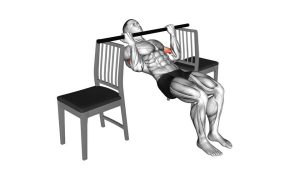
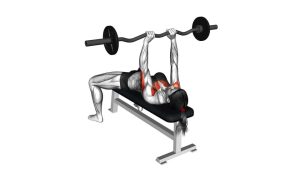
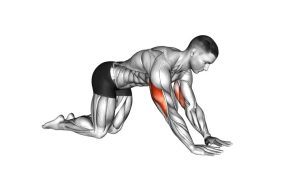
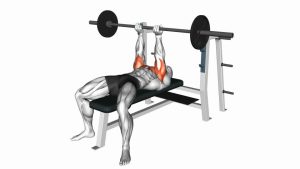
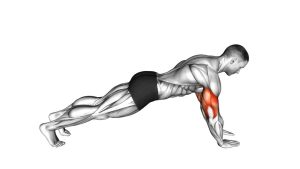
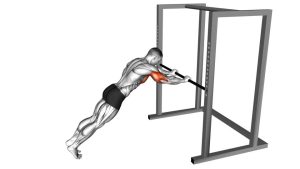
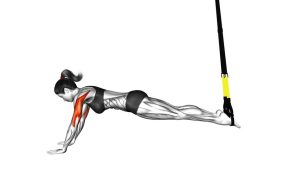
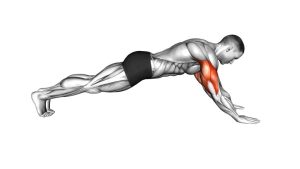
This exercise works best when you treat it like a bodyweight skullcrusher, not a push-up and not a dip. Your torso should stay braced, your elbows should do most of the moving, and the range of motion should be controlled from top to bottom. If your hips sag, elbows flare hard, or shoulders take over, reduce the angle and clean up the movement pattern before progressing.
Quick Overview
| Body Part | Triceps |
|---|---|
| Primary Muscle | Triceps brachii |
| Secondary Muscle | Anterior deltoids, chest stabilizers, core |
| Equipment | Flat bench or sturdy elevated surface |
| Difficulty | Intermediate |
Sets & Reps (By Goal)
- Muscle growth: 3–4 sets × 8–15 reps, 60–90 sec rest
- Strength-endurance: 2–4 sets × 12–20 reps, 45–75 sec rest
- Skill / movement control: 2–3 sets × 6–10 slow reps, 60 sec rest
- Finisher after pressing work: 2–3 sets × near technical fatigue with clean form
Progression rule: First improve control and range of motion. Then make the exercise harder by lowering the body angle, elevating the feet, or adding pauses at the bottom.
Setup / Starting Position
- Use a stable bench: Place both hands on the bench edge about shoulder-width apart.
- Walk the feet back: Set your body into a straight plank from head to heels.
- Lock in posture: Brace the core, squeeze the glutes, and keep the ribs down.
- Set the elbows: Point them mostly backward rather than letting them flare wide.
- Start tall: Arms straight, shoulders stable, gaze slightly toward the bench.
Tip: The farther your feet are back, the harder the exercise becomes because more bodyweight shifts into the arms.
Execution (Step-by-Step)
- Begin under control: Bend the elbows and let your head travel toward the bench.
- Keep the body rigid: Do not let the hips sag or pike excessively.
- Lower into the stretch: Continue descending until your head comes close to or slightly below bench level.
- Pause briefly: Hold the bottom for a split second while keeping tension on the triceps.
- Press back up: Extend the elbows until you return to the starting position with straight arms.
- Repeat smoothly: Maintain tucked elbows and avoid using momentum to bounce out of the bottom.
Pro Tips & Common Mistakes
- Treat it like a skullcrusher: Think elbow flexion and extension, not chest pressing.
- Keep elbows tucked: Mild natural flare is fine, but wide elbows reduce triceps focus.
- Stay in a plank: A loose core makes the movement sloppy and harder to control.
- Use full but safe range: Lower enough to stretch the triceps without crashing into the bottom.
- Control the eccentric: Slow lowering usually improves stimulus and technique.
- Do not rush lockout: Finish each rep with active elbow extension instead of bouncing through the top.
- Regress if needed: Bring the feet closer to the bench to reduce difficulty.
FAQ
What muscles does the Bench Triceps Press work most?
The main target is the triceps brachii. The shoulders, chest, and core help stabilize, but the triceps should do most of the work when your elbows stay tucked and your body remains rigid.
Is this exercise the same as a bench dip?
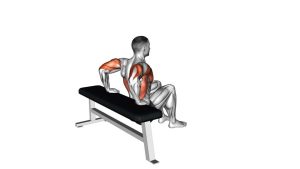
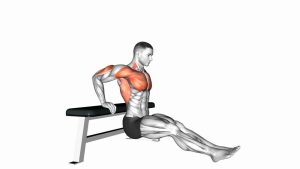
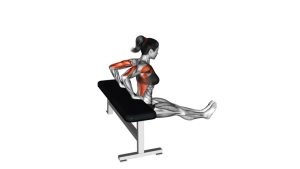
No. A bench dip emphasizes shoulder extension with the torso behind the bench, while the Bench Triceps Press uses a forward-leaning plank position and a skullcrusher-style elbow motion.
How can I make it easier?
Move your feet closer to the bench, shorten the range slightly, or slow the tempo so you can maintain better alignment. These changes reduce the effective load and help you learn the pattern.
How can I make it harder?
Walk the feet farther back, elevate the feet, add a pause at the bottom, or use a slower eccentric. Each method increases the demand on the triceps without changing the basic setup.
Where should I feel it?
You should mainly feel it in the back of the upper arms. Some core tension is normal, but you should not feel the movement dominated by the lower back, neck, or front shoulders.
Recommended Equipment (Optional)
- Adjustable Weight Bench — gives you a stable surface for bench triceps presses and many other upper-body exercises
- Push-Up Stands — useful if you want a similar pressing angle with extra wrist comfort
- Resistance Bands Set — helpful for warm-ups, triceps pump work, and joint-friendly accessory training
- Exercise Mat — adds comfort and grip for your feet during bodyweight pressing drills
- Adjustable Weighted Vest — for advanced lifters who want more overload once bodyweight reps become too easy
Tip: Start with the bench alone. Add accessories only when they improve comfort, progression, or exercise variety.