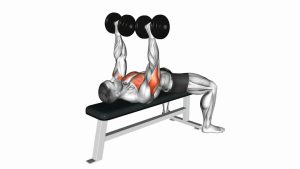
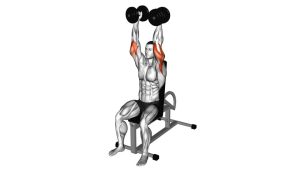
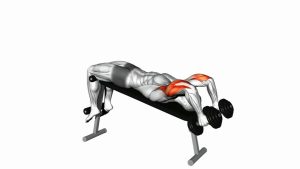
Vertical Overhead Triceps Extension: Form, Sets, Tips & FAQ
Learn the Vertical Overhead Triceps Extension with proper setup, step-by-step form, sets by goal, common mistakes, FAQs, and recommended equipment for safer, more effective triceps training.
Vertical Overhead Triceps Extension
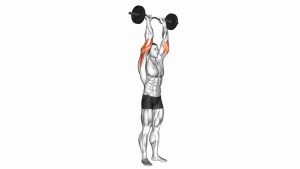
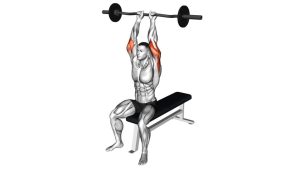
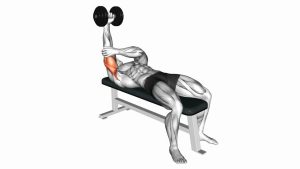
This exercise works best when the movement comes almost entirely from the elbows, not from swinging the shoulders or leaning the torso. You should feel the triceps loading as the hands travel behind the head and contracting as the arms extend upward. A clean rep is controlled at both ends, keeps tension on the target muscle, and avoids turning the movement into a loose overhead press pattern.
Quick Overview
| Body Part | Triceps |
|---|---|
| Primary Muscle | Triceps brachii (especially the long head) |
| Secondary Muscle | Anterior deltoids, upper back stabilizers, and core for posture control |
| Equipment | Bodyweight drill or light resistance option such as a dumbbell, band, or cable setup |
| Difficulty | Beginner to Intermediate |
Sets & Reps (By Goal)
- Muscle growth: 3–4 sets × 8–15 reps, 60–90 sec rest
- Technique practice: 2–3 sets × 10–12 slow reps, 45–60 sec rest
- Light finisher: 2–3 sets × 15–20 reps, short rest, controlled tempo
- Warm-up activation: 1–2 sets × 12–15 easy reps before heavier triceps work
Progression rule: Add reps first, then increase resistance only when you can keep the elbows stable, reach a comfortable overhead stretch, and finish each rep without compensating through the torso.
Setup / Starting Position
- Stand tall: Place your feet about hip-width apart and lightly brace your core.
- Raise the arms overhead: Bring the upper arms close to the sides of your head.
- Set elbow position: Keep the elbows pointing generally forward rather than flaring wide.
- Neutral torso: Keep ribs stacked over hips and avoid leaning back.
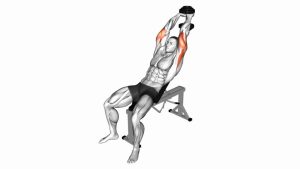
- Start in the stretched position: Bend the elbows so the hands move behind the head while the upper arms stay mostly vertical.
Tip: Think “elbows high, ribs down.” That cue usually improves both triceps tension and joint comfort.
Execution (Step-by-Step)
- Begin from the overhead stretch: Hands are behind the head, elbows bent, upper arms mostly fixed.
- Brace and stay tall: Tighten the abs slightly so the lower back does not arch as you move.
- Extend the elbows: Drive the forearms upward until the arms are nearly straight overhead.
- Squeeze at the top: Briefly contract the triceps without aggressively locking out.
- Lower under control: Bend the elbows and return the hands behind the head slowly for the next rep.
Pro Tips & Common Mistakes
- Keep the elbows in: A small natural flare is fine, but excessive flaring shifts tension away from the triceps.
- Don’t rush the bottom: The stretched position is one of the most valuable parts of the exercise.
- Avoid turning it into a press: Shoulder movement should stay minimal; elbow extension should drive the rep.
- Watch your lower back: Overarching usually means the load is too heavy or the ribcage is lifting.
- Use a smooth tempo: Controlled eccentrics usually make this exercise more effective and more joint-friendly.
- Train through a comfortable range: Go deep enough to feel the triceps stretch, but never force painful shoulder or elbow positions.
FAQ
What part of the triceps does this exercise emphasize most?
Overhead triceps work is especially useful for the long head of the triceps because the shoulder stays in an overhead position, placing that portion of the muscle under more stretch.
Should my elbows stay completely glued in?
Not perfectly. A small amount of natural movement is normal, but you should still aim to keep the elbows relatively close to the head and avoid letting them flare excessively outward.
Is this exercise better for high reps or moderate reps?
It works well in both ranges. Most lifters get great results with 8–15 reps, while higher reps can work well for lighter finishing sets or technique-focused work.
What if I feel this more in my shoulders than my triceps?
Usually that means the upper arms are moving too much, the elbows are flaring, or the torso is leaning back. Reduce the load, tighten your setup, and focus on elbow extension rather than shoulder motion.
Can beginners use this exercise?
Yes. Beginners can start with a bodyweight or very light-resistance version and focus on controlled reps, stable elbow position, and a pain-free range of motion.
Recommended Equipment
- Adjustable Dumbbell — versatile for progressive overhead triceps extensions and other arm exercises
- Adjustable Weight Bench — useful if you want seated or incline-supported overhead triceps variations
- Resistance Bands Set — good for light-resistance triceps work, warm-ups, and home training
- Wrist Wraps — helpful if overhead arm work irritates your wrists under load
- Exercise Mat — useful for floor-based warm-ups, mobility work, and bodyweight accessory training
Choose equipment that supports stable overhead arm positioning and controlled elbow movement rather than simply increasing load too quickly.