Bodyweight Side-Lying Biceps Curl: Form, Muscles Worked, Sets, Tips & FAQ
Learn how to do the Bodyweight Side-Lying Biceps Curl with proper form. Discover muscles worked, setup, step-by-step execution, sets by goal, common mistakes, FAQs, and recommended equipment.
Bodyweight Side-Lying Biceps Curl
This exercise works best when you treat it like an isolation-focused bodyweight curl rather than a full-body pull. The elbow should stay relatively stable, the shoulder should remain quiet, and the rep should feel smooth from the bottom to the peak contraction. Because resistance depends on leverage, even a small change in body angle can make the exercise much harder.
Quick Overview
| Body Part | Biceps |
|---|---|
| Primary Muscle | Biceps brachii |
| Secondary Muscle | Brachialis, brachioradialis, forearm flexors, shoulder stabilizers, core |
| Equipment | Bodyweight with a stable grip point such as suspension straps, rings, or a fixed handle |
| Difficulty | Intermediate (can feel advanced depending on leverage and control) |
Sets & Reps (By Goal)
- Muscle building: 3–4 sets × 6–12 reps per side
- Strength-focused control: 4–5 sets × 4–8 reps per side with slower lowering
- Skill and technique practice: 2–3 sets × 5–8 smooth reps per side
- Finisher / arm burnout: 2–3 sets × 10–15 lighter reps using easier leverage
Progression rule: First improve control, range, and tempo. Then increase difficulty by using a more challenging body angle, reducing assistance, or adding a brief pause at peak contraction.
Setup / Starting Position
- Choose a secure anchor: Set up with rings, suspension straps, or another fixed grip point that will not move.
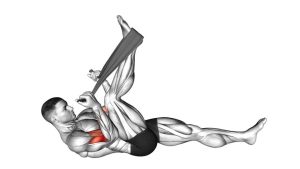
- Lie on your side: Keep your body long and aligned from shoulders through hips and legs.
- Take the working grip: Grab the handle or strap with the working arm and position the elbow close to your side.
- Set your base: Stack or lightly stagger the legs for balance and brace the core so the torso does not roll around.
- Start with light tension: Keep the shoulder packed, wrist neutral, and arm ready to pull without jerking.
Tip: Start with an easier leverage angle before trying to make the movement more horizontal or more demanding.
Execution (Step-by-Step)
- Brace and align: Keep the body side-lying, ribs controlled, and core engaged before initiating the rep.
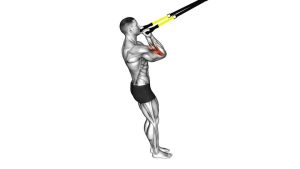
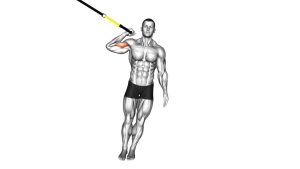
- Curl with the arm: Pull your body toward the hand by bending the elbow and contracting the biceps.
- Keep the elbow position honest: Let the biceps do the work rather than turning it into a torso twist or shoulder pull.
- Reach peak contraction: Pause briefly when the elbow is most flexed and the biceps are fully shortened.
- Lower slowly: Extend the elbow under control and return to the starting position without collapsing.
- Repeat smoothly: Maintain tension and keep each rep consistent from start to finish.
Pro Tips & Common Mistakes
- Lead with elbow flexion: Think “curl the body with the biceps,” not “drag the whole body with the shoulder.”
- Control the eccentric: The lowering phase is one of the best parts of this exercise for biceps growth.
- Use leverage intelligently: Small changes in angle dramatically affect difficulty, so adjust gradually.
- Don’t twist to cheat: Excess torso rotation reduces biceps tension and turns the movement into a compensation drill.
- Keep the wrist neutral: Avoid excessive wrist bending that shifts stress away from the upper arm.
- Stay smooth: Momentum makes this look easier than it is, but quality reps give better results.
FAQ
What muscles does the Bodyweight Side-Lying Biceps Curl work?
The main target is the biceps brachii. It also involves the brachialis, brachioradialis, forearm muscles, shoulder stabilizers, and core for body control.
Is this exercise good for building bigger biceps?
Yes, especially if you use controlled reps, enough tension, and progressive overload through leverage, tempo, or added pause work. It is a useful bodyweight option when done seriously.
Is this better than a dumbbell curl?
It is different rather than automatically better. Dumbbell curls are easier to load precisely, while this exercise offers a unique bodyweight challenge and strong tension when leverage is set well.
Why do I feel this in my shoulder more than my biceps?
Usually that means the elbow is drifting, the torso is rotating too much, or the setup is too difficult. Reduce the leverage demand and focus on curling through the elbow.
Can beginners do this exercise?
Some beginners can, but many will need an easier angle or a more supportive setup first. If you cannot control the lowering phase, regress the leverage and rebuild from there.
Recommended Equipment
- Suspension Trainer — ideal for creating adjustable body angles and a stable grip point
- Gymnastic Rings with Adjustable Straps — great for bodyweight arm work, calisthenics progressions, and grip freedom
- Workout Mat — adds comfort and stability for side-lying floor setups
- Grip Pads or Training Grips — useful if hand fatigue or slipping limits the quality of your reps
- Suspension Training Kit with Door Anchor — practical for home users who want a compact setup without a full gym
Choose equipment that gives you a secure anchor, a comfortable grip, and enough adjustability to make the exercise easier or harder as needed.