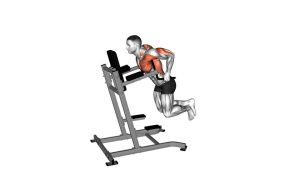
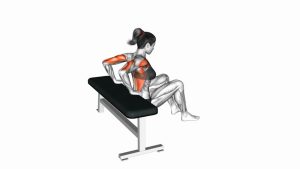
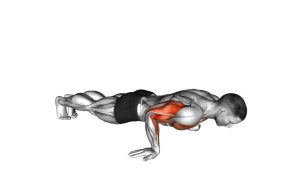
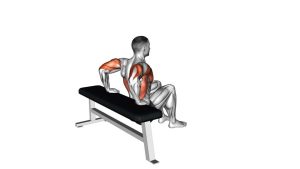
Bodyweight Kneeling Triceps Extension: Form, Muscles Worked, Sets & FAQ
Learn how to do the Bodyweight Kneeling Triceps Extension with proper form. Discover muscles worked, setup tips, step-by-step execution, sets by goal, common mistakes, FAQs, and recommended equipment.
Bodyweight Kneeling Triceps Extension
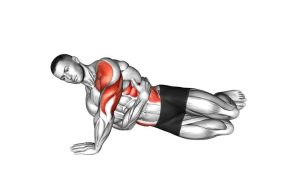
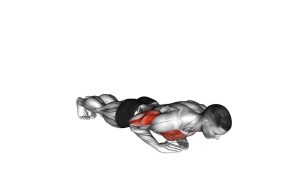
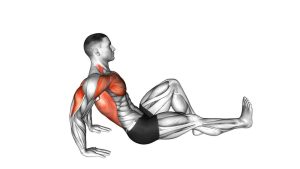
This exercise is excellent for building triceps strength and size with minimal equipment. By adjusting the height of the support surface, you can make it easier or harder while keeping the same movement pattern. A higher support usually makes the exercise more beginner-friendly, while a lower support increases the challenge.
Quick Overview
| Body Part | Triceps |
|---|---|
| Primary Muscle | Triceps brachii |
| Secondary Muscle | Anterior deltoids, chest stabilizers, core |
| Equipment | Stable bench, box, bar, countertop, or similar support surface |
| Difficulty | Beginner to Intermediate |
Sets & Reps (By Goal)
- Muscle growth: 3–4 sets × 8–15 reps with controlled tempo and 60–90 sec rest
- Strength endurance: 2–4 sets × 12–20 reps with smooth reps and short rest
- Technique practice: 2–3 sets × 6–10 reps on a higher support with strict form
- Home upper-arm training: 3 sets × 10–15 reps paired with push-ups or dips
Progression rule: First improve rep quality and range of motion, then increase reps, then lower the support surface to make the movement harder.
Setup / Starting Position
- Choose a stable surface: Use a bench, box, Smith bar, countertop, or other secure support that will not slide or wobble.
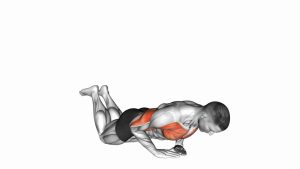
- Kneel behind the support: Place your knees on the floor and position yourself far enough back so your body creates a straight line from knees to shoulders.
- Set your hands: Grip the edge or top of the support about shoulder-width apart or slightly narrower.
- Brace your torso: Tighten your core and glutes lightly so your hips do not sag during the rep.
- Start with arms extended: Elbows should be nearly straight, shoulders stable, and head aligned with the spine.
Tip: The higher the support, the easier the exercise. This makes it easy to scale for beginners.
Execution (Step-by-Step)
- Lock in your body position: Keep the knees planted, core engaged, and torso rigid from knees through shoulders.
- Bend at the elbows: Lower your body toward the support by allowing the elbows to flex while keeping the upper arms relatively stable.
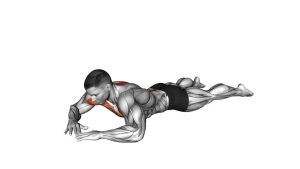
- Bring your head and upper body forward: Your forehead or head area moves toward the hands or just beyond them, depending on setup and mobility.
- Pause in the stretched position: Stop when the elbows are deeply bent and the triceps feel loaded without losing body alignment.
- Extend the elbows: Push through the hands and straighten the arms to return to the starting position.
- Finish with control: Avoid bouncing, collapsing, or using shoulder momentum to complete the rep.
Pro Tips & Common Mistakes
- Keep elbows tucked: A moderate tuck helps keep tension on the triceps and reduces unnecessary shoulder stress.
- Stay rigid from knees to shoulders: A loose torso leaks force and makes the movement feel unstable.
- Use a full but controlled range: Lower until the triceps are stretched, but don’t collapse into the bottom.
- Avoid turning it into a push-up: Too much shoulder movement shifts focus away from the triceps.
- Adjust difficulty with setup: Higher surface = easier, lower surface = harder.
- Control the eccentric: A slow lowering phase improves tension and makes the exercise more effective.
- Don’t flare the elbows excessively: Wide elbows can irritate the shoulders and reduce triceps emphasis.
- Watch the wrists: If hand position feels awkward, slightly change grip width or support angle.
FAQ
What muscles does the bodyweight kneeling triceps extension work?
The main target is the triceps brachii. The shoulders, chest stabilizers, and core assist by helping keep the body aligned and stable.
Is this exercise better than bench dips for triceps?
Many people find it more elbow- and shoulder-friendly because the movement is centered on elbow flexion and extension. It can also be scaled more easily by changing the height of the support.
How do I make kneeling triceps extensions harder?
Lower the support surface, slow the lowering phase, add a pause at the bottom, or perform more total reps while maintaining strict form.
Can beginners do this exercise?
Yes. Beginners can start with a higher bench, countertop, or bar to reduce the load and learn the correct movement pattern safely.
Why do I feel this more in my shoulders than my triceps?
That usually happens when the elbows drift too far out, the body sags, or the movement turns into a push-up pattern. Keep the torso rigid and focus on bending and straightening at the elbows.
Recommended Equipment
- Push-Up Bars — help keep the wrists in a more neutral position and are useful for triceps-focused bodyweight training
- Suspension Trainer — gives you another scalable way to perform bodyweight triceps extensions and upper-body isolation work
- Resistance Band Set — great for warm-ups, triceps pushdowns, joint-friendly accessory work, and progressive overload at home
- Exercise Mat — adds comfort for the knees and improves stability during kneeling bodyweight exercises
- Adjustable Workout Bench — provides a stable surface and lets you change exercise difficulty based on support height
Tip: For this exercise, the most useful equipment is anything that improves surface stability, wrist comfort, and difficulty scaling.