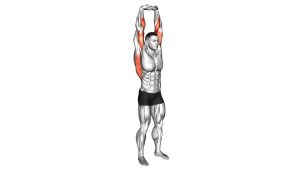
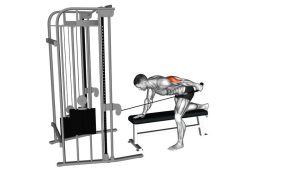
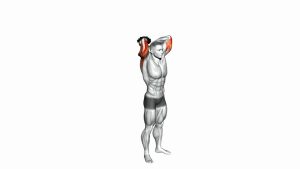
Old-School Reverse Extension: Form, Muscles Worked, Sets, Tips & FAQ
Learn how to perform the Old-School Reverse Extension for upper-arm development with proper form. Discover muscles worked, setup, execution steps, sets by goal, common mistakes, FAQs, and recommended equipment.
Old-School Reverse Extension
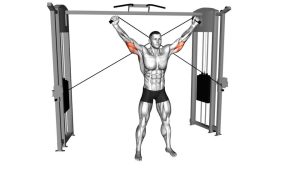
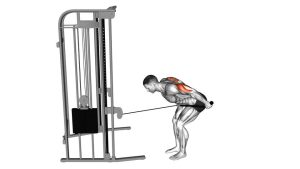
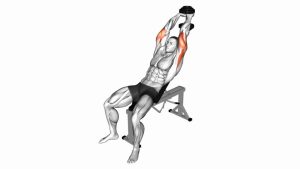
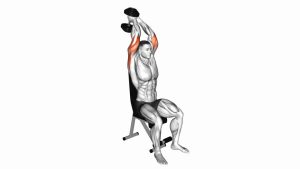
This exercise works best when you control the eccentric, keep your elbows steady, and avoid turning it into a loose press. The goal is to challenge the triceps through a long range of motion while keeping the shoulders stable and the wrists stacked over the forearms. Use a load you can lower with confidence and reverse smoothly without bouncing or flaring excessively.
Quick Overview
| Body Part | Triceps |
|---|---|
| Primary Muscle | Triceps brachii (especially the long head) |
| Secondary Muscle | Anconeus, anterior deltoids, forearms, and upper-arm stabilizers |
| Equipment | Barbell or EZ-bar, flat bench, weight plates, collars |
| Difficulty | Intermediate |
Sets & Reps (By Goal)
- Muscle growth: 3–4 sets × 8–12 reps with controlled tempo and 60–90 seconds rest
- Strength focus: 4–5 sets × 5–8 reps with a heavier load and 90–120 seconds rest
- Technique / control: 2–3 sets × 10–15 reps using a lighter weight and a slow eccentric
- Arm finisher: 2–3 sets × 12–15 reps with strict form and short rest
Progression rule: Add reps before adding load. Only increase the weight when you can keep the elbows under control and maintain a smooth stretch-to-lockout path.
Setup / Starting Position
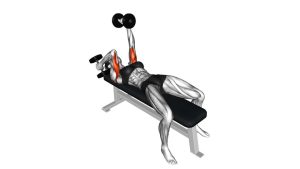
- Lie flat on a bench: Position your head near the end of the bench so the bar can travel comfortably behind it.
- Grip the bar securely: Use a shoulder-width or slightly narrow grip, depending on wrist comfort and equipment.
- Press the bar to the top: Start with the bar above your chest or shoulders with elbows nearly locked.
- Set your upper arms: Keep them stable and slightly angled back rather than letting them drift all over the place.
- Brace lightly: Keep your feet planted, core tight, and shoulders packed into the bench.
Tip: Many lifters find an EZ-bar more comfortable than a straight bar because it reduces wrist strain during the extension.
Execution (Step-by-Step)
- Lower the bar behind your head: Bend at the elbows and guide the bar in a controlled arc behind the head rather than straight to the forehead.
- Feel the stretch: Pause briefly in the bottom position when your triceps are fully lengthened and your elbows remain under control.
- Extend the elbows: Drive the bar back up by straightening the arms without turning the movement into a chest press.
- Reach the top position: Finish with the bar above the chest or shoulders and the triceps fully contracted.
- Repeat smoothly: Keep tension on the triceps and maintain the same bar path on every rep.
Pro Tips & Common Mistakes
- Lower behind the head, not just to the forehead: This increases the stretch and better targets the long head of the triceps.
- Don’t let the elbows drift excessively: A little natural movement is fine, but too much turns the lift into a hybrid press.
- Control the negative: The eccentric phase is where this exercise becomes especially effective for hypertrophy.
- Avoid ego loading: Too much weight usually causes elbow flare, shortened range, and loss of triceps tension.
- Keep wrists neutral: Bent wrists can make the lift less comfortable and reduce control.
- Use a spotter when going heavy: This is especially helpful if you are pushing near failure with a straight bar.
FAQ
What muscles does the Old-School Reverse Extension work most?
It mainly targets the triceps brachii, especially the long head because of the deep stretch created when the bar is lowered behind the head.
Is this the same as a skull crusher?
It is closely related, but this version usually uses a deeper range of motion behind the head rather than stopping near the forehead. That extra stretch can make it feel more demanding on the triceps.
Should I use a straight bar or an EZ-bar?
Both can work, but many lifters prefer an EZ-bar because it feels easier on the wrists and elbows. A straight bar can still be effective if it feels comfortable for your structure.
How heavy should I go?
Use a weight you can control through the entire range of motion. If you have to shorten the stretch, flare the elbows aggressively, or bounce out of the bottom, the load is too heavy.
Is this exercise good for building bigger upper arms?
Yes. Since the triceps make up a large portion of upper-arm size, a strict deep-stretch extension like this can be very effective for building more arm mass when programmed consistently.
Recommended Equipment
- EZ Curl Bar — often more comfortable than a straight bar for triceps extensions
- Adjustable Weight Bench — provides the stable platform needed for strict lying extensions
- Barbell Weight Plates — lets you scale resistance gradually as your triceps get stronger
- Barbell Collars — helps keep plates secure during deep-range arm work
- Wrist Wraps — optional support if your wrists feel stressed during straight-bar variations
Tip: For most lifters, an EZ-bar plus a flat bench is the most joint-friendly setup for this exercise.