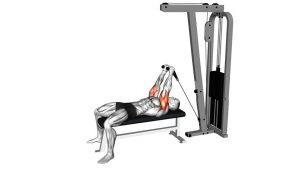
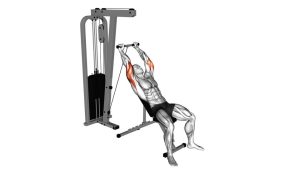
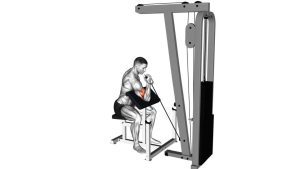
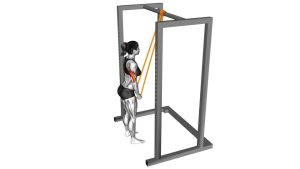
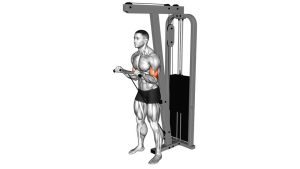
Cable High Triceps Extension: Form, Muscles Worked, Sets, Tips & FAQ
Learn how to do the Cable High Triceps Extension with proper form. Discover muscles worked, setup, step-by-step execution, sets and reps by goal, common mistakes, FAQs, and useful equipment.
Cable High Triceps Extension
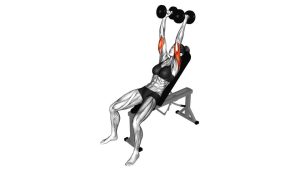
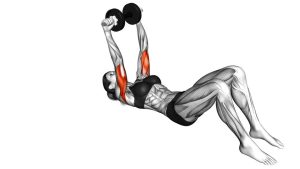
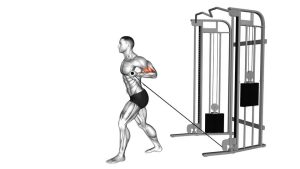
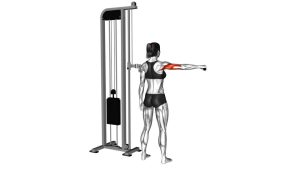
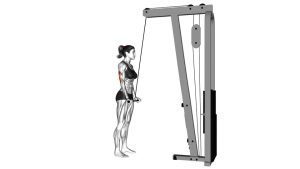
This exercise works best when you keep the torso stable, brace the core, and let the elbows do the work. From the video, the movement is performed with a controlled tempo, a smooth overhead extension path, and minimal body sway. That makes it a strong option for building triceps size, improving overhead arm control, and adding focused upper-arm work after pressing exercises.
Quick Overview
| Body Part | Triceps |
|---|---|
| Primary Muscle | Triceps brachii (long head emphasis) |
| Secondary Muscle | Lateral head and medial head of the triceps, shoulder stabilizers, core |
| Equipment | High cable pulley and rope attachment |
| Difficulty | Beginner to Intermediate |
Sets & Reps (By Goal)
- Muscle growth: 3–4 sets × 8–15 reps with controlled tempo and 45–75 seconds rest
- Technique practice: 2–3 sets × 10–12 reps using a light load and strict elbow control
- Finisher / pump work: 2–3 sets × 12–20 reps with short rest and constant tension
- Strength support for pressing: 3–4 sets × 6–10 reps with solid form and no torso swing
Progression rule: Add reps before adding weight. Only increase the load when you can keep your elbows stable, complete the full range, and avoid leaning or overextending the spine.
Setup / Starting Position
- Attach the rope: Set a rope attachment on a high pulley.
- Face away from the machine: Grab the rope and step forward so the cable tracks behind your head.
- Bring the arms overhead: Bend the elbows so the hands move behind the head and the rope sits under tension.
- Set posture: Stand tall, brace the abs, keep the ribs down, and avoid excessive lower-back arching.
- Fix the upper arms: Keep the elbows pointing generally forward/upward and hold the upper arms in place.
Tip: A staggered stance can make the exercise more stable if you tend to sway or lose your balance.
Execution (Step-by-Step)
- Start under tension: Begin with the elbows bent and the rope positioned behind the head.
- Extend the elbows: Press the rope upward and slightly forward by straightening the arms overhead.
- Keep the upper arms still: Let the elbows open without turning the movement into a shoulder press.
- Reach full contraction: Stop near full elbow extension while keeping tension on the triceps.
- Control the return: Slowly bend the elbows and guide the rope back behind the head.
- Repeat smoothly: Maintain the same path each rep with no jerking, bouncing, or torso movement.
Pro Tips & Common Mistakes
- Keep the elbows tucked enough to stay efficient: Too much flare reduces control and may stress the shoulders.
- Do not rush the lowering phase: A controlled eccentric keeps tension on the triceps and improves technique.
- Avoid lower-back arching: Brace your core and keep the ribcage stacked over the hips.
- Use a rope path that feels natural: Slight rope separation at the top can improve contraction.
- Do not chase lockout aggressively: Finish the rep with tension, not elbow snapping.
- Match load to control: If the cable pulls you out of position, the weight is too heavy.
FAQ
What muscle does the Cable High Triceps Extension target most?
It mainly targets the triceps brachii, with extra emphasis on the long head because the arms are placed overhead.
Is this better than a regular triceps pushdown?
They are both useful. Pushdowns are often easier to stabilize, while overhead cable extensions tend to bias the long head of the triceps more strongly.
Should I go heavy on this exercise?
Moderate loads usually work best. The goal is clean elbow extension and constant tension, not heaving the stack with body movement.
What if my elbows flare during the set?
Reduce the load, slow down the reps, and focus on keeping the upper arms quiet. A slightly narrower arm path usually improves comfort and control.
Where should I place this in my workout?
It works well after pressing movements such as bench press, overhead press, dips, or machine chest work. It can also be used as a dedicated triceps hypertrophy exercise on arm day.
Recommended Equipment
- Tricep Rope Cable Attachment — the most direct match for this exercise; Amazon currently shows multiple dedicated rope options for cable work.
- Bells of Steel Extra Long Tricep Rope Cable Attachment — a longer rope can allow a bigger stretch and a comfortable overhead path.
- Ergonomic Cable Attachment Handle — useful if you prefer a grippy handle option for cable arm work.
- Resistance Bands with Handles + Door Anchor — a practical home-training alternative when you do not have a cable machine.
- Heavy-Duty Door Anchor — helps recreate a high anchor point for overhead triceps extensions at home.
Choose attachments that prioritize secure grip, smooth cable tracking, and comfortable wrist positioning for overhead work.