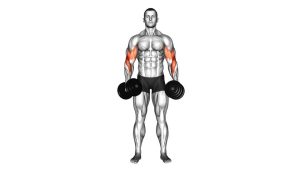
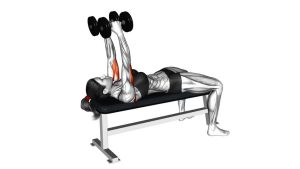
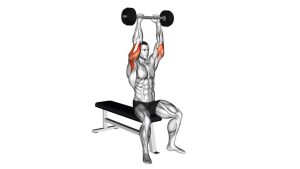
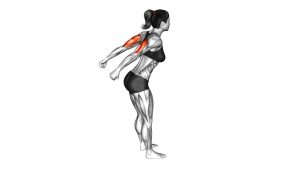
Dumbbell Kickback: Proper Form, Sets, Tips & FAQ
Learn how to perform the Dumbbell Kickback with proper form to target the triceps effectively. Includes setup, step-by-step execution, sets and reps by goal, common mistakes, FAQs, and recommended equipment.
Dumbbell Kickback
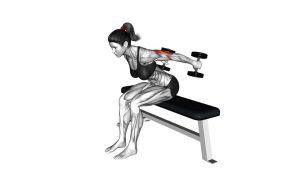
This exercise works best with strict technique, light-to-moderate load, and a deliberate squeeze at the top. You should feel the effort mainly in the back of the upper arm, not in the lower back, neck, or shoulder. The most important rule is simple: move at the elbow, not by swinging the shoulder.
Quick Overview
| Body Part | Triceps |
|---|---|
| Primary Muscle | Triceps brachii |
| Secondary Muscle | Posterior deltoid, anconeus, core stabilizers |
| Equipment | Dumbbell (single-arm or dual-arm variation) |
| Difficulty | Beginner to Intermediate |
Sets & Reps (By Goal)
- Muscle growth: 3-4 sets × 10-15 reps per arm
- Definition / pump work: 2-4 sets × 12-20 reps per arm
- Technique practice: 2-3 sets × 8-12 reps with very strict form
- Finisher after presses: 2-3 sets × 12-18 reps with short rest
Progression rule: Increase reps first, then load. Only go heavier when you can keep the elbow high, the torso stable, and the lockout smooth on every rep.
Setup / Starting Position
- Grab a dumbbell: Hold one dumbbell in one hand with a neutral grip.
- Hinge forward: Push your hips back and lean your torso forward while keeping your spine neutral.
- Set your base: Keep feet about hip- to shoulder-width apart for balance.
- Brace your body: Tighten your core and keep your chest open.
- Position the arm: Bring the working elbow up so the upper arm is close to your torso and roughly parallel to the floor.
- Start bent: Begin with the elbow at about 90 degrees and the dumbbell hanging below the upper arm.
Tip: You can place your non-working hand on your thigh or a bench for extra stability if needed.
Execution (Step-by-Step)
- Lock in the upper arm: Keep the elbow lifted and pinned in place beside your torso.
- Extend the elbow: Drive the dumbbell backward by straightening your arm.
- Reach full extension: Stop when the arm is nearly straight and the triceps are fully contracted.
- Squeeze at the top: Pause briefly for a strong lockout without swinging the shoulder.
- Lower with control: Slowly bend the elbow and return to the start position.
- Repeat evenly: Perform all reps with the same range, tempo, and body position.
Pro Tips & Common Mistakes
- Keep the elbow high: If the elbow drops, tension shifts away from the triceps.
- Don’t swing the dumbbell: Momentum reduces isolation and makes the exercise less effective.
- Use full but controlled range: Extend fully without hyperextending the elbow.
- Stay hinged: Don’t stand upright during the rep or turn it into a shoulder movement.
- Keep the wrist neutral: Avoid flicking the dumbbell at the top.
- Go lighter than you think: This is a precision triceps move, not a max-load lift.
- Pause at lockout: A brief squeeze improves mind-muscle connection and tension quality.
FAQ
What muscles do dumbbell kickbacks work?
Dumbbell kickbacks primarily target the triceps brachii, especially during the lockout portion. Secondary support comes from the rear delts and core stabilizers.
Should I go heavy on dumbbell kickbacks?
Usually no. This exercise is most effective with strict control and a clean contraction. Going too heavy often causes shoulder swing and poor elbow positioning.
Is it better to do one arm at a time?
Yes, for many people the single-arm version is easier to control and helps maintain better technique. It also makes it easier to focus on a full squeeze at the top.
Where should I feel the exercise?
You should feel it in the back of the upper arm. If you mainly feel your shoulder or lower back, check your elbow position, body angle, and weight selection.
When should I place kickbacks in my workout?
Dumbbell kickbacks work well late in an upper-body or arm session after heavier compound presses. They are excellent for isolation work, finishing sets, and high-rep triceps volume.
Recommended Equipment
- Adjustable Dumbbell — ideal for progressive overload and home training versatility
- Resistance Bands Set — useful for warm-ups, triceps burnout sets, and joint-friendly arm work
- Adjustable Weight Bench — provides support for chest-supported or one-hand-braced kickback variations
- Weightlifting Gloves — can improve grip comfort during higher-rep isolation work
- Wrist Wraps — helpful if you want extra wrist support during dumbbell sessions
Tip: For dumbbell kickbacks, the best equipment choice is often a light-to-moderate adjustable dumbbell that lets you keep form strict while progressing gradually.