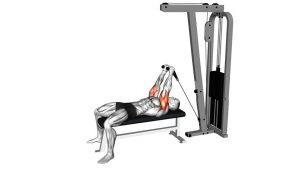
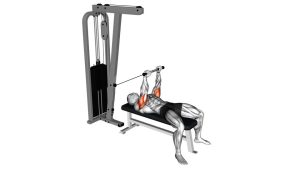
Cable Overhead Triceps Extension (Straight Bar): Form, Sets, Tips & FAQ
Learn the Cable Overhead Triceps Extension with a straight bar to build stronger, fuller triceps with extra long-head emphasis. Includes setup, execution, sets by goal, common mistakes, FAQs, and recommended equipment.
Cable Overhead Triceps Extension (Straight Bar)
This variation is excellent for lifters who want more triceps detail, better overhead arm strength, and an exercise that complements pushdowns, dips, and close-grip pressing. The cable provides steady resistance through the full range, while the straight bar gives a firm, symmetrical grip. Done properly, you should feel the triceps working hard from the stretched bottom position all the way to the top contraction.
Quick Overview
| Body Part | Triceps |
|---|---|
| Primary Muscle | Triceps brachii (long head emphasis) |
| Secondary Muscle | Lateral head and medial head of the triceps, shoulders and core as stabilizers |
| Equipment | Cable machine with straight bar attachment |
| Difficulty | Beginner to Intermediate |
Sets & Reps (By Goal)
- Muscle growth: 3–4 sets × 8–15 reps with controlled tempo and 45–75 sec rest
- Technique practice: 2–3 sets × 10–12 reps using lighter weight and strict elbow control
- Strength-focused assistance: 3–4 sets × 6–10 reps with heavier load and clean form
- Finisher / pump work: 2–3 sets × 12–20 reps with smooth constant tension
Progression rule: First improve form and range of motion, then add reps, and only after that increase the weight. The best overhead triceps extensions stay controlled from stretch to lockout.
Setup / Starting Position
- Attach the straight bar: Set the cable high and connect a straight bar attachment securely.
- Grip the bar evenly: Use an overhand grip at about shoulder width, or slightly narrower if that feels better on your elbows.
- Step away from the machine: Turn so your back faces the stack and take a staggered or shoulder-width stance for balance.
- Bring the bar overhead: Position the elbows up beside your head with the bar behind it.
- Brace your torso: Keep ribs down, core tight, and avoid flaring the chest excessively.
- Start in the stretch: Elbows bent, upper arms mostly fixed, wrists straight, neck neutral.
Tip: A small split stance often makes this exercise feel more stable and helps prevent leaning backward.
Execution (Step-by-Step)
- Lock in your upper arms: Keep the elbows lifted and close to the head without squeezing them unnaturally.
- Extend the elbows: Press the bar upward and slightly forward by straightening your arms.
- Reach near full extension: Finish the rep with the triceps contracted, but do not slam into a harsh elbow lockout.
- Pause briefly: Hold the top for a moment to feel the contraction.
- Lower under control: Bend the elbows and let the bar travel back behind the head slowly.
- Return to the stretch: Stop when you feel a deep but comfortable triceps stretch, then begin the next rep without bouncing.
Pro Tips & Common Mistakes
- Keep the elbows mostly fixed: Small movement is normal, but too much drift reduces triceps focus.
- Use the full stretch carefully: The long head responds well to overhead work, but don’t force painful depth.
- Don’t arch the lower back: Brace your abs and glutes so the torso stays steady.
- Avoid rushing the eccentric: Lowering too fast wastes one of the best parts of the exercise.
- Keep wrists neutral: Let the elbows and triceps do the work instead of bending the hands backward.
- Choose load honestly: A lighter, cleaner set usually beats a sloppy heavy set here.
- Don’t flare too wide: Excessive elbow flare can shift tension away from a clean triceps path.
- Pair it smartly: This exercise works well after presses or pushdowns for complete triceps training.
FAQ
What part of the triceps does this exercise emphasize most?
The overhead arm position places extra stretch on the long head of the triceps, which is why this variation is so popular for fuller upper-arm development.
Is a straight bar better than a rope for overhead triceps extensions?
A straight bar gives a fixed, balanced grip and can feel very stable. A rope may allow a freer wrist path. Neither is automatically better—choose the one that lets you train pain-free with strong triceps tension.
How heavy should I go on this movement?
Use a weight you can control through the full range without leaning back, flaring excessively, or losing elbow position. Most lifters benefit more from strict moderate reps than from chasing maximum load here.
Should I lock out fully at the top?
You can reach near full elbow extension, but avoid snapping into a hard lockout. Think of squeezing the triceps at the top while keeping tension on the muscle.
Can beginners use this exercise?
Yes. Beginners can learn it well with a lighter load, a stable stance, and a focus on smooth elbow motion. Start conservatively and build consistency first.
Recommended Equipment
- Straight Bar Cable Attachment — the most direct tool for this variation and a useful attachment for pressdowns, curls, and upright rows
- Cable Machine Attachment Set — a versatile bundle that often includes a straight bar, rope, row handle, and other cable accessories
- Elbow Sleeves for Weightlifting — useful for warmth, compression, and extra support during higher-volume arm training
- Wrist Wraps — helpful if your wrists feel stressed while stabilizing the straight bar overhead
- Home Gym Cable Pulley System — a practical option for lifters who want to perform overhead triceps extensions outside a commercial gym
Choose equipment that improves stability and comfort, not just load. Better setup usually means better triceps tension.