Crunch on BOSU Ball: Form, Benefits, Sets, Tips & FAQ
Learn how to do the Crunch on BOSU Ball with proper form, core control, sets, reps, common mistakes, FAQs, and recommended equipment.
Crunch on BOSU Ball
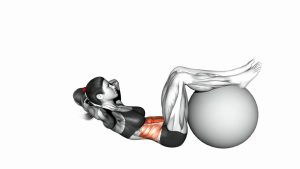
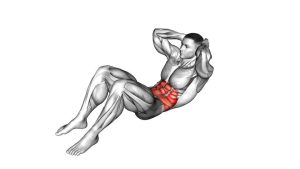
This movement is best performed with a smooth tempo and a short, focused crunch. The goal is not to sit all the way up. Instead, you should lift the head, shoulders, and upper back just enough to shorten the abs. Because the BOSU ball creates an unstable base, the exercise also trains balance, bracing, and body awareness.
In the video, the athlete begins reclined over the BOSU with the knees bent, feet flat, and arms crossed across the chest. The torso curls upward in a controlled motion, reaches a brief peak contraction, and then lowers slowly back into the stretched position. This clean rhythm makes the exercise useful for both home ab training and gym-based core sessions.
Quick Overview
| Body Part | Core |
|---|---|
| Primary Muscle | Rectus abdominis |
| Secondary Muscle | Obliques, transverse abdominis, hip flexors, deep core stabilizers |
| Equipment | BOSU ball / balance trainer |
| Difficulty | Beginner to Intermediate |
Sets & Reps (By Goal)
- Core activation: 2–3 sets × 10–12 reps with slow control.
- Muscle endurance: 3–4 sets × 12–20 reps with steady breathing.
- Beginner technique practice: 2 sets × 8–10 reps with a short range of motion.
- Ab hypertrophy focus: 3–4 sets × 10–15 reps with a 1–2 second squeeze at the top.
- Core finisher: 2–3 sets × 15–25 reps, only if form stays clean.
Progression rule: First improve control, range, and tempo. After that, add reps, longer top holds, or light resistance across the chest.
Setup / Starting Position
- Place the BOSU dome side up: Set it on a flat, non-slip surface before starting.
- Sit in front of the dome: Lower yourself back until your lower and mid-back rest comfortably on the rounded surface.
- Plant your feet: Keep both feet flat on the floor, about hip-width apart, with knees bent.
- Position your torso: Let your upper back extend slightly over the BOSU so the abs feel lightly stretched.
- Set your arms: Cross your arms over your chest or place fingertips lightly near the temples without pulling the head.
- Brace gently: Tighten your core enough to control the spine, but avoid holding your breath.
The BOSU should support your back, not force your spine into an uncomfortable arch. Adjust your position until the movement feels stable and controlled.
Execution (Step-by-Step)
- Start from the stretched position: Keep your feet grounded and allow your torso to recline slightly over the BOSU.
- Exhale before curling: Breathe out as you begin to bring the ribs toward the pelvis.
- Lift the shoulders: Curl the head, shoulders, and upper back upward without turning the movement into a full sit-up.
- Keep the hips still: Do not thrust the hips, bounce off the BOSU, or shift the feet.
- Squeeze at the top: Pause briefly when the abs are fully contracted.
- Lower with control: Return slowly until your torso extends over the dome again.
- Repeat cleanly: Keep every rep smooth, controlled, and focused on abdominal contraction.
Pro Tips & Common Mistakes
Pro Tips
- Think ribs to pelvis: This cue helps target the abs instead of pulling from the neck.
- Use the BOSU curve: Let the dome create a gentle stretch at the bottom, then crunch from that position.
- Exhale on the way up: A strong exhale improves abdominal contraction.
- Keep the reps short and strict: A smaller crunch with control is better than a large, sloppy sit-up.
- Pause at the top: Hold the contracted position briefly to remove momentum.
Common Mistakes
- Pulling the neck: Avoid using the hands to drag the head forward.
- Using momentum: Do not bounce off the BOSU to start the next rep.
- Lifting the hips: Keep the pelvis stable so the abs do the work.
- Going too far up: Turning the movement into a sit-up shifts tension away from the abs.
- Holding the breath: Breathe smoothly through every repetition.
- Placing the BOSU too low: If the dome sits under the hips instead of the lower back, the exercise loses its correct line.
FAQ
What muscles does the Crunch on BOSU Ball work?
The main muscle worked is the rectus abdominis. The obliques, transverse abdominis, hip flexors, and smaller stabilizing muscles also assist because the BOSU creates an unstable surface.
Is the BOSU ball crunch better than a floor crunch?
It is not automatically better, but it offers a larger range of motion and a greater stability challenge. Floor crunches are easier to control, while BOSU crunches add balance and a deeper abdominal stretch.
Should beginners do crunches on a BOSU ball?
Yes, beginners can use this exercise if they move slowly and keep the range small. Start with fewer reps and focus on control before increasing volume.
Where should I feel this exercise?
You should feel it mainly in the front of your abs. If you feel it mostly in your neck, lower back, or hip flexors, reduce the range and focus on curling the ribs toward the pelvis.
Can I add weight to the BOSU ball crunch?
Yes, but only after your bodyweight form is stable. Hold a light plate or dumbbell across the chest and avoid swinging the weight.
How many reps should I do?
Most people do well with 10–20 controlled reps per set. Use lower reps for strict strength work and higher reps for endurance.
Recommended Equipment
- BOSU Balance Trainer — the main tool for performing the exercise with proper curved support.
- Non-Slip Exercise Mat — helps keep the BOSU stable and protects the floor during core training.
- Light Weight Plate — useful for advanced progressions once bodyweight reps are controlled.
- Adjustable Dumbbells — can be held across the chest for loaded crunch variations.
- Core Sliders — helpful for pairing BOSU crunches with planks, mountain climbers, and ab roll-style drills.
Tip: The BOSU ball is the key item for this exercise. Extra tools should only be used after your bodyweight technique feels stable and pain-free.