Dumbbell Incline Triceps Extension: Proper Form, Sets, Tips & FAQ
Learn the Dumbbell Incline Triceps Extension with proper form, setup tips, sets by goal, common mistakes, FAQs, and recommended equipment to build stronger, fuller triceps safely.
Dumbbell Incline Triceps Extension
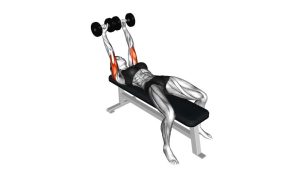
This exercise is excellent for building triceps size, especially if you want more challenge in the stretched position. The incline setup can make the movement feel more demanding than a flat-bench version, so use a weight you can control from start to finish. You should feel strong tension through the back of the upper arms, not discomfort in the elbows, wrists, or shoulders.
Quick Overview
| Body Part | Triceps |
|---|---|
| Primary Muscle | Triceps brachii (especially the long head) |
| Secondary Muscle | Anconeus, forearm stabilizers, shoulder stabilizers |
| Equipment | Dumbbells and an incline bench |
| Difficulty | Intermediate |
Sets & Reps (By Goal)
- Muscle growth: 3–4 sets × 8–12 reps with 60–90 sec rest
- Strength-focused accessory work: 3–5 sets × 6–8 reps with 90–120 sec rest
- Technique and control: 2–3 sets × 10–15 reps with light-to-moderate weight
- High-rep finishing set: 2–3 sets × 12–15 reps with strict tempo and full control
Progression rule: Add reps first while keeping your elbows stable and your range controlled. Increase weight only when you can maintain a smooth eccentric and a clean lockout without shoulder compensation.
Setup / Starting Position
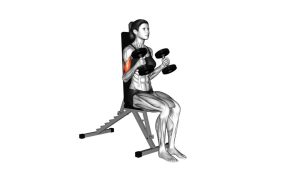
- Set the bench: Adjust an incline bench to about 30–45 degrees.
- Grab the dumbbells: Sit down with a dumbbell in each hand and carefully lean back onto the bench.
- Plant your feet: Keep both feet flat on the floor for full-body stability.
- Press to the start: Extend the dumbbells above your upper chest/shoulders with palms facing each other or slightly angled inward.
- Fix the upper arms: Keep your elbows pointed mostly upward and your upper arms steady throughout the set.
Tip: A neutral or semi-neutral grip often feels more comfortable on the wrists and elbows than forcing the palms completely forward.
Execution (Step-by-Step)
- Start at lockout: Hold the dumbbells over your shoulders with your elbows extended but not hyperextended.
- Lower by bending the elbows: Bring the dumbbells down slowly toward the sides of your head or slightly behind it.
- Keep the upper arms quiet: Let the elbows bend, but avoid turning the movement into a chest press or shoulder pullover.
- Reach a deep stretch: Lower until you feel a strong but comfortable triceps stretch without losing control.
- Extend back up: Drive through the triceps to straighten the elbows and return the dumbbells to the start position.
- Reset and repeat: Pause briefly at the top, stabilize the dumbbells, and begin the next rep with the same path.
Pro Tips & Common Mistakes
- Use a controlled negative: The lowering phase is where a lot of the training value comes from.
- Do not rush the bottom: Stay in control as the triceps lengthen under load.
- Keep elbows from flaring excessively: A little natural movement is fine, but too much flare reduces efficiency and may stress the joints.
- Don’t turn it into a press: If your shoulders take over, reduce the weight and focus on elbow motion.
- Maintain neutral wrists: Avoid letting the dumbbells fold your wrists backward.
- Choose the right bench angle: Moderate incline usually works best for balancing stretch, stability, and comfort.
- Use manageable loads: Heavy dumbbells can quickly break form in this exercise.
FAQ
What muscle does the dumbbell incline triceps extension work most?
It primarily targets the triceps brachii, with strong emphasis on the long head because the incline position places the upper arm in a posture that increases stretch.
Is this better than flat dumbbell triceps extensions?
Not always better, but different. The incline version often creates a stronger stretch and may feel more challenging in the bottom range, while the flat version can feel slightly more stable for some lifters.
How low should I bring the dumbbells?
Lower them until you feel a strong, controlled stretch in the triceps without losing elbow position or causing pain. Your ideal range depends on mobility, joint comfort, and dumbbell control.
Should both dumbbells move together?
Yes, ideally both arms should move in sync. If one side lags behind, reduce the weight and focus on even tempo and control.
Who should be cautious with this exercise?
Anyone with elbow tendon irritation, wrist pain, or shoulder discomfort should start light, shorten the range if needed, or choose a variation that feels more joint-friendly.
Recommended Equipment
- Adjustable Dumbbells — versatile for progressive overload without needing a full rack
- Adjustable Incline Weight Bench — lets you set the ideal incline angle for comfort and triceps emphasis
- Wrist Wraps for Weightlifting — helpful if you want extra wrist support during dumbbell extensions
- Exercise Mat — adds comfort and floor protection around your bench setup
- Liquid Chalk — improves grip security if your hands get sweaty during pressing and arm work
Tip: The most important tools here are a stable adjustable bench and dumbbells you can control precisely. This exercise rewards clean mechanics more than heavy loading.