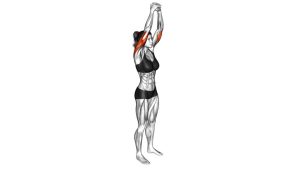
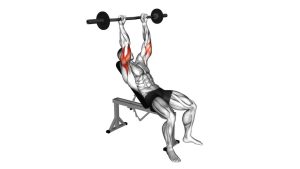
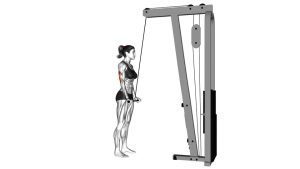
Seated Cable Overhead Triceps Extension: Proper Form, Sets, Tips & FAQ
Learn the Seated Cable Overhead Triceps Extension for stronger upper arms and better long-head triceps development. Includes setup, step-by-step execution, sets by goal, common mistakes, FAQ, and recommended equipment.
Seated Cable Overhead Triceps Extension
This exercise works best when you control the rope behind the head, keep your elbows from flaring excessively, and avoid turning the movement into a full-body press. A stable seated position helps reduce momentum and makes it easier to focus tension where it belongs: the triceps.
Quick Overview
| Body Part | Triceps |
|---|---|
| Primary Muscle | Triceps brachii (long head emphasis) |
| Secondary Muscle | Lateral head and medial head of the triceps; shoulders and core stabilize lightly |
| Equipment | Cable machine, low pulley setup, rope attachment, bench or seat |
| Difficulty | Intermediate |
Sets & Reps (By Goal)
- Muscle growth: 3–4 sets × 8–15 reps
- Strength-focused accessory work: 3–4 sets × 6–10 reps
- Controlled pump / burnout work: 2–3 sets × 12–20 reps
- Technique practice: 2–3 sets × 10–12 reps with light weight
Progression rule: Increase reps before increasing the load. If elbow position starts drifting or you lose control in the stretched position, reduce the weight and clean up the rep quality first.
Setup / Starting Position
- Set the cable: Attach a rope to a low pulley or a behind-the-body cable path that allows the rope to travel upward behind your head.
- Sit down securely: Sit tall on a bench or stable seat with your feet flat on the floor.
- Bring the rope overhead: Hold the rope with a neutral grip and bring it behind your head so your elbows are bent.
- Position the upper arms: Keep your elbows pointing mostly upward and slightly forward instead of flaring wide out to the sides.
- Brace your torso: Keep your ribs down, chest tall, and core tight to avoid excessive back arching.
Tip: Think “elbows stay parked” before you even begin the first rep. Stability in the upper arm is what turns this into a true triceps isolation movement.
Execution (Step-by-Step)
- Start in the stretch: Let the rope sit behind your head with your elbows bent and the triceps loaded.
- Extend your elbows: Press the rope upward by straightening the arms without turning it into a shoulder press.
- Separate slightly at the top: As you near lockout, allow the rope ends to move apart naturally for a stronger triceps squeeze.
- Pause briefly: Hold the top for a moment and contract the triceps hard without hyperextending the elbows.
- Lower with control: Return the rope behind your head slowly until you feel a deep but comfortable stretch.
- Repeat smoothly: Keep tension on the muscle and avoid bouncing out of the bottom position.
Pro Tips & Common Mistakes
- Keep the elbows relatively fixed: Too much upper-arm movement reduces isolation.
- Use full range carefully: The stretched bottom position is valuable, but only if you can control it.
- Don’t rush the eccentric: Lowering slowly improves tension and makes each rep more effective.
- Avoid over-arching the lower back: Stay braced so the triceps do the work.
- Do not slam into lockout: Extend hard, but keep the elbows safe and controlled.
- Choose the right seat height: A stable seated setup helps you stay aligned and balanced.
FAQ
What part of the triceps does this exercise emphasize most?
This variation strongly emphasizes the long head of the triceps because the arms are overhead, which places that portion of the muscle under more stretch compared with many standard pushdown variations.
Is this better than a cable pushdown?
Not necessarily better, but different. Pushdowns are great for overall triceps work, while overhead extensions often feel better for targeting the long head through a larger stretch.
Should I go heavy on seated cable overhead triceps extensions?
You can train moderately heavy, but this exercise usually works best with controlled reps, stable elbows, and smooth tempo rather than sloppy max loading.
Why do my elbows flare during the set?
Elbows usually flare because the weight is too heavy, mobility is limited, or the lifter loses torso stability. Reduce the load slightly and focus on keeping the upper arms in a more consistent path.
Can beginners use this exercise?
Yes, but many beginners should start light and practice control first. If the setup feels awkward, simpler cable pushdowns may be easier to learn before progressing to overhead variations.
Recommended Equipment (Optional)
- Triceps Rope Cable Attachment — the most useful attachment for comfortable overhead triceps extensions
- Adjustable Weight Bench — provides a stable seated position for stricter reps
- Elbow Sleeves for Weightlifting — useful for warmth, support, and comfort during arm training
- Home Gym Cable Machine — ideal if you want a cable setup for overhead triceps work at home
- Resistance Bands Set — a practical backup option for triceps extensions when a cable machine is not available
Tip: Prioritize a good rope attachment and a stable seat first. Those two upgrades usually make the biggest difference in comfort and execution quality.