Dumbbell Incline Biceps Curl: Form, Benefits, Sets, Tips & FAQ
Learn how to perform the Dumbbell Incline Biceps Curl with proper form to target the biceps through a deep stretch. Includes setup, execution, sets by goal, common mistakes, FAQs, and recommended equipment.
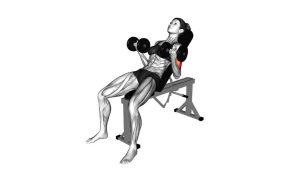
Dumbbell Incline Biceps Curl
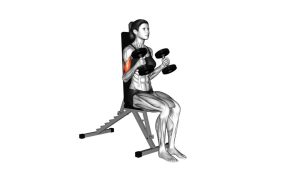
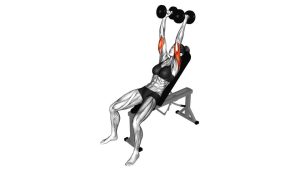
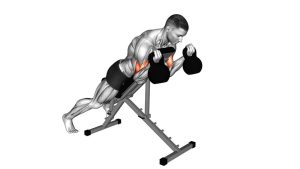
This exercise is best used as a strict biceps isolation movement. Because the bench fixes your torso in place and your arms begin from a stretched position, even moderate weights can feel challenging. Focus on clean elbow flexion, a full but comfortable range of motion, and a slow eccentric rather than trying to swing heavy dumbbells.
Quick Overview
| Body Part | Biceps |
|---|---|
| Primary Muscle | Biceps brachii (with strong emphasis on the long head) |
| Secondary Muscle | Brachialis, brachioradialis, forearm flexors |
| Equipment | Dumbbells and an adjustable incline bench |
| Difficulty | Beginner to Intermediate |
Sets & Reps (By Goal)
- Muscle growth: 3–4 sets × 8–12 reps with 60–90 seconds rest
- Technique and control: 2–3 sets × 10–15 reps with slow lowering and lighter load
- Strength-focused arm work: 3–4 sets × 6–8 reps with strict form and full control
- Finisher / pump work: 2–3 sets × 12–15 reps with short rests and smooth tempo
Progression rule: Add reps before adding load when possible. Once you can complete all sets cleanly without swinging, increase the dumbbells in small steps.
Setup / Starting Position
- Adjust the bench: Set an incline bench to roughly 45–60 degrees.
- Sit back fully: Keep your upper back and head supported by the bench with your chest open.
- Plant your feet: Place both feet flat on the floor for stability.
- Hold the dumbbells at your sides: Let the arms hang straight down with the elbows slightly behind the torso.
- Start with palms forward: Use a supinated grip and keep the wrists neutral.
Tip: If the shoulder stretch feels too aggressive, slightly reduce the incline angle or use a shorter bottom range until mobility and control improve.
Execution (Step-by-Step)
- Brace and stay tall: Keep your shoulders down and back lightly against the bench.
- Initiate the curl: Bend the elbows and curl the dumbbells upward without letting the shoulders roll forward.
- Keep elbows mostly fixed: The upper arms should stay close to their starting position instead of drifting forward.
- Lift under control: Bring the dumbbells toward shoulder level while maintaining a palms-up position.
- Squeeze the biceps: Pause briefly near the top without relaxing tension completely.
- Lower slowly: Return the dumbbells to the stretched bottom position with a controlled eccentric.
- Repeat smoothly: Keep every rep strict and avoid using body momentum.
Pro Tips & Common Mistakes
- Use less weight than standing curls: The incline position makes this variation much harder to cheat.
- Don’t swing from the bottom: Let the biceps do the work instead of bouncing out of the stretched position.
- Keep the elbows quiet: Too much shoulder movement turns it into a front-delt-assisted curl.
- Control the eccentric: Lowering slowly improves tension and keeps the rep honest.
- Don’t over-flex the wrists: Keep them mostly neutral so tension stays on the biceps.
- Use full but pain-free range: A deep stretch is useful, but not if it causes joint discomfort.
- Match both sides: Keep tempo and range symmetrical to avoid one arm dominating.
FAQ
What does the dumbbell incline biceps curl target most?
It primarily targets the biceps brachii, with extra emphasis on the long head because the arms start slightly behind the torso.
Why does this feel harder than a normal dumbbell curl?
The incline bench reduces body English and places the biceps under tension from a stretched position, so you cannot rely on momentum as easily.
How heavy should I go on incline curls?
Use a weight that lets you keep your elbows controlled and your lowering phase smooth. Most people need less weight here than on standing curls.
Should I curl both arms together or alternate?
Both methods can work. Curling both at once is efficient, while alternating can help you focus on one arm at a time and reduce momentum.
Is this exercise good for building biceps peak?
It is a popular choice for biceps development because the incline position challenges the biceps from a long muscle length and makes strict reps easier to maintain.
Recommended Equipment
- Adjustable Dumbbells — versatile for progressive overload and convenient for home arm training
- Adjustable Incline Weight Bench — essential for setting the proper angle and supporting strict incline curls
- Wrist Wraps — useful for lifters who want extra wrist support during curling work
- Lifting Straps — optional for reducing grip fatigue during high-volume dumbbell training
- Fat Grip Attachments — optional accessory to increase grip challenge and forearm involvement
Tip: For this exercise, the most important pieces are a stable adjustable bench and dumbbells you can progress gradually.