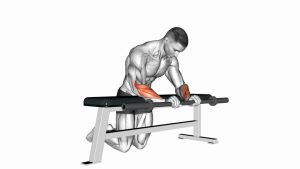
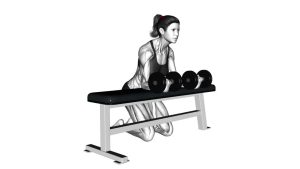
Dumbbell One-Arm Reverse Wrist Curl: Form, Sets, Muscles Worked & FAQ
Learn how to perform the Dumbbell One-Arm Reverse Wrist Curl with proper form to strengthen the forearm extensors and improve wrist stability. Includes setup, execution, sets by goal, mistakes, FAQs, and recommended equipment.
Dumbbell One-Arm Reverse Wrist Curl
This exercise works best when performed with light-to-moderate weight, a strict wrist-only motion, and a slow tempo. Because the range of motion is small, quality matters more than load. You should feel the work on the top side of the forearm, not in the shoulder, elbow, or lower back. Keeping the forearm supported helps isolate the target muscles and prevents momentum from taking over.
Quick Overview
| Body Part | Forearms |
|---|---|
| Primary Muscle | Forearm extensors |
| Secondary Muscle | Wrist stabilizers, finger extensors, grip-support muscles |
| Equipment | 1 dumbbell and a bench, thigh, or other support surface |
| Difficulty | Beginner |
Sets & Reps (By Goal)
- Muscle building: 3–4 sets × 12–20 reps per arm
- Forearm endurance: 2–4 sets × 15–25 reps per arm
- Strength and control: 3–5 sets × 8–12 reps per arm with strict tempo
- Warm-up / activation: 1–2 sets × 15–20 light reps per arm
Progression tip: Increase reps first, then increase weight gradually. Small muscles respond well to controlled volume and consistent technique rather than aggressive jumps in load.
Setup / Starting Position
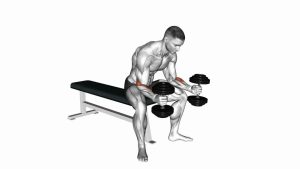
- Sit down securely: Sit on a bench or chair with good posture and both feet planted on the floor.
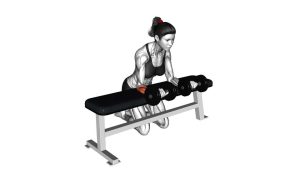
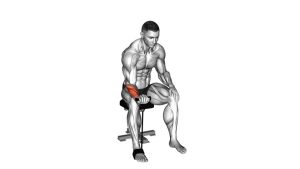
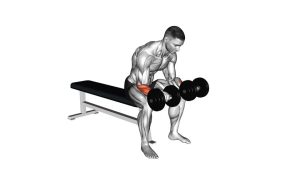
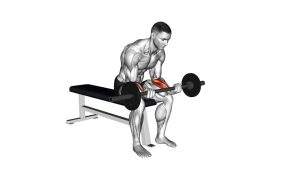
- Support the working forearm: Rest one forearm across your thigh or a bench, with the wrist hanging just beyond the edge.
- Use a pronated grip: Hold the dumbbell with your palm facing down.
- Keep the forearm still: Your elbow and forearm should stay fixed throughout the set.
- Start from a lowered wrist position: Let the wrist bend slightly downward under control before beginning the first rep.
Tip: A firm support position makes it much easier to isolate the wrist and keep the movement clean.
Execution (Step-by-Step)
- Brace the arm: Keep your forearm pressed into the support surface so only the wrist can move.
- Extend the wrist upward: Lift the back of your hand toward the ceiling by contracting the forearm extensors.
- Raise with control: Move through a smooth, short arc without swinging the dumbbell.
- Pause at the top: Briefly squeeze at peak contraction for better muscle activation.
- Lower slowly: Return the dumbbell to the starting position under control, allowing the wrist to come back down without dropping it.
- Repeat evenly: Complete all reps on one side, then switch arms.
Pro Tips & Common Mistakes
- Use lighter weight than you think: Wrist extensors are small muscles, and strict form matters more than heavy load.
- Do not rush the lowering phase: The eccentric portion is excellent for forearm development and tendon resilience.
- Keep the motion small and precise: Overextending the wrist or forcing range can create unnecessary joint stress.
- Do not swing the dumbbell: Momentum reduces tension on the target muscles.
- Keep the shoulder relaxed: This is a wrist exercise, not an upper-arm movement.
- Train both flexors and extensors: Pairing reverse wrist curls with standard wrist curls can help build more balanced forearms.
FAQ
What muscles does the Dumbbell One-Arm Reverse Wrist Curl work?
It primarily targets the forearm extensors, which run along the top side of the forearm and are responsible for extending the wrist. It also involves smaller stabilizers that support grip and wrist control.
Should I use heavy or light weight for reverse wrist curls?
Most people should use a light-to-moderate weight. Because the wrist extensors are relatively small, heavy weights often cause cheating, reduced range of motion, and joint discomfort.
Is this exercise good for grip strength?
Yes, indirectly. While it does not train crushing grip the same way heavy carries or holds do, it helps strengthen the muscles that stabilize the wrist, which can improve overall hand and forearm function.
How often should I train this exercise?
For most lifters, 1–3 times per week is enough. Forearm work responds well to consistent training, but too much volume can irritate the wrists or tendons if recovery is poor.
Can beginners do one-arm reverse wrist curls?
Yes. This is a beginner-friendly exercise as long as the weight stays manageable and the movement remains slow, controlled, and pain-free.
Recommended Equipment
- Adjustable Dumbbell — convenient for micro-loading and progressing forearm work gradually
- Rubber Hex Dumbbell — stable, simple, and ideal for seated single-arm wrist exercises
- Adjustable Weight Bench — provides a solid support surface for better positioning and cleaner isolation
- Wrist Wraps — useful for lifters who want extra support during higher-volume wrist training
- Forearm Trainer / Grip Strengthener — a useful accessory for adding extra forearm and hand work alongside wrist curls
Tip: For this exercise, an adjustable dumbbell is especially useful because small weight jumps are usually better for wrist training than large ones.