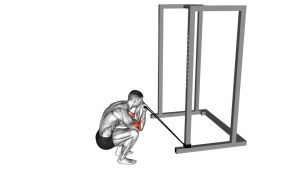
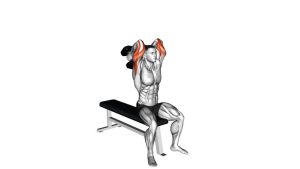
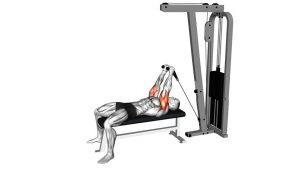
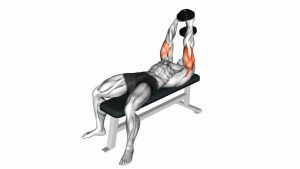
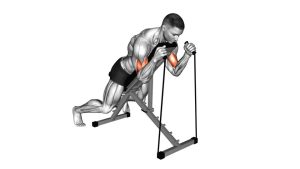
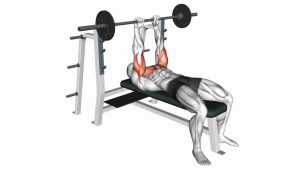
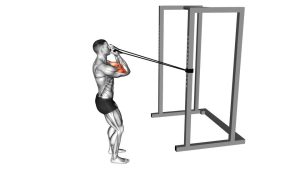
Resistance Band Overhead Triceps Extension: Form, Sets, Tips & FAQ
Learn the Resistance Band Overhead Triceps Extension to build stronger upper arms with minimal equipment. Step-by-step form, sets by goal, common mistakes, FAQs, and recommended gear.
Resistance Band Overhead Triceps Extension
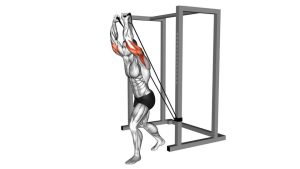
This exercise works best when the elbows stay pointed up and the band is moved with control from a deep stretch to a strong overhead extension. You should feel the triceps doing most of the work, especially along the back of the upper arms. Keep your ribs down, core braced, and avoid letting the lower back arch just to finish the rep.
Quick Overview
| Body Part | Triceps |
|---|---|
| Primary Muscle | Triceps brachii (long head emphasized) |
| Secondary Muscle | Triceps lateral and medial heads, shoulders and core stabilizers |
| Equipment | Resistance band |
| Difficulty | Beginner to Intermediate |
Sets & Reps (By Goal)
- Muscle building: 3-4 sets × 8-15 reps with 45-75 seconds rest
- General toning: 2-4 sets × 12-20 reps with 30-60 seconds rest
- Warm-up / activation: 2-3 sets × 15-20 controlled reps with a light band
- End-of-workout burnout: 1-2 sets × 20+ reps or near technical fatigue
Progression rule: First add reps with clean form, then increase band tension. Do not move to a heavier band if you need to flare the elbows or arch the lower back to finish the set.
Setup / Starting Position
- Anchor the band: Stand on the band or secure it under your feet so it rises behind you.
- Grip securely: Hold one end in each hand and bring your hands overhead.
- Set elbow position: Bend your elbows so your hands move behind your head while your upper arms stay mostly vertical.
- Brace your body: Stand tall with a neutral spine, ribs down, and core engaged.
- Start in the stretch: The band should already have light tension at the bottom.
Tip: Use a split stance if you need extra balance or stability while learning the movement.
Execution (Step-by-Step)
- Begin from the bottom: With hands behind the head, keep your elbows pointing up and close to your head.
- Extend the elbows: Press the band upward until your arms are nearly straight overhead.
- Squeeze at the top: Contract the triceps hard for a brief pause without shrugging the shoulders.
- Lower under control: Bend the elbows slowly and return to the stretched position behind the head.
- Repeat smoothly: Keep tension on the band and maintain the same elbow path on every rep.
Pro Tips & Common Mistakes
- Keep elbows tucked: Letting them flare wide reduces tension on the target area.
- Do not rush lockout: Finish with control and a full triceps squeeze.
- Avoid excessive back arch: Brace the abs so the movement stays in the elbows, not the spine.
- Use full but comfortable range: Lower into a stretch, but do not force painful elbow flexion.
- Control the negative: The lowering phase helps keep tension high and technique honest.
- Match the band to your strength: Too much resistance usually causes elbow flare and momentum.
FAQ
What part of the triceps does this exercise target most?
The overhead arm position places extra stretch on the long head of the triceps, which makes this variation excellent for overall upper-arm development.
Is a resistance band overhead triceps extension good for home workouts?
Yes. It is one of the most convenient triceps exercises for home training because it needs very little space and still provides continuous resistance through the rep.
Should I lock out my elbows completely?
You can reach near full extension, but avoid jamming the elbows aggressively. Focus on a strong squeeze with smooth control instead of snapping into lockout.
Why do I feel this in my shoulders more than my triceps?
That usually happens when the elbows drift back or wide, or when the band is too heavy. Use a lighter band and keep the upper arms more stable beside your head.
Can beginners use this exercise?
Absolutely. Beginners should start with a lighter band and moderate reps, focusing on elbow control and posture before increasing resistance.
Recommended Equipment (Optional)
- Resistance Bands Set — useful for progressive triceps training with multiple tension options
- Tube Resistance Bands with Handles and Door Anchor — adds comfort, grip support, and more setup flexibility for upper-body band work
- Exercise Mat — improves footing and comfort during home workouts
- Elbow Compression Sleeve — may help provide warmth and light support during higher-rep arm sessions
- Door Anchor Strap for Resistance Bands — expands your band training options for more triceps and upper-body variations
Tip: Start with lighter band tension and only add resistance when you can keep the elbows stable and the full rep controlled.