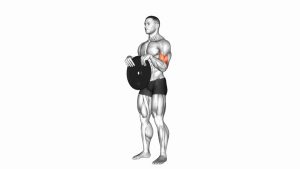
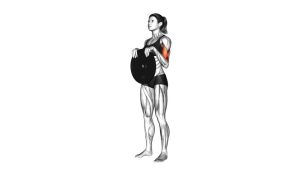
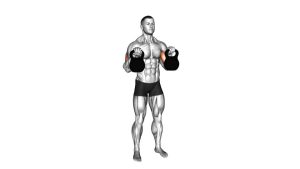
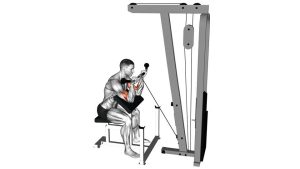
Barbell Reverse Curl: Proper Form, Sets, Tips & FAQ
Learn how to do the Barbell Reverse Curl with proper form to build forearm strength, improve grip, and target the brachioradialis. Includes setup, execution, sets by goal, mistakes, FAQs, and recommended equipment.
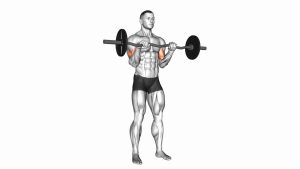
Barbell Reverse Curl
The Barbell Reverse Curl works best with controlled tempo and moderate loads. Because the pronated grip makes the lift more demanding on the wrists and forearms, clean form matters more than chasing heavy weight. You should feel the exercise mainly through the top of the forearm, with secondary contribution from the brachialis and biceps. Avoid swinging the bar or letting the wrists fold back.
Quick Overview
| Body Part | Forearms |
|---|---|
| Primary Muscle | Brachioradialis |
| Secondary Muscle | Brachialis, biceps brachii, forearm extensors, grip muscles |
| Equipment | Barbell or EZ curl bar, weight plates, collars |
| Difficulty | Beginner to Intermediate |
Sets & Reps (By Goal)
- Forearm hypertrophy: 3–4 sets × 8–12 reps with controlled lowering, 60–90 sec rest
- Grip and arm strength: 4–5 sets × 5–8 reps, 90–120 sec rest
- Accessory work after curls or pulling: 2–3 sets × 10–15 reps, 45–75 sec rest
- Technique practice: 2–3 sets × 8–10 reps using a lighter load and strict tempo
Progression rule: Increase weight only when you can keep your elbows steady, wrists neutral, and the lowering phase controlled. Reverse curls respond very well to clean reps and gradual overload.
Setup / Starting Position
- Load the bar: Use a straight bar or EZ curl bar with a weight you can control without swinging.
- Stand tall: Place your feet about hip- to shoulder-width apart with knees softly unlocked.
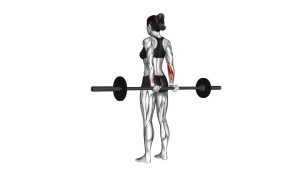
- Take an overhand grip: Grip the bar around shoulder width with palms facing down.
- Set posture: Keep the chest up, shoulders down, and core lightly braced.
- Start with the bar at thigh level: Arms extended, elbows close to your sides, wrists stacked.
Tip: If a straight bar feels awkward on your wrists, try an EZ curl bar for a more comfortable hand position.
Execution (Step-by-Step)
- Brace and stay tall: Begin from a stable standing position with the bar resting near your thighs.
- Curl the bar upward: Bend at the elbows and raise the bar in a smooth arc while keeping your upper arms mostly still.
- Keep wrists neutral: Do not let the hands bend backward as the bar rises.
- Reach the top under control: Bring the bar to roughly lower chest or upper waist height depending on your mobility and bar path.
- Pause briefly: Squeeze the forearms and maintain tension without shrugging the shoulders.
- Lower slowly: Return the bar to the starting position with control instead of letting it drop.
- Repeat cleanly: Reset your posture before the next repetition and keep the motion strict from rep to rep.
Pro Tips & Common Mistakes
- Use an overhand grip only: The pronated position is what makes this variation unique.
- Keep elbows pinned: Too much upper-arm movement turns it into a loose cheat curl.
- Do not swing the torso: Momentum takes tension away from the forearms.
- Control the lowering phase: The eccentric helps build forearm strength and joint control.
- Keep wrists stacked: Letting the wrists fold back can create unnecessary strain.
- Use moderate weight: Reverse curls usually require less weight than standard barbell curls.
- Place them after main pulling or biceps work: They are excellent as an accessory for forearms and grip.
- EZ bar is a smart option: It can feel smoother for lifters with limited wrist comfort on a straight bar.
FAQ
What muscles does the Barbell Reverse Curl work most?
The main emphasis is on the brachioradialis, with help from the brachialis, forearm extensors, grip muscles, and the biceps. The overhand grip shifts more work toward the forearms than a standard curl.
Is the Barbell Reverse Curl better with a straight bar or EZ curl bar?
Both work well. A straight bar is classic and straightforward, while an EZ curl bar can feel more comfortable on the wrists for some lifters.
How heavy should reverse curls be?
Usually lighter than your standard barbell curl. Choose a weight that lets you keep the wrists neutral and the elbows steady without swinging the body.
Should I do reverse curls for strength or hypertrophy?
They can do both. Moderate rep ranges are excellent for hypertrophy, while lower rep sets with strict form can help improve grip and arm strength.
Are reverse curls good for grip strength?
Yes. Because the overhand grip challenges the forearms differently, reverse curls are a strong accessory choice for building grip endurance and forearm resilience.
Recommended Equipment
- EZ Curl Bar — a wrist-friendlier alternative to a straight bar for reverse curls and arm training
- Barbell Weight Plates — lets you load the movement progressively as forearm and grip strength improve
- Barbell Collars — helps keep plates secure and stable during standing curling work
- Wrist Wraps — useful for lifters who want a little extra wrist support during heavier sets
- Weightlifting Gloves or Grip Gloves — can improve comfort and bar security during higher-rep forearm work
Tip: Keep accessory choices practical. For this exercise, the biggest difference usually comes from a comfortable bar, secure loading, and enough grip support to train consistently.