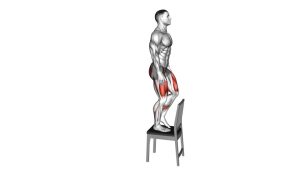
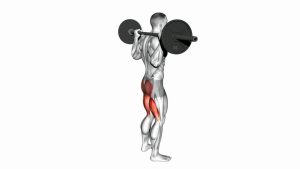
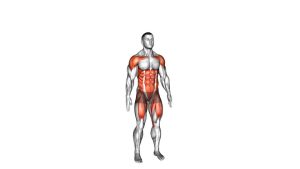
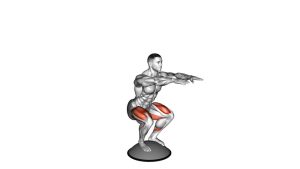
Sumo Squat: Proper Form, Muscles Worked, Sets, Tips & FAQ
Learn how to do the Sumo Squat with proper form to target glutes, quads, and inner thighs. Includes setup, steps, tips, mistakes, FAQ, and gear.
Sumo Squat
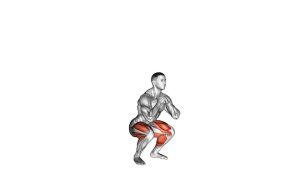
The Sumo Squat is an excellent lower-body exercise for building strength, improving hip mobility, and developing better control through a wide squat pattern. It is especially useful for people who want to train the inner thighs and glutes without needing machines or heavy equipment. The movement should feel smooth and controlled from top to bottom, with the knees following the toes and the torso staying upright.
Quick Overview
| Body Part | Legs |
|---|---|
| Primary Muscle | Glutes, quadriceps, and adductors |
| Secondary Muscle | Hamstrings, calves, hip stabilizers, and core |
| Equipment | Bodyweight only; optional dumbbell or kettlebell for progression |
| Difficulty | Beginner to intermediate |
Sets & Reps (By Goal)
- Beginner technique: 2–3 sets × 8–12 reps with slow control.
- Muscle growth: 3–4 sets × 10–15 reps with a controlled tempo.
- Glute and inner-thigh focus: 3–4 sets × 12–20 reps with a strong squeeze at the top.
- Mobility and warm-up: 1–3 sets × 8–10 reps using a comfortable range of motion.
- Loaded progression: 3–5 sets × 8–12 reps using a dumbbell or kettlebell held in front.
Progression rule: First improve depth, knee tracking, and control. After your reps are clean, progress by adding reps, slowing the tempo, pausing at the bottom, or holding a dumbbell or kettlebell.
Setup / Starting Position
- Stand tall: Begin with your feet wider than shoulder-width.
- Turn the toes outward: Point your toes out about 30–45 degrees, depending on hip comfort.
- Brace lightly: Keep your ribs stacked, core engaged, and chest lifted.
- Set your knees: Make sure your knees point in the same direction as your toes.
- Balance your weight: Keep pressure through the mid-foot, heel, and outer edge of the foot.
- Relax the upper body: Keep the shoulders down and avoid leaning too far forward.
Your stance should feel wide but stable. If your knees or hips feel restricted, slightly narrow the stance and reduce the depth until the movement feels natural.
Execution (Step-by-Step)
- Start from a tall position: Stand with your chest lifted, feet wide, and toes turned outward.
- Begin the descent: Bend your knees and hips at the same time while lowering your body straight down.
- Push the knees outward: Keep your knees tracking over your toes throughout the movement.
- Keep the torso upright: Avoid folding forward. Let the hips drop between the legs instead of far behind you.
- Reach your working depth: Lower until your thighs approach parallel or until your hips reach a comfortable depth.
- Pause briefly: Stay controlled at the bottom without bouncing or collapsing inward.
- Drive upward: Push through your heels and mid-foot to stand back up.
- Finish tall: Squeeze the glutes gently at the top without overextending the lower back.
Pro Tips & Common Mistakes
- Push the floor apart: Imagine spreading the floor with your feet to activate the glutes and keep the knees open.
- Do not let the knees cave in: Knee collapse reduces control and may increase joint stress.
- Keep the chest proud: A tall torso helps maintain balance and keeps the movement focused on the legs and hips.
- Avoid excessive forward lean: This is a squat pattern, not a deadlift-style hinge.
- Control the bottom position: Do not bounce aggressively out of the bottom.
- Use the right stance width: Wider is not always better. Choose a stance that allows smooth depth and strong knee tracking.
- Keep the heels grounded: If your heels lift, reduce depth or adjust your stance.
- Do not rush reps: Slow, controlled reps create better muscle tension and cleaner technique.
FAQ
What muscles does the Sumo Squat work?
The Sumo Squat mainly works the glutes, quadriceps, and adductors. It also uses the hamstrings, calves, hip stabilizers, and core to help control the movement.
Is the Sumo Squat good for inner thighs?
Yes. Because of the wide stance and outward toe angle, the Sumo Squat places more emphasis on the adductors, which are the inner-thigh muscles.
Should my knees go out during a Sumo Squat?
Yes. Your knees should track outward in the same direction as your toes. Avoid letting them collapse inward, especially at the bottom of the squat.
How deep should I go?
Go as deep as you can while keeping your heels down, knees aligned, and torso controlled. For many people, this means lowering until the thighs are near parallel or slightly below.
Can beginners do Sumo Squats?
Yes. Beginners can start with bodyweight reps and a comfortable range of motion. Once form is consistent, the exercise can be progressed with a dumbbell, kettlebell, or resistance band.
Why do I feel Sumo Squats in my hips?
Some hip activation and stretching is normal because the stance is wide and externally rotated. However, sharp pain or pinching means you should adjust your stance, reduce depth, or stop the exercise.
Recommended Equipment
- Kettlebell — useful for goblet-style loaded Sumo Squats.
- Adjustable Dumbbell — allows easy progression for weighted Sumo Squats.
- Resistance Bands for Legs — helpful for improving knee tracking and glute activation.
- Exercise Mat — provides a comfortable training surface for home workouts.
- Squat Wedge Blocks — optional heel support for people who need help with squat depth and ankle comfort.
Tip: Equipment is optional. Start with bodyweight first, then add resistance only when your stance, knee tracking, and depth stay consistent.