Dumbbell Preacher Curl over Exercise Ball: Form, Sets, Tips & FAQ
Learn the Dumbbell Preacher Curl over Exercise Ball to isolate the biceps with strict form and full-range tension. Includes setup, execution, sets by goal, common mistakes, FAQs, and recommended equipment.
Dumbbell Preacher Curl over Exercise Ball
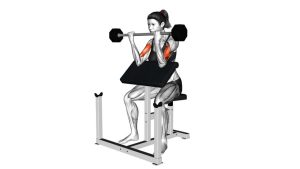
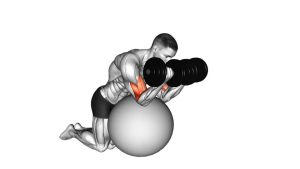
This variation works best with strict form and moderate loads. The exercise ball creates a soft preacher-style support, which helps lock the upper arm in place while forcing you to stay controlled. You should feel the biceps doing most of the work, not the front delts, lower back, or swinging body.
Quick Overview
| Body Part | Biceps |
|---|---|
| Primary Muscle | Biceps brachii |
| Secondary Muscle | Brachialis, brachioradialis, forearm flexors |
| Equipment | Dumbbell, exercise ball / stability ball |
| Difficulty | Beginner to Intermediate |
Sets & Reps (By Goal)
- Muscle growth: 3–4 sets × 8–12 reps per arm, 60–90 sec rest
- Strict technique practice: 2–3 sets × 10–15 reps per arm, light-to-moderate load, 45–75 sec rest
- Higher-rep pump work: 2–4 sets × 12–20 reps per arm, short rest, smooth tempo
- Finisher after heavier curls: 2–3 sets × 10–14 reps with controlled negatives
Progression rule: First improve control, range of motion, and the squeeze at the top. Add load only when you can keep the upper arm planted on the ball without swinging.
Setup / Starting Position
- Position the ball: Place a stability ball in front of you and kneel or brace yourself behind it.
- Lean your torso onto the ball: Rest your chest and upper body lightly against it so you stay supported and stable.
- Set the working arm: Drape the upper arm over the top/front of the ball so the triceps and elbow area are supported.
- Grip the dumbbell: Use a supinated grip (palm up) and let the arm extend nearly straight without losing tension.
- Lock in posture: Keep the shoulder down, chest quiet, core lightly braced, and wrist neutral before starting the curl.
Tip: The ball should support the arm enough to reduce cheating, but not so high that it jams the shoulder into an awkward angle.
Execution (Step-by-Step)
- Start from the stretch: Let the dumbbell hang under control with the palm facing up and the upper arm fixed against the ball.
- Curl the weight upward: Bend the elbow and bring the dumbbell toward your shoulder in a smooth arc.
- Keep the elbow anchored: Do not let the upper arm lift away from the ball or drift backward.
- Squeeze at the top: Pause briefly when the biceps are fully shortened without collapsing the wrist.
- Lower slowly: Return the dumbbell to the starting position under control until the arm is nearly straight again.
- Repeat evenly: Keep the tempo steady and match the same range of motion on every rep.
Pro Tips & Common Mistakes
- Use a controlled tempo: Lift with intent, then lower slower than you lift.
- Don’t turn it into a front raise: The elbow should stay mostly fixed while the forearm does the work.
- Keep the wrist neutral: Avoid curling the wrist to “help” the dumbbell up.
- Stay chest-supported: Too much torso movement takes tension off the biceps.
- Don’t rush the bottom: A controlled stretch improves tension and consistency.
- Choose the right ball height: If the arm angle feels awkward, adjust your body position on the ball.
- Use moderate weight: This exercise shines when the reps are strict, not when the load is maximal.
FAQ
What makes this different from a regular preacher curl bench?
The exercise ball adds a slightly unstable support surface, which can increase control demands. It is more versatile for home workouts, but usually less stable than a fixed preacher bench.
Should I use one arm or both arms at the same time?
One arm at a time is usually easier to control and helps you focus on clean elbow positioning. It also makes it easier to match reps side to side.
Where should I feel this exercise most?
You should feel the biceps working through the full curl, especially in the middle and top of the rep. Some forearm involvement is normal, but shoulder strain should stay minimal.
Can beginners use this exercise?
Yes. Beginners can use it effectively with a light dumbbell and slow tempo. The key is learning to keep the upper arm supported and the body still.
Is this good for muscle growth?
Yes. It can be very effective for hypertrophy because it limits momentum, improves biceps isolation, and makes it easier to keep tension on the target muscle.
Recommended Equipment
- Anti-Burst Exercise Ball — the key support surface for this variation; useful for curls, core work, and home training setups
- Adjustable Dumbbells — lets you fine-tune the load so you can stay strict without jumping too heavy too soon
- Arm Blaster / Curl Isolator — optional accessory for lifters who want even stricter biceps isolation on curl work
- Exercise Mat — adds comfort and grip when kneeling behind the ball during single-arm work
- Dumbbell Grip Covers — useful if you want a more comfortable, less slippery grip during higher-rep sets
Tip: For this exercise, the best setup is usually a stable anti-burst ball, a manageable dumbbell load, and enough floor grip to keep your position consistent.