Cable High Pulley Overhead Triceps Extension: Form, Sets, Tips & FAQ
Learn the Cable High Pulley Overhead Triceps Extension with proper form, setup, execution cues, sets by goal, common mistakes, FAQs, and recommended equipment to build stronger triceps.
Cable High Pulley Overhead Triceps Extension
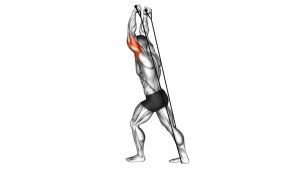
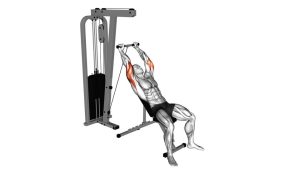
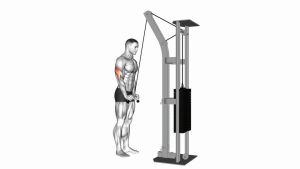
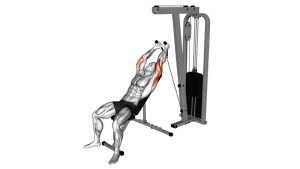
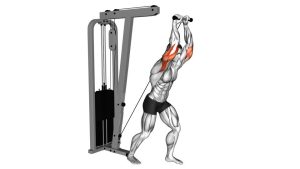
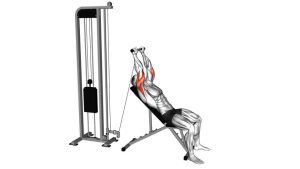
This exercise is highly effective for building triceps size and improving lockout strength, but it works best when performed with strict elbow control. The goal is to extend through the elbows while keeping the upper arms relatively fixed. You should feel tension in the back of the upper arms throughout the rep, with the strongest contraction near the top and the deepest stretch when the rope moves behind the head.
Quick Overview
| Body Part | Triceps |
|---|---|
| Primary Muscle | Triceps brachii (long head emphasis) |
| Secondary Muscle | Lateral head and medial head of the triceps, shoulders and core as stabilizers |
| Equipment | High pulley cable machine with rope attachment |
| Difficulty | Beginner to Intermediate |
Sets & Reps (By Goal)
- Muscle growth: 3–4 sets × 8–15 reps with controlled tempo and full stretch
- Strength-focused accessory work: 3–5 sets × 6–10 reps with heavier resistance and strict form
- Muscle endurance / pump work: 2–4 sets × 12–20 reps with shorter rest periods
- Technique practice: 2–3 sets × 10–12 reps using light weight and slow execution
Progression rule: Increase reps first, then increase load gradually once you can maintain elbow position, full range of motion, and steady tension without using momentum.
Setup / Starting Position
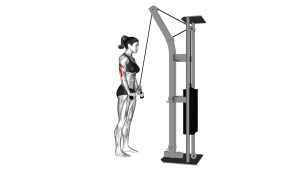
- Attach a rope to a high pulley cable station.
- Grab the rope ends with a neutral grip and turn so you are facing away from the machine.
- Step forward into a staggered or shoulder-width stance to create stable cable tension.
- Raise the hands overhead so the rope sits behind your head and your elbows are bent.
- Brace the core, keep the ribs down, and maintain a neutral spine with only a slight forward lean if needed for balance.
- Point the elbows mostly forward/up and keep the upper arms steady before starting the rep.
Tip: A split stance can make the movement feel more stable and reduce the urge to arch the lower back.
Execution (Step-by-Step)
- Start in the stretched position: Let the rope move behind your head with the elbows bent and the triceps fully loaded.
- Extend the elbows: Push the rope upward and slightly forward until your arms are nearly straight overhead.
- Separate the rope ends: At the top, allow the hands to move slightly apart to maximize triceps contraction.
- Squeeze briefly: Pause for a moment at peak extension without snapping into lockout.
- Lower under control: Bend the elbows slowly and guide the rope back behind the head.
- Repeat smoothly: Keep tension on the triceps and avoid bouncing into the next rep.
Pro Tips & Common Mistakes
- Keep the elbows in: A little natural movement is fine, but too much flare reduces triceps isolation.
- Use the stretch: Don’t cut the bottom short. The deep stretch is one of the biggest benefits of this exercise.
- Don’t turn it into a press: The movement should come from elbow extension, not shoulder drive.
- Brace your abs: This helps prevent excessive lower-back arching under load.
- Control the eccentric: Lowering the rope slowly improves tension and technique.
- Choose the right load: Too much weight often causes elbow drift, momentum, and shortened range of motion.
- Separate the rope slightly at the top: This can improve peak contraction without forcing the shoulders into awkward positions.
FAQ
What part of the triceps does this exercise target most?
The overhead position places extra emphasis on the long head of the triceps, while the other triceps heads still assist throughout the movement.
Should I use a rope or another attachment?
A rope is the most popular option because it allows a natural grip and slight hand separation at lockout, which many lifters find more comfortable and effective.
How heavy should I go on overhead cable triceps extensions?
Use a weight that lets you keep the elbows steady, feel a full stretch, and complete every rep with control. If form breaks down, the weight is too heavy.
Is this better than pushdowns for triceps growth?
It is not necessarily better than every pushdown variation, but it is excellent for emphasizing the long head because of the overhead arm position. Many lifters benefit from using both.
Can beginners use this exercise?
Yes. Beginners can use it effectively as long as they start light, learn to brace properly, and avoid excessive elbow flare or lower-back arching.
Recommended Equipment
- Tricep Rope Cable Attachment — the most direct attachment for overhead triceps extensions and one of the most useful cable accessories for arm training
- Cable Pulley Handles — useful for adding more grip options and expanding your cable training beyond triceps work
- Tricep Straps / Extension Straps — a great alternative if you want a different wrist and hand feel during cable extensions
- Wrist Cuffs for Cable Machines — can reduce grip fatigue and help some lifters focus more directly on elbow extension mechanics
- Resistance Bands — useful for warm-ups, triceps activation, and travel-friendly arm training when a cable machine is not available
Tip: For this exercise, a high-quality rope attachment is usually the best first purchase because it gives the most natural setup and the best overall versatility.