Dumbbell Side Plank Raise: Form, Core Benefits, Sets & Tips
Learn the Dumbbell Side Plank Raise for stronger obliques, shoulders, and core stability. Includes setup, form steps, mistakes, FAQs, and gear.
Dumbbell Side Plank Raise
This exercise works best when the dumbbell is light enough to control without twisting the torso, shrugging the shoulder, or dropping the hips. The side plank position makes the movement more demanding because your core must stabilize the body while your top shoulder performs the raise.
Quick Overview
| Body Part | Core |
|---|---|
| Primary Muscle | Obliques and lateral deltoids |
| Secondary Muscle | Transverse abdominis, glutes, serratus anterior, rotator cuff, quadratus lumborum |
| Equipment | Dumbbell and exercise mat |
| Difficulty | Intermediate to advanced |
Sets & Reps (By Goal)
- Core stability: 2–3 sets × 6–10 reps per side with slow control.
- Shoulder endurance: 2–4 sets × 8–12 reps per side using a light dumbbell.
- Strength and control: 3–4 sets × 5–8 reps per side with a strict pause at the top.
- Conditioning circuit: 2–3 rounds × 20–30 seconds per side with clean form.
Progression rule: First improve plank stability, then increase reps, then add load. Do not increase dumbbell weight if your hips sag or your torso rotates.
Setup / Starting Position
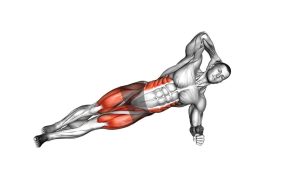
- Lie on your side: Place your lower forearm on the floor with the elbow under the shoulder.
- Stack your body: Keep your shoulders, hips, knees, and feet aligned in one long line.
- Set your feet: Stack the feet for more challenge or stagger them for better balance.
- Hold the dumbbell: Grip a light dumbbell in your top hand with the arm resting near your side.
- Lift your hips: Press through the forearm and feet until your body forms a straight side plank.
- Brace your core: Keep ribs down, glutes lightly squeezed, and neck neutral.
Execution (Step-by-Step)
- Start in a strong side plank: Keep your lower elbow under your shoulder and your hips lifted.
- Begin the raise: Lift the dumbbell away from your body in a smooth side-raise motion.
- Control the top arm: Keep a slight bend in the elbow and avoid locking the arm aggressively.
- Raise to shoulder height: Stop when the dumbbell reaches about shoulder level or slightly below.
- Pause briefly: Hold the top position without shrugging or rotating your chest open.
- Lower slowly: Bring the dumbbell back down with control while keeping the plank stable.
- Repeat: Complete all reps on one side, then switch sides with the same form quality.
Pro Tips & Common Mistakes
- Use a light dumbbell: This exercise becomes unstable quickly if the weight is too heavy.
- Do not let the hips drop: Sagging hips reduce oblique tension and may stress the lower back.
- Avoid torso rotation: Keep your chest stacked instead of rolling backward during the raise.
- Do not shrug: Keep the top shoulder away from the ear to avoid upper-trap dominance.
- Control the lowering phase: Lowering slowly improves shoulder control and core stability.
- Keep the neck neutral: Look forward or slightly down without letting the head hang.
- Brace before every rep: Think ribs down, glutes tight, and hips high before lifting the dumbbell.
FAQ
What muscles does the Dumbbell Side Plank Raise work?
It mainly works the obliques and lateral deltoids. It also trains the transverse abdominis, glutes, serratus anterior, rotator cuff, and deep core stabilizers.
Is this a core exercise or shoulder exercise?
It is both. The side plank challenges your core, especially the obliques, while the dumbbell raise trains the shoulder. The best form requires both areas to work together.
How heavy should the dumbbell be?
Start very light. Many people need less weight than a normal lateral raise because the side plank makes stability much harder. Choose a weight you can lift without twisting or dropping your hips.
Can beginners do this exercise?
Beginners should first master a regular side plank and a standing dumbbell lateral raise separately. Once both movements feel controlled, this combined variation can be introduced with a light dumbbell.
Why do my hips drop during the movement?
Hip drop usually means the dumbbell is too heavy, your obliques are fatigued, or your setup is unstable. Reduce the load, stagger your feet, or perform fewer reps per side.
Recommended Equipment
- Adjustable Dumbbells — useful for selecting the right light-to-moderate load.
- Hex Dumbbells — stable, durable, and easy to grip for side plank raise variations.
- Thick Exercise Mat — protects the elbow and improves comfort during side plank holds.
- Elbow Support Pad — helpful if your supporting elbow feels uncomfortable on the floor.
- Wrist Wraps — optional support if gripping dumbbells causes wrist fatigue.
Tip: For this exercise, comfort and control matter more than heavy loading. Choose equipment that helps you maintain a stable side plank position.