Dumbbell Single-Leg Squat: Form, Muscles, Sets & Tips
Learn the Dumbbell Single-Leg Squat with step-by-step form, muscles worked, sets, balance tips, common mistakes, FAQs, and equipment for safer training.
Dumbbell Single-Leg Squat
The Dumbbell Single-Leg Squat combines lower-body strength, coordination, and balance in one challenging movement. Because each leg works independently, the exercise helps expose differences in strength and stability between sides. Additionally, it develops control around the ankle, knee, and hip while requiring continuous core stabilization.
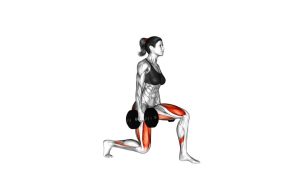
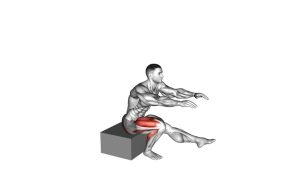
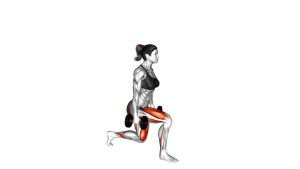
During the movement, the athlete balances on one foot while holding two dumbbells beside the body. Next, the supporting knee bends as the opposite leg extends forward. After reaching a controlled squat position, the athlete presses through the working foot to return upright. Therefore, success depends on precise movement rather than heavy weights or excessive depth.
Quick Overview
| Body Part | Legs |
|---|---|
| Primary Muscle | Quadriceps (vastus lateralis, vastus medialis, vastus intermedius, rectus femoris) and gluteus maximus |
| Secondary Muscle | Gluteus medius, hamstrings, adductors, calves, ankle stabilizers, and core muscles |
| Equipment | Two dumbbells and a firm, non-slip training surface |
| Difficulty | Advanced, due to unilateral strength, balance, and mobility requirements |
Sets & Reps (By Goal)
Choose your training volume according to your experience, balance, and ability to control each repetition. Since the Dumbbell Single-Leg Squat places substantial demands on one leg, begin with conservative loading. Furthermore, allow enough recovery between sets to maintain consistent technique.
- Technique and control: 2–3 sets × 4–6 reps per leg with bodyweight or very light dumbbells. Use a slow descent and rest 60–90 seconds.
- Muscle strength: 3–5 sets × 3–6 reps per leg with manageable dumbbells. Focus on controlled force production and rest 2–3 minutes.
- Muscle hypertrophy: 3–4 sets × 6–10 reps per leg using a controlled range. Additionally, rest 90–150 seconds between sets.
- Balance and coordination: 2–3 sets × 5–8 reps per leg with a brief pause near the bottom. Prioritize steady posture over heavier resistance.
- Muscular endurance: 2–3 sets × 10–12 reps per leg with light resistance. However, stop the set if balance or knee alignment deteriorates.
Progression rule: First master stable bodyweight repetitions. Then increase the controlled range of motion, improve balance, and gradually add resistance. Only increase dumbbell weight when both legs demonstrate consistent technique. For best results, avoid progressing load and depth simultaneously.
Setup / Starting Position
- Choose an appropriate dumbbell weight: Select two light dumbbells that allow you to maintain balance throughout the repetition. Initially, practice without weights if single-leg stability is limited.
- Stand on a stable surface: Position yourself on a level, non-slip floor with enough space to extend one leg forward. Avoid soft or unstable surfaces during loaded repetitions.
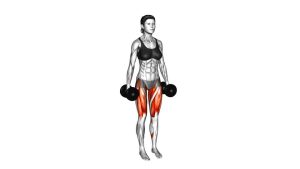
- Hold the dumbbells at your sides: Grip one dumbbell in each hand with your arms extended naturally. Keep your shoulders relaxed and avoid lifting the weights toward your chest.
- Shift your weight onto one leg: Place your body weight over the supporting foot. Meanwhile, maintain steady pressure through the heel, ball of the big toe, and ball of the little toe.
- Position the free leg forward: Lift the opposite foot slightly from the floor. Then extend that leg forward while keeping its knee relatively straight and comfortable.
- Brace your core: Gently engage your abdominal muscles while maintaining a natural spinal position. Keep the chest open without excessively arching the lower back.
- Prepare your balance: Look toward a fixed point ahead and maintain a comfortable head position. Finally, confirm that the supporting knee aligns with the direction of your toes.
Setup tip: Before attempting loaded repetitions, hold the single-leg starting position for several seconds. If your foot shifts or your upper body sways excessively, reduce the weight or use a supported progression.
Execution (Step-by-Step)
- Establish a stable stance: Balance on the working leg with both dumbbells hanging beside your thighs. Keep your abdominal muscles engaged and your gaze steady.
- Begin the descent: Slowly bend the supporting knee and hip to lower your body. At the same time, maintain controlled pressure through the supporting foot.
- Extend the opposite leg: As your hips descend, move the nonworking leg forward to keep it clear of the floor. Maintain comfortable knee extension without forcing the hamstrings.
- Control your torso position: Allow a natural forward inclination to maintain your center of mass over the supporting foot. However, avoid excessive rounding or uncontrolled twisting.
- Maintain knee alignment: Guide the supporting knee in the same general direction as the toes. Additionally, prevent sudden inward collapse or uncontrolled side-to-side movement.
- Reach a controlled squat depth: Lower only as far as your strength, ankle mobility, and balance allow. The demonstrated variation uses a partial-to-moderate squat depth rather than a full-depth pistol squat.
- Drive upward through the working leg: Press firmly through the supporting foot while extending the knee and hip. Meanwhile, keep the dumbbells beside your body instead of swinging them for momentum.
- Return to the starting position: Rise until your supporting leg is comfortably extended and your torso becomes upright. Then lower the free leg toward its initial position without abruptly dropping the foot.
- Reset and repeat: Reestablish your balance before beginning another repetition. After completing the prescribed reps, switch legs and repeat with the same controlled technique.
Pro Tips & Common Mistakes
- Master the bodyweight version first: Build consistent single-leg strength before adding external resistance. Consequently, you can focus on proper mechanics rather than struggling to balance heavy dumbbells.
- Do not rush the lowering phase: Descend slowly for approximately 2–3 seconds. This controlled tempo helps develop eccentric strength and reduces sudden balance corrections.
- Keep the knee tracking naturally: Allow the supporting knee to move forward as needed while maintaining alignment with the toes. However, avoid sudden inward collapse during either phase.
- Maintain consistent foot pressure: Keep your supporting foot firmly planted whenever possible. If your heel repeatedly rises, reduce depth or address limited ankle mobility.
- Avoid swinging the dumbbells: Let the weights hang naturally beside your thighs. Otherwise, excessive arm movement may disturb balance and reduce muscular control.
- Control the extended leg: Keep the nonworking leg forward without touching the floor during the main squat. Nevertheless, avoid forcing the leg unnaturally high or locking it rigidly.
- Use an appropriate squat depth: Partial repetitions can be useful while developing strength and mobility. Therefore, increase depth gradually instead of forcing a full pistol squat immediately.
- Keep the hips reasonably level: Prevent excessive pelvic rotation or dropping toward the unsupported side. In addition, engage the hip stabilizers to improve control throughout the movement.
- Avoid excessive forward bending: A slight forward torso inclination is natural. However, excessive rounding or uncontrolled leaning can change your balance and movement mechanics.
- Train both sides equally: Start with the weaker leg and use controlled repetitions on both sides. As a result, training quality remains consistent without forcing unnecessary extra repetitions.
Pro training tip: Combine this exercise with controlled split squats, step-ups, and ankle mobility exercises. Additionally, assisted single-leg squats can help develop the balance and strength required for weighted repetitions. Quality repetitions should always take priority over heavier dumbbells.
FAQ
What muscles does the Dumbbell Single-Leg Squat work?
The Dumbbell Single-Leg Squat primarily trains the quadriceps and gluteus maximus. Additionally, the gluteus medius, hamstrings, calves, and core contribute to stabilization. Because the body balances on one leg, the ankle and hip stabilizers work continuously. Therefore, the exercise challenges both muscular strength and coordination.
Is the Dumbbell Single-Leg Squat the same as a pistol squat?
Both exercises share a similar unilateral squat movement with the free leg extended forward. However, a traditional pistol squat generally involves a much deeper squat position. The demonstrated Dumbbell Single-Leg Squat uses a shorter range while holding two dumbbells. Consequently, it is best described as a weighted, pistol-squat-style variation.
Is the Dumbbell Single-Leg Squat suitable for beginners?
The weighted variation is generally better suited to experienced exercisers. Beginners should first develop balance through supported single-leg squats, step-ups, and split squats. Additionally, practicing shallow bodyweight repetitions can improve knee and hip control. Once stability improves, light dumbbells may be introduced gradually.
Why do I lose balance during Dumbbell Single-Leg Squats?
Balance difficulties may result from limited ankle mobility, insufficient hip stability, or excessive dumbbell weight. Additionally, descending too quickly can shift your center of mass beyond the supporting foot. Therefore, reduce the squat depth, slow the movement, and practice with bodyweight first. A stable support may also help during progression.
How often should I perform Dumbbell Single-Leg Squats?
Many experienced lifters can include this movement once or twice weekly, depending on training volume and recovery. Start with modest sets and allow adequate rest between demanding lower-body sessions. Furthermore, prioritize consistent form over training frequency. If soreness or instability persists, reduce the workload before progressing.
Recommended Equipment
- Adjustable Dumbbell Set — allows gradual resistance increases for single-leg strength training without requiring multiple dumbbell pairs
- Suspension Training Straps — provide adjustable assistance for developing balance and control before progressing to weighted single-leg squats
- Mini Loop Resistance Bands — useful for separate glute activation drills and hip stability exercises during lower-body warm-ups
- Flat-Sole Training Shoes — provide a firm and stable base for controlled foot pressure during unilateral strength exercises
- Non-Slip Rubber Gym Flooring — provides a firm training surface with traction for dumbbell exercises and home strength workouts
Equipment tip: Choose dumbbells that allow controlled movement without excessive upper-body compensation. Additionally, train on a firm, level surface that supports stable footing. Assisted equipment can be useful while learning the movement, but it should never replace proper technique. Most importantly, progress gradually and prioritize balance before increasing resistance.