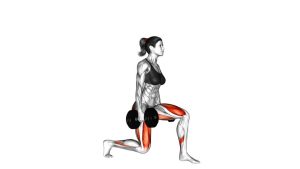
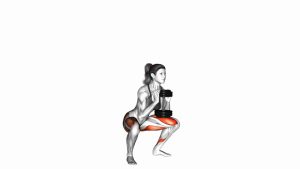
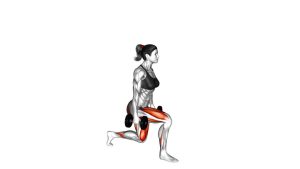
Front-Foot Elevated Dumbbell Goblet Split Squat: Form, Sets, Tips & FAQ
Learn the Front-Foot Elevated Dumbbell Goblet Split Squat for stronger quads, glutes, balance, and deep lower-body control.
Front-Foot Elevated Dumbbell Goblet Split Squat
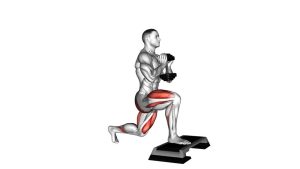
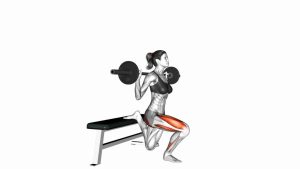
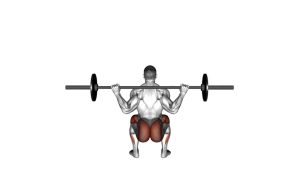
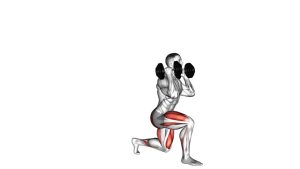
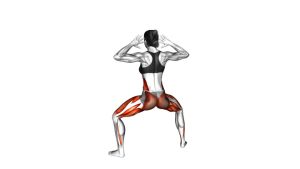
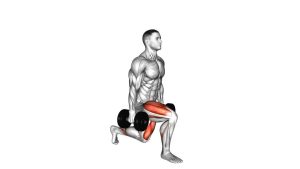
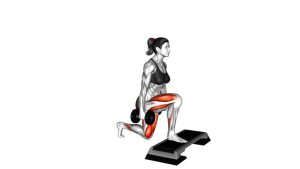
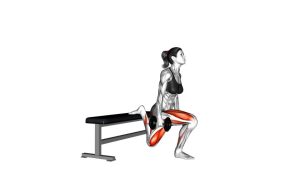
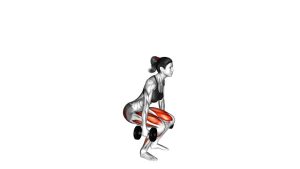
This exercise is performed in a split stance while holding a dumbbell close to the chest in a goblet position. The front foot stays elevated on a stable platform, while the back foot acts as a support point. The goal is to lower with control, keep the front heel planted, allow the front knee to travel naturally forward, and drive back up mainly through the working front leg.
Quick Overview
| Body Part | Legs |
|---|---|
| Primary Muscle | Quadriceps |
| Secondary Muscle | Glutes, hamstrings, adductors, calves, and core stabilizers |
| Equipment | Dumbbell and stable step/platform |
| Difficulty | Intermediate |
Sets & Reps (By Goal)
- Muscle growth: 3–4 sets × 8–12 reps per leg with controlled tempo.
- Strength: 4–5 sets × 5–8 reps per leg using a heavier dumbbell and longer rest.
- Balance and control: 2–3 sets × 10–15 reps per leg with slow, clean movement.
- Beginner progression: 2–3 sets × 6–10 reps per leg using bodyweight or a light dumbbell.
Progression rule: Increase depth and control first. Add load only when both legs stay stable and the front heel remains planted through every rep.
Setup / Starting Position
- Place a stable step, plate, or low platform on the floor.
- Stand with your front foot fully planted on the elevated surface.
- Step the opposite foot back into a comfortable split stance.
- Hold one dumbbell vertically at chest level in a goblet grip.
- Keep your chest tall, ribs stacked, core braced, and shoulders relaxed.
- Set your stance so the front knee can travel forward without the heel lifting.
Tip: A shorter stance usually creates more quad emphasis, while a longer stance may shift more work toward the glutes.
Execution (Step-by-Step)
- Brace first: Hold the dumbbell close to your chest and tighten your core gently.
- Lower under control: Bend the front knee and allow the back knee to travel down toward the floor.
- Keep the front foot stable: Maintain pressure through the mid-foot and heel of the elevated leg.
- Reach deep range: Lower until you feel strong tension in the front quad and glute without losing posture.
- Drive up: Push through the front foot and extend the knee and hip to return to the top.
- Repeat cleanly: Complete all reps on one side before switching legs.
Pro Tips & Common Mistakes
- Keep the dumbbell close: Holding the weight near your chest improves posture and reduces forward collapse.
- Let the knee travel naturally: Forward knee travel is expected in this variation and helps increase quad loading.
- Do not lift the front heel: Heel lift reduces stability and may increase unwanted knee stress.
- Avoid bouncing: Control the bottom position instead of dropping quickly.
- Keep hips square: Do not rotate your pelvis as you lower or stand up.
- Use the correct platform height: Start low, then increase elevation only when your mobility and balance allow it.
- Match both sides: Use the same stance length, depth, and tempo on each leg.
FAQ
What muscles does the Front-Foot Elevated Dumbbell Goblet Split Squat work?
It mainly works the quadriceps, with strong help from the glutes, adductors, hamstrings, calves, and core stabilizers.
Is this exercise more quad-focused or glute-focused?
This variation is usually more quad-focused because the front foot elevation allows deeper knee flexion and more forward knee travel.
Should my front knee go past my toes?
Yes, it can. In this exercise, controlled forward knee travel is normal and helps increase quad demand. The key is keeping the front heel planted and the knee tracking in line with the toes.
How high should the front foot elevation be?
Start with a low step or platform. A height of 2–6 inches is enough for most lifters. Higher elevation increases range of motion and difficulty.
Can beginners do this exercise?
Beginners can use it if they start with bodyweight or a very light dumbbell. However, standard split squats are usually better before progressing to the elevated version.
Recommended Equipment
- Adjustable Dumbbell — ideal for progressive loading and home leg workouts.
- Aerobic Step Platform — provides a stable front-foot elevation for split squat variations.
- Weightlifting Shoes — help improve stability and allow better knee-forward mechanics.
- Exercise Mat — useful for protecting the back knee and improving floor comfort.
- Ankle Mobility Band — useful for warm-ups and improving comfortable knee travel.
Tip: Choose equipment that improves stability first. More load only helps when your position, depth, and control stay consistent.