Dumbbell Standing One-Arm Concentration Curl: Form, Muscles Worked, Sets & Tips
Learn how to do the Dumbbell Standing One-Arm Concentration Curl with proper form. Discover muscles worked, setup, step-by-step execution, sets and reps by goal, mistakes to avoid, FAQs, and recommended equipment.
Dumbbell Standing One-Arm Concentration Curl
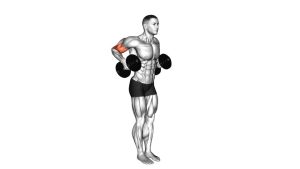
This exercise works best with moderate weight, strict mechanics, and full attention on the working arm. Because the elbow is anchored against the thigh, it becomes easier to isolate the biceps and avoid turning the rep into a swinging standing curl. You should feel most of the tension in the biceps brachii, with assistance from the brachialis and forearm flexors. Keep the shoulder quiet, the wrist neutral, and the lowering phase controlled to get the most from every rep.
Quick Overview
| Body Part | Biceps |
|---|---|
| Primary Muscle | Biceps brachii |
| Secondary Muscle | Brachialis, brachioradialis, forearm flexors |
| Equipment | One dumbbell |
| Difficulty | Beginner to Intermediate |
Sets & Reps (By Goal)
- Muscle growth: 3–4 sets × 8–12 reps per arm with a controlled squeeze and 45–75 sec rest
- Biceps isolation / mind-muscle connection: 2–4 sets × 10–15 reps per arm using moderate load and strict form
- Strength-focused arm work: 3–5 sets × 6–8 reps per arm with clean reps and longer rest periods
- Finisher / pump work: 2–3 sets × 12–20 reps per arm with lighter weight and slow eccentrics
Progression rule: Add reps before adding load. Increase weight only when you can keep the elbow planted, avoid torso swing, and control the lowering phase on every rep.
Setup / Starting Position
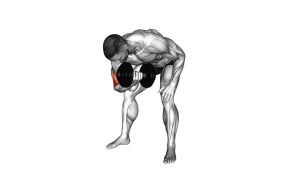
- Stand with a stable base: Place your feet about shoulder width apart or slightly staggered for balance.
- Hinge forward slightly: Bend at the hips with a soft knee bend so your torso leans forward comfortably.
- Brace the non-working side: Rest your free hand on the opposite thigh for extra support and stability.
- Anchor the working elbow: Press the elbow of the curling arm against the inner thigh on the same side.
- Start from a stretched position: Let the dumbbell hang down with the arm nearly straight, shoulder quiet, and wrist neutral.
Tip: The setup should feel locked in and balanced before the first rep starts. If you feel unstable, narrow the range slightly and reset your stance.
Execution (Step-by-Step)
- Set your position: Keep your torso still, chest slightly up, and elbow firmly braced against the inner thigh.
- Begin the curl: Flex the elbow and curl the dumbbell upward without swinging the shoulder or twisting the body.
- Keep the upper arm fixed: The elbow should stay planted so the biceps do the work instead of the front delts.
- Squeeze at the top: Bring the dumbbell up as far as you can without losing position, then pause briefly for a hard contraction.
- Lower with control: Slowly extend the arm back down until the biceps are lengthened again, but do not drop the weight.
- Repeat smoothly: Finish all reps on one side, then switch arms and match the same quality and tempo.
Pro Tips & Common Mistakes
- Drive through elbow flexion, not body English: This is a strict isolation exercise, not a cheat curl.
- Keep the elbow pinned: The more stable the elbow, the better the biceps isolation.
- Use a neutral wrist: Avoid excessive wrist curling, which can shift tension away from the biceps.
- Control the eccentric: Lowering slowly usually improves tension and makes lighter weights more effective.
- Do not rush the top: A brief squeeze helps reinforce peak contraction and better biceps engagement.
- Avoid twisting the torso: Rotating to finish the rep reduces exercise quality and hides strength imbalances.
- Choose load wisely: A moderate dumbbell with perfect mechanics is usually better than a heavier weight with momentum.
FAQ
What muscles does the dumbbell standing one-arm concentration curl work most?
It mainly targets the biceps brachii. The brachialis, brachioradialis, and forearm flexors assist, but the setup is designed to keep the emphasis strongly on the biceps.
How is this different from a regular standing dumbbell curl?
The elbow is braced against the inner thigh, which reduces momentum and shoulder assistance. That usually makes this variation stricter and better for isolation than a standard standing curl.
Should I do this exercise one arm at a time?
Yes. This is a unilateral movement, so complete all reps on one side first, then switch arms. That makes it easier to focus on control, symmetry, and mind-muscle connection.
What rep range works best for this exercise?
Most lifters do well with 8–15 reps per arm. Heavier sets can work, but this movement usually shines when you keep it strict and controlled instead of turning it into a low-rep power curl.
Where should I feel the exercise?
You should feel it mostly in the working biceps. If you feel it mainly in the front shoulder, lower back, or wrist, check your setup and reduce the weight.
Recommended Equipment
- Adjustable Dumbbell Set — the main tool for progressive overload and convenient single-arm curl training
- Adjustable Weight Bench — useful if you want more arm-training variety, including seated curls and incline curl variations
- Arm Blaster — helps reinforce strict curl mechanics and better elbow positioning during other biceps exercises
- Preacher Curl Bench — a strong option if you want another high-isolation setup for focused biceps training
- Gym Wrist Wraps — helpful for lifters who want extra wrist support during repeated curl sessions
Tip: For this exercise, a good adjustable dumbbell is the most important piece. Extra accessories are optional and should support cleaner mechanics, not replace them.