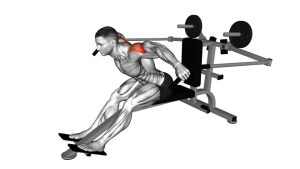
Kettlebell Lying on Floor Rear Delt Raise: Form, Muscles Worked, Sets & Tips
Learn the Kettlebell Lying on Floor Rear Delt Raise with proper form, setup, sets by goal, common mistakes, FAQs, and recommended equipment for stronger rear shoulders and upper-back control.
Kettlebell Lying on Floor Rear Delt Raise
This movement works best with a light-to-moderate load and a smooth, deliberate tempo. You should feel the exercise mostly in the back of the shoulder, with some support from the rhomboids and middle traps. The floor setup reduces cheating, making it a strong choice for improving rear delt development, shoulder balance, and upper-body control.
Quick Overview
| Body Part | Rear Shoulders |
|---|---|
| Primary Muscle | Rear Deltoid (Posterior Deltoid) |
| Secondary Muscle | Rhomboids, Middle Trapezius, Rotator Cuff Stabilizers |
| Equipment | Kettlebell, floor mat or padded surface optional |
| Difficulty | Beginner to Intermediate |
Sets & Reps (By Goal)
- Muscle growth: 3–4 sets × 10–15 reps per side
- Shoulder control / technique: 2–3 sets × 8–12 reps per side with a slow tempo
- Warm-up / activation: 2–3 sets × 12–20 reps with a lighter kettlebell
- Posture support / accessory work: 2–4 sets × 12–16 reps per side
Progression rule: Add reps first, then increase load only when you can keep the torso stable, avoid shrugging, and raise the kettlebell without momentum.
Setup / Starting Position
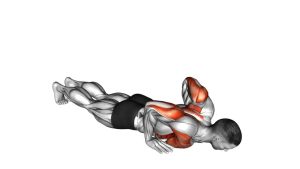
- Lie face down: Position yourself prone on the floor or on a mat with your body fully supported.
- Set the non-working side: Rest the free arm comfortably near your head or slightly out to the side for balance.
- Grip the kettlebell: Hold the kettlebell in the working hand with the arm hanging down toward the floor.
- Keep a soft elbow: Maintain a slight bend in the elbow and keep that angle mostly fixed throughout the rep.
- Brace lightly: Keep the neck neutral, ribs down, and torso quiet before starting the raise.
Tip: A lighter kettlebell often works better here because rear delts respond best to clean, controlled reps rather than heavy swinging.
Execution (Step-by-Step)
- Start from the bottom: Let the kettlebell hang naturally with the shoulder packed and the torso still.
- Raise out and slightly back: Lift the arm away from the body in a rear-delt raise path, not a rowing motion.
- Lead with the upper arm: Think about moving from the shoulder rather than curling with the elbow or yanking the bell upward.
- Pause briefly at the top: Stop around shoulder height or when you feel the rear delt fully engage without shrugging.
- Lower under control: Return slowly to the start position and keep tension on the rear shoulder during the eccentric.
Pro Tips & Common Mistakes
- Use a light kettlebell: Rear delts are smaller muscles and usually respond better to control than max loading.
- Do not swing: Momentum shifts stress away from the rear delt and reduces the exercise’s value.
- Avoid turning it into a row: If the elbow drives too far back, the upper back takes over.
- Do not shrug the shoulder: Keep the trap relaxed so the rear delt stays the main worker.
- Control the lowering phase: The eccentric is a big part of the muscle-building benefit.
- Stay within a clean range: Lift only as high as you can without shoulder pinching or torso movement.
FAQ
What muscle does the kettlebell lying on floor rear delt raise target most?
The main target is the rear deltoid, with support from the rhomboids, middle traps, and smaller shoulder stabilizers.
Why do this exercise on the floor instead of standing?
The floor reduces torso movement and momentum, which makes it easier to keep the movement strict and focused on the rear shoulder rather than cheating with the body.
How heavy should the kettlebell be?
Usually lighter than you think. Choose a weight that lets you lift with a smooth tempo, pause briefly at the top, and lower without losing control.
Should I feel this in my traps?
A little upper-back support is normal, but the main sensation should be in the back of the shoulder. If your traps dominate, reduce the load and avoid shrugging.
Can beginners use this exercise?
Yes, especially with a light kettlebell and short range of motion. It is a useful accessory move for building rear delt awareness and shoulder balance.
Recommended Equipment
- Yes4All Powder Coated Kettlebell — a solid cast-iron kettlebell option for controlled rear delt work
- Amazon Basics Cast Iron Kettlebell — straightforward kettlebell choice for home training and single-arm raises
- Amazon Basics Extra Thick Exercise Mat — adds comfort and support when performing the movement face down on the floor
- Fit Simplify Resistance Loop Bands — useful for pairing with shoulder warm-ups, pull-aparts, and rear delt activation drills
- Adjustable Kettlebell — convenient if you want more than one resistance level without buying multiple bells
Tip: For this exercise, comfort and control matter more than heavy loading. A stable kettlebell and a padded floor setup usually improve execution.