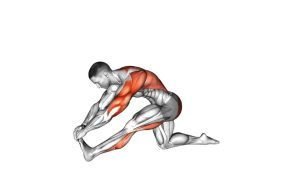
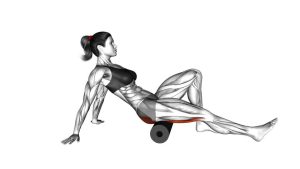
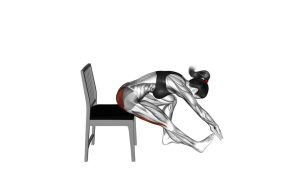
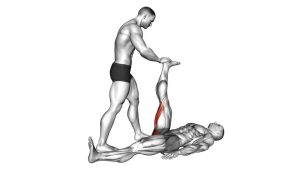
Lying Single-Leg Hamstring Stretch: Safe Form, Benefits, Tips & FAQ
Learn the Lying Single-Leg Hamstring Stretch to improve hamstring flexibility, hip mobility, and recovery with safe setup, form cues, FAQs, and gear.
Lying Single-Leg Hamstring Stretch
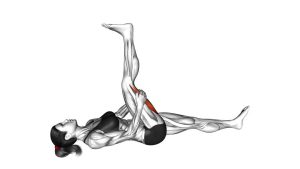
This stretch is useful for improving hamstring flexibility, reducing posterior-chain tightness, and supporting better hip mobility. Because the body stays on the floor, it is easier to control the pelvis, avoid excessive lower-back movement, and focus the stretch directly through the back of the working leg.
Quick Overview
| Body Part | Hamstrings |
|---|---|
| Primary Muscle | Hamstrings — biceps femoris, semitendinosus, semimembranosus |
| Secondary Muscle | Calves, glutes, hip stabilizers, lower-back stabilizers |
| Equipment | None; optional towel, yoga strap, exercise mat, or resistance band |
| Difficulty | Beginner |
Sets & Reps (By Goal)
- General flexibility: 2–3 sets × 20–40 seconds per side
- Post-workout recovery: 2 sets × 30–60 seconds per side
- Mobility warm-up: 1–2 sets × 8–12 slow reps per side with a brief pause at the top
- Beginner tight-hamstring routine: 2 sets × 15–25 seconds per side with the knee slightly bent
Progression rule: Increase hold time before increasing range. A smooth, pain-free stretch is more effective than pulling the leg aggressively.
Setup / Starting Position
- Lie on your back: Use a mat or comfortable floor surface.
- Extend one leg on the floor: Keep the non-working leg long and relaxed.
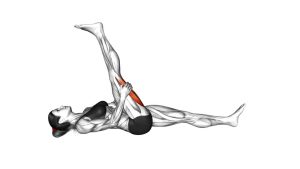
- Raise the working leg: Bring one leg upward while keeping the pelvis stable.
- Hold behind the thigh or calf: Use your hands to guide the leg, not force it.
- Keep the spine supported: Avoid arching the lower back or lifting the hips off the floor.
If your hamstrings are very tight, keep a soft bend in the knee. The stretch should target the back of the thigh, not create strain behind the knee.
Execution (Step-by-Step)
- Start flat on the floor: Relax your neck, shoulders, ribs, and lower back.
- Lift one leg slowly: Raise the working leg toward the ceiling without kicking or swinging.
- Guide the leg closer: Use your hands, towel, or strap to gently bring the leg toward your torso.
- Find the stretch: Stop when you feel a comfortable pull through the hamstrings.
- Hold and breathe: Keep steady breathing and avoid bouncing.
- Return with control: Lower the leg slowly, then repeat or switch sides.
Pro Tips & Common Mistakes
- Do not bounce: Bouncing can irritate the hamstrings and reduce control.
- Keep the pelvis steady: Avoid letting the hips roll or lift off the floor.
- Use a slight knee bend if needed: A small bend can make the stretch safer and more comfortable.
- Do not pull from the foot aggressively: Pulling too hard can shift stress toward the knee or calf.
- Relax the upper body: Keep the shoulders, jaw, and neck soft.
- Control the opposite leg: Keep the non-working leg grounded to help stabilize the pelvis.
- Use a strap for better leverage: A towel or yoga strap can help you maintain form without straining the arms.
FAQ
Where should I feel the Lying Single-Leg Hamstring Stretch?
You should feel it mainly along the back of the thigh. A mild calf stretch may also occur if the ankle is flexed. You should not feel sharp pain behind the knee or in the lower back.
Should my knee stay completely straight?
Not always. If your hamstrings are tight, keeping a slight bend in the knee is acceptable. The goal is a controlled hamstring stretch, not forcing the leg into a locked position.
Is this stretch good after leg workouts?
Yes. It can be useful after lower-body training, running, cycling, or long periods of sitting. Use gentle holds and avoid aggressive pulling when the muscles are fatigued.
Can beginners do this exercise?
Yes. It is beginner-friendly because the floor supports the spine and makes balance easier. Beginners should start with shorter holds and a comfortable range of motion.
What is the most common mistake?
The most common mistake is pulling the leg too hard or lifting the hips off the floor. Keep the movement smooth and keep the stretch at a manageable intensity.
Recommended Equipment (Optional)
- Yoga Mat — provides comfortable floor support for lying stretches
- Yoga Stretching Strap — helps guide the leg without overusing the arms
- Resistance Bands Set — useful as an alternative strap and for mobility drills
- Foam Roller — helps prepare the hamstrings before stretching
- Exercise Towel — simple tool for assisted stretching and grip support
Tip: Equipment is optional. The best tool is the one that helps you keep the stretch controlled, comfortable, and consistent.