Kettlebell Overhead Leg Raise: Form, Sets, Core Tips & FAQ
Learn the Kettlebell Overhead Leg Raise to build lower abs, hip control, and core stability with safe form, sets, tips, mistakes, FAQs, and gear.
Kettlebell Overhead Leg Raise
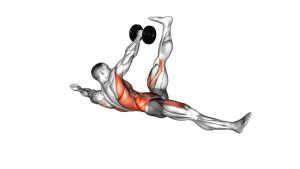
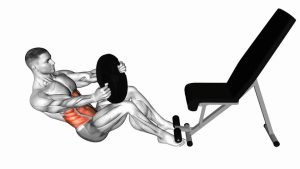
This exercise is more challenging than a standard lying leg raise because the kettlebell creates an isometric stability demand through the shoulders, chest, lats, and core. During each rep, the legs move while the upper body stays quiet. The best reps are slow, smooth, and controlled from top to bottom.
Quick Overview
| Body Part | Core |
|---|---|
| Primary Muscle | Rectus abdominis, especially lower abdominal fibers |
| Secondary Muscle | Hip flexors, transverse abdominis, obliques, shoulders, lats, and chest stabilizers |
| Equipment | Kettlebell and exercise mat |
| Difficulty | Intermediate to advanced |
Sets & Reps (By Goal)
- Core control: 3 sets × 6–10 slow reps, resting 60–90 seconds between sets.
- Lower-ab strength: 3–4 sets × 8–12 reps with a controlled 2–3 second lowering phase.
- Stability training: 2–3 sets × 6–8 reps using a lighter kettlebell and strict tempo.
- Advanced core endurance: 3 sets × 10–15 reps only if your lower back stays flat and controlled.
Progression rule: First improve control, range, and tempo. Then increase reps. Add kettlebell weight only when the kettlebell stays steady and your lower back does not arch.
Setup / Starting Position
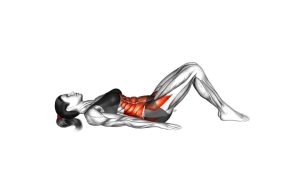
- Lie on your back: Use a mat and keep your head, upper back, and hips supported on the floor.
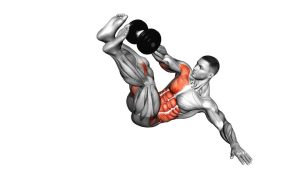
- Hold the kettlebell safely: Grip the kettlebell handle with both hands and position it above your chest, not directly over your face.
- Set your shoulders: Press the upper back lightly into the floor and keep the shoulders packed down away from the ears.
- Brace your core: Pull the ribs down and lightly flatten the lower back toward the floor.
- Extend the legs: Start with both legs straight and hovering slightly above the floor if you can control it.
If the full straight-leg version is too difficult, bend your knees slightly or start with a smaller lowering range.
Execution (Step-by-Step)
- Brace before moving: Keep the kettlebell steady above the chest and tighten your abs before the legs rise.
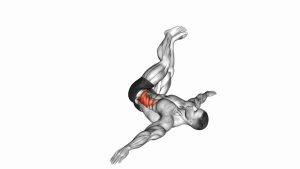
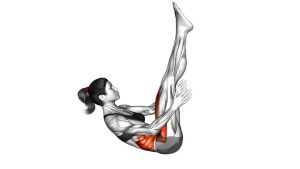
- Raise both legs: Lift the legs together in a smooth arc until they approach vertical.
- Add a small pelvic curl: At the top, lightly curl the hips off the floor if you can do it without swinging.
- Pause briefly: Squeeze the abs at the top while keeping your shoulders and kettlebell stable.
- Lower slowly: Bring the legs down under control while keeping the lower back from arching.
- Stop before form breaks: End the lowering phase before your back lifts or your ribs flare.
- Repeat with control: Start the next rep without relaxing the core or bouncing the legs.
Pro Tips & Common Mistakes
- Use a manageable kettlebell: The weight should improve stability, not create danger or shoulder strain.
- Do not rush the lowering phase: The eccentric portion is where the abs work hardest.
- Avoid lower-back arching: If your back lifts, reduce the range or bend your knees.
- Keep the ribs down: Rib flare shifts tension away from the abs and into the lower back.
- Do not swing the legs: Use controlled hip flexion and abdominal tension, not momentum.
- Keep the kettlebell above the chest: Avoid letting it drift backward, forward, or toward the face.
- Control the top position: If you add a hip lift, make it small and deliberate, like a reverse crunch.
FAQ
What muscles does the Kettlebell Overhead Leg Raise work?
It mainly works the rectus abdominis, especially the lower-ab region, while also training the hip flexors, transverse abdominis, obliques, shoulders, lats, and chest stabilizers.
Is this exercise good for lower abs?
Yes. The leg raise portion strongly challenges the lower abdominal area because the core must resist lower-back arching as the legs move away from the body.
Should beginners do this exercise?
Complete beginners should first master standard lying leg raises, bent-knee leg raises, dead bugs, and reverse crunches. The kettlebell version is better for people who already have solid core control.
How heavy should the kettlebell be?
Start light. The kettlebell is used mainly for stability and control, not maximum loading. Choose a weight you can hold securely without shaking, drifting, or losing shoulder position.
Why does my lower back arch during the movement?
Your legs may be lowering too far, your abs may be fatigued, or the variation may be too advanced. Shorten the range, bend the knees, or perform standard leg raises until your core control improves.
Can I do this exercise without a kettlebell?
Yes. You can perform a standard lying leg raise without weight. You can also hold a light dumbbell, medicine ball, or no equipment at all while learning the movement pattern.
Recommended Equipment
- Kettlebell Set — useful for choosing different weights as your core strength improves.
- Cast Iron Kettlebell — a durable option for overhead holds, core work, swings, and strength training.
- Thick Exercise Mat — supports the spine and hips during lying abdominal exercises.
- Adjustable Kettlebell — space-saving option for progressing load without buying multiple kettlebells.
- Ab Workout Mat — helps make floor-based core training more comfortable and consistent.
Tip: For this movement, safety and control matter more than heavy loading. Use a kettlebell you can hold steadily for every rep.