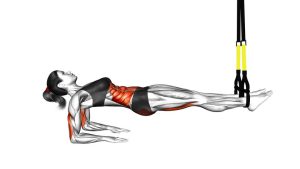
Plank on Hands: Proper Form, Core Benefits, Sets, Tips & FAQ
Learn how to do the Plank on Hands with proper form, core tension, safe setup, goal-based sets, common mistakes, FAQs, and gear tips.
Plank on Hands
This exercise works best when the body stays long, firm, and quiet. Instead of rushing or forcing intensity, focus on pressing the floor away, keeping the ribs controlled, and holding the hips level. As a result, the plank becomes a clean core stability drill that also builds shoulder support and total-body awareness.
Quick Overview
| Body Part | Core |
|---|---|
| Primary Muscle | Rectus abdominis and deep core stabilizers |
| Secondary Muscle | Obliques, transverse abdominis, shoulders, chest, triceps, glutes, quads |
| Equipment | No equipment required |
| Difficulty | Beginner to intermediate, depending on hold time and body control |
Sets & Reps (By Goal)
- Beginner core control: 3 sets × 15–25 seconds, resting 45–60 seconds between holds.
- General strength: 3–4 sets × 30–45 seconds, keeping perfect body alignment throughout.
- Core endurance: 4–5 sets × 45–60 seconds, resting 45–75 seconds between sets.
- Warm-up activation: 2 sets × 15–30 seconds before push-ups, presses, or full-body workouts.
Progression rule: Add time only while your hips stay level, your lower back stays neutral, and your shoulders remain stacked over your wrists.
Setup / Starting Position
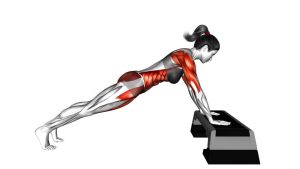
- Start on all fours: Place your hands on the floor about shoulder-width apart.
- Stack the joints: Position your wrists under your shoulders so the arms support the body vertically.
- Step the feet back: Extend both legs until your body forms a straight line from head to heels.
- Set the core: Brace your abs gently, pull the ribs down, and avoid letting the belly drop.
- Lock in the lower body: Squeeze the glutes lightly and keep the thighs active.
- Keep the neck neutral: Look down toward the floor instead of lifting the head forward.
Tip: If the wrists feel uncomfortable, place your hands slightly wider or use push-up handles to keep the wrists more neutral.
Execution (Step-by-Step)
- Press the floor away: Push through your palms so the upper back stays strong and the shoulders do not sink.
- Hold a straight line: Keep your head, spine, hips, knees, and heels aligned.
- Brace without holding your breath: Keep the core firm while breathing slowly through the hold.
- Control the hips: Do not let the hips sag toward the floor or rise too high.
- Stay still: Maintain the position with only small natural balance adjustments.
- Finish cleanly: Lower the knees to the floor before relaxing the core and shoulders.
Pro Tips & Common Mistakes
- Keep hands under shoulders: If the hands drift too far forward, the shoulders and lower back may take extra stress.
- Avoid hip sagging: Dropping the hips usually means the core is losing tension.
- Do not pike the hips: Raising the hips too high reduces core demand and changes the exercise shape.
- Push through the palms: Active hands help keep the shoulders stable and supported.
- Keep the neck neutral: Looking forward can strain the neck; looking down keeps the spine aligned.
- Breathe steadily: Holding your breath can create unnecessary tension and make the hold harder to control.
- End before form breaks: A shorter clean plank is better than a longer plank with a sagging lower back.
FAQ
What muscles does the Plank on Hands work?
The Plank on Hands mainly trains the core, especially the rectus abdominis, transverse abdominis, and obliques. In addition, the shoulders, chest, triceps, glutes, and quads help keep the body stable.
Is the Plank on Hands good for beginners?
Yes. It is beginner-friendly when the hold is short and the form stays controlled. However, beginners should start with 15–25 seconds and stop before the hips sag or the shoulders collapse.
How long should I hold a high plank?
Most people can start with 15–30 seconds per set. After that, gradually build toward 45–60 seconds while keeping the body straight and the breathing steady.
Why do my wrists hurt during the Plank on Hands?
Wrist discomfort can happen when too much pressure sits on the heel of the hand or when wrist mobility is limited. Try spreading the fingers, pressing evenly through the palms, or using push-up handles for a more neutral wrist position.
Should I do this exercise for reps or time?
Since this version is a static hold, it is best measured by time. Focus on seconds held with good form rather than repetitions.
Recommended Equipment
- Exercise Mat — adds comfort and floor grip during plank holds.
- Push-Up Handles — helps keep the wrists in a more neutral position.
- Non-Slip Workout Mat — improves stability if hands or feet slide on smooth flooring.
- Core Sliders — useful for future plank progressions after mastering the static hold.
- Fitness Interval Timer — helps track plank hold times, rest periods, and workout structure.
Tip: Equipment is optional for this exercise. However, a good mat and wrist-friendly handles can make the plank more comfortable and easier to practice consistently.